

More news on this day
Gulf Air is preparing to increase daily flights between Bahrain and Singapore even as the carrier restarts only limited operations from alternative regional hubs during an ongoing closure of Bahraini airspace that has disrupted travel across the Middle East and Asia.
Get the latest news straight to your inbox!
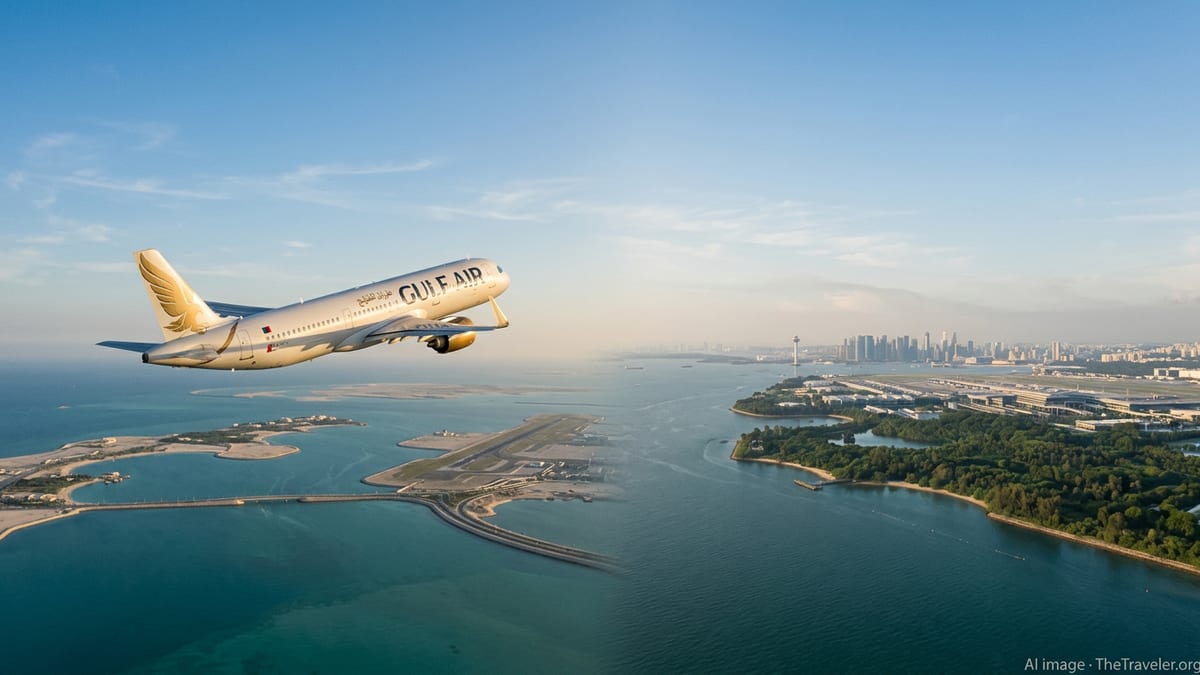
Daily Bahrain–Singapore Service Set for Expansion
Gulf Air’s Bahrain–Singapore route, launched as a daily non-stop service in late 2024, is now at the center of the airline’s recovery planning as it works through unprecedented airspace restrictions. The carrier is moving ahead with plans to increase seat capacity and refine schedules on the route, positioning Singapore Changi as a critical gateway for traffic between Southeast Asia and the Gulf once full operations resume.
The Bahrain-based airline has signalled that, when conditions permit, it intends to enhance frequencies and deploy higher-capacity aircraft on selected days between Bahrain International Airport and Changi Airport to meet pent-up demand from corporate travelers, visiting friends and relatives traffic, and transit passengers connecting to wider Asia-Pacific networks. The focus on Singapore underscores its role as a resilient long-haul hub during a period of intense regional disruption.
Travel demand between the Gulf and Singapore has remained comparatively robust, driven by energy, logistics, financial services and technology ties. Airlines across the region have seen strong forward bookings for Southeast Asian destinations once schedules normalize, and Gulf Air’s decision to prioritize Bahrain–Singapore capacity reflects confidence that the corridor will recover quickly as soon as airspace conditions allow more direct routings.
Aviation analysts note that the Bahrain–Singapore sector is also strategically important for Gulf Air’s competitive positioning. By maintaining a strong presence on this route, the carrier can better defend market share against larger Gulf rivals and Asian network airlines that are also eyeing growth as traffic flows are reconfigured in response to evolving security and regulatory constraints.
Operations Remain Constrained by Bahrain Airspace Closure
Despite its long-term growth plans on the Bahrain–Singapore corridor, Gulf Air continues to face immediate operational headwinds. Bahrain’s airspace remains closed to regular civilian traffic following heightened regional tensions, forcing the airline to keep scheduled passenger services from its home base largely suspended while regulators and air navigation authorities evaluate safety conditions.
With Bahrain International Airport functioning at a minimal level for commercial operations, Gulf Air’s core hub-and-spoke model is effectively on hold. Flight cancellations have rippled through its network, affecting connections between Europe, the Middle East and Asia, and leaving many passengers to be rebooked on other carriers or routed via alternative hubs that still have approved corridors skirting restricted airspace.
The airspace closure has also complicated crew and aircraft rotations. Aircraft and flight crews that were outside Bahrain when restrictions came into effect have been repositioned only selectively, under special clearances and narrow time windows. That has limited the airline’s ability to reconstruct even a skeletal schedule originating from Bahrain, particularly on longer-haul routes such as those serving Southeast Asia.
Industry observers say that any substantial increase in Bahrain–Singapore flying will depend on a sustained reopening of regional corridors and a coordinated easing of restrictions by multiple states. Current risk assessments continue to prioritize safety and overflight security, meaning that Gulf Air’s ambitions for additional daily services on the route remain contingent on a broader stabilization of the regional air traffic picture.
Limited Services Restart from Alternative Regional Gateways
In the absence of normal operations from Bahrain, Gulf Air has begun charting a gradual path back to the skies via limited flights from alternative airports in neighboring countries. Operating under special approvals and within defined air corridors, the airline has mounted select services from regional gateways such as Dammam in Saudi Arabia and airports in Oman, focusing initially on high-demand cities where passengers have been stranded by the shutdown.
These limited flights, which include services to key long-haul destinations in Europe and Asia, are designed primarily to repatriate travelers and restore essential connectivity rather than to function as a full commercial schedule. Seat availability remains tight, and flights are often timed to coincide with safe operating windows agreed between civil aviation authorities and air traffic control centers along the route.
For passengers connecting between Singapore and the Gulf, the workaround generally involves multi-stop itineraries that link Gulf Air’s temporary operations from Saudi or Omani airports with services operated by partner or competitor airlines through other open hubs. That has extended journey times and reduced flexibility, but it has also provided a vital bridge for those who must travel urgently despite the disruptions.
Gulf Air has stressed that all such limited operations are subject to ongoing review and may be adjusted at short notice in response to new safety assessments or changes in airspace status. Travelers are being advised to monitor booking systems frequently and maintain close contact with the airline or their travel agents as schedules remain fluid.
Regional Airspace Disruptions Ripple Across Asia
The shutdown of key Gulf airspaces has sent shockwaves across aviation networks linking Europe and the Middle East with South and Southeast Asia. Airlines have been forced to reroute or cancel services that normally use Gulf corridors as the most efficient path between Asia and western markets, prompting a surge in demand for alternative routings via South Asia, the Eastern Mediterranean and Central Asia.
At Singapore Changi, authorities have reported a spike in delays and cancellations on flights to and from Gulf destinations, including Bahrain, Doha and Dubai, since the end of February. Carriers have scrambled to reassign aircraft and crews, while travelers headed to the Middle East or beyond have often needed last-minute rebookings via secondary hubs, stretching airport resources and testing airline customer service systems.
In practical terms, the closure of airspace over several Middle Eastern states has removed one of the primary trunk corridors for long-haul flights between Asia and Europe. Some airlines have chosen longer southerly routings over the Arabian Sea and East Africa, while others have shifted traffic northward over Turkey and the Caucasus, trading extra flight time and fuel burn for access to safe, open airspace and more predictable operations.
These disruptions have also had a knock-on impact on air cargo. With many passenger widebody flights grounded or rerouted, bellyhold capacity on major east–west lanes has contracted, nudging up freight rates and prompting shippers to seek alternative options. For Gulf Air, which carries significant cargo on its passenger network, restoring dependable operations on corridors such as Bahrain–Singapore will be critical to supporting regional supply chains once restrictions ease.
Cautious Timeline for Full Bahrain–Singapore Restoration
While Gulf Air’s intention to ultimately increase daily flights between Bahrain and Singapore is clear, the timeline for full restoration of the route remains uncertain. Much depends on when Bahrain’s civil aviation regulators, in coordination with neighboring states, determine that airspace can safely reopen for widespread civilian use and not just tightly controlled humanitarian or repatriation flights.
Industry experts suggest that the return to a regular daily schedule, followed by any frequency additions or upgauging of aircraft, is likely to be phased. Initial steps could include a limited number of weekly Bahrain–Singapore flights operated under conservative routings, with the airline gradually building back to daily and then enhanced frequencies as operational confidence grows and demand patterns stabilize.
In the interim, Gulf Air is expected to maintain a flexible approach, continuing to use alternative regional gateways and opportunistic corridors to keep some connectivity alive. For travelers planning journeys between Singapore and the Gulf, that will mean closely tracking schedule updates and remaining prepared for itinerary changes, even as the prospect of more daily non-stop Bahrain–Singapore flights remains a core element of the airline’s medium-term strategy.
Once airspace restrictions are lifted and the network can be rebuilt more fully, the Bahrain–Singapore route is likely to re-emerge as one of Gulf Air’s flagship links between the Gulf and Southeast Asia, supported by increased frequencies and renewed confidence among both business and leisure travelers.