

More news on this day
Gulf Air has cancelled additional flights and extended the suspension of most operations at Bahrain International Airport, leaving passengers stranded and disrupting key links between Europe, the Middle East, and Asia, including important connections to and from Singapore.
Get the latest news straight to your inbox!
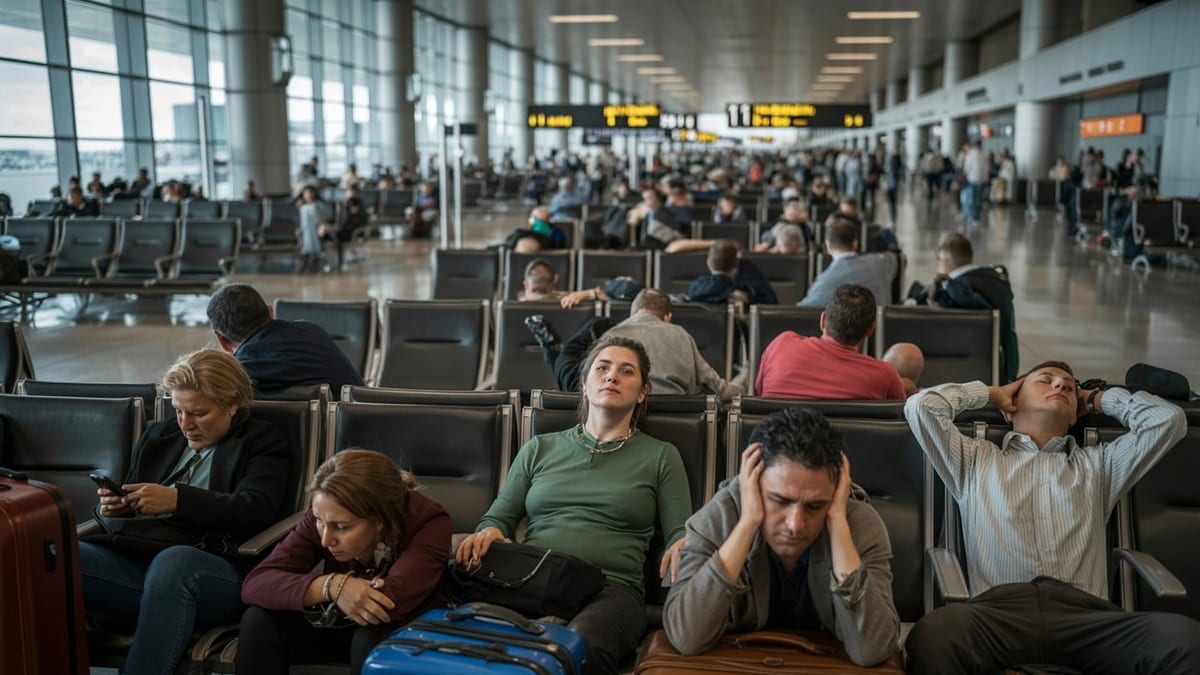
Image by Travel And Tour World
Extended Suspension at Bahrain International Airport
Recent advisories and aviation industry updates show that Bahrain’s airspace remains heavily restricted following the latest phase of the regional conflict, with Bahrain International Airport operating only a skeleton schedule. Gulf Air, the country’s flag carrier, has shifted from a short disruption to an extended suspension of regular services at its Bahrain hub, prompting a fresh wave of cancellations.
According to publicly available airline notices and airport updates, Gulf Air’s scheduled services to and from Bahrain have been largely paused, with only limited relief and repositioning flights operating. This has turned Bahrain International from a busy transfer hub into a congestion point where passengers are waiting days for alternative routing or repatriation options.
Travel forums and social media posts from early to mid March describe repeated last minute cancellations for travelers transiting Bahrain, including those who had already been rebooked once. The pattern suggests that the carrier has been forced to roll forward its disruption window several times as airspace restrictions persist, rather than returning to normal operations on the initial target dates.
The extended outage at Bahrain International has knock on effects across the wider network, as aircraft and crew are out of position and connecting banks of flights cannot operate as planned. Even passengers not originally flying to Bahrain are now facing longer connections or unexpected overnights as Gulf Air reshuffles its reduced schedule.
Singapore Routes and Asia Connections Under Pressure
Gulf Air’s links between Europe and Southeast Asia, including important one stop itineraries connecting Singapore via Bahrain, have been among the most affected. Booking engines and schedule displays in recent days show multiple cancellations on these routes, with some services removed entirely from sale for the coming weeks.
Traveler reports from March indicate that flights involving Singapore and other Asian gateways such as Bangkok and Manila have been particularly unstable when routed through Bahrain. Some passengers who had already rebooked their journeys after earlier cancellations describe a second wave of disruptions as the hub closure dragged on, forcing them to abandon Gulf Air itineraries altogether and purchase new tickets on alternative carriers.
Aviation analysis published this week highlights how the Bahrain disruption is reshaping traditional traffic flows between Europe and Asia. With Gulf Air constrained at its home base, travelers bound for Singapore and neighboring markets are being pushed toward secondary routings via Cairo, Istanbul, or major Northeast Asian hubs like Tokyo and Seoul. These detours often add several hours to total travel time and, in many cases, significantly higher fares.
For Singapore specifically, Gulf Air’s reduced presence removes a competitive one stop option linking secondary European cities with the city state. Industry observers note that this is likely to concentrate demand further onto big Gulf carriers that still have partial access to other regional hubs, as well as on European and Asian network airlines that can offer alternative one stop journeys.
Stranded Passengers Face Uncertain Timelines
As the suspension at Bahrain International continues, the human impact is becoming more visible. Accounts posted by passengers stuck in Bahrain describe crowded terminal areas and hotels filled with travelers waiting for news of replacement flights. Many are holding tickets for itineraries that connected through Bahrain to destinations in India, Europe, and Southeast Asia, including Singapore.
Publicly available discussions on passenger forums suggest that some travelers have seen two or more consecutive Gulf Air flights cancelled, often with just a few days’ notice. In several cases, travelers reported that rebooking options through Bahrain simply disappeared, forcing them to request refunds or attempt to reroute through other Gulf or regional hubs at their own expense.
At the same time, Gulf governments and immigration authorities around the region are introducing temporary visa and overstay leniency measures to accommodate visitors who cannot depart on schedule. Recent public statements from several countries, including Bahrain, reference emergency extensions and fee waivers designed to help stranded travelers remain legally in the country until they can secure a departure flight.
Despite these measures, many passengers continue to face uncertainty over when they will be able to leave and on which carrier. Travel advisors are warning that, as long as Bahrain’s airspace remains constrained, options may stay limited and last minute operational changes are likely.
Alternative Routings and Limited Relief Flights
In mid March, network updates shared through aviation tracking services and travel advisories indicated that Gulf Air had begun operating a number of temporary services from King Fahd International Airport in Dammam, just across the causeway in Saudi Arabia. These flights are intended primarily to move stranded passengers and provide some level of continuity on key international routes while Bahrain’s own airport remains disrupted.
Information made available to the public suggests that ground transport between Bahrain and Dammam is being arranged for customers with confirmed Gulf Air tickets on these special services. However, capacity on such flights is limited, and priority is typically given to passengers whose original travel dates have already passed or who face urgent travel needs.
Passengers connecting between Europe and Asia, including those aiming for Singapore, are being advised in many public channels to consider alternative routings that avoid Bahrain entirely. This can involve switching to itineraries via other Gulf hubs that still have partial operations, or using longer paths through cities such as Cairo, Istanbul, or major European gateways with strong Asian connections.
Travel industry commentary points out that, even where alternative seats exist, the sudden spike in demand has pushed fares higher on many routes. For some travelers, particularly those on nonrefundable tickets, the cost of abandoning a Gulf Air itinerary and booking afresh on another airline is proving substantial.
What Travelers Need to Watch in the Coming Days
For now, the outlook for a full resumption of Gulf Air’s Bahrain hub operations remains tied to the broader security and airspace situation in the Gulf. Recent risk assessments and news coverage emphasize that the regional conflict has produced repeated closures and reopenings of key corridors, making it difficult for airlines to plan stable schedules.
Travelers booked on Gulf Air in the coming weeks, especially those routing through Bahrain to Singapore, India, or Europe, are being encouraged by publicly available guidance to monitor their reservations closely and to check for updated travel waivers. Recent airline policy notices indicate that passengers whose journeys fall within the current disruption window may be eligible for free date changes or refunds, though exact terms can vary by ticket type and point of sale.
Industry analysts expect that, once Bahrain’s airspace restrictions ease, Gulf Air will gradually rebuild its network, starting with core regional links and high demand long haul routes. Until that occurs, however, Bahrain is likely to remain a fragile point in the global air travel system, with further short notice adjustments possible.
For passengers already abroad or planning imminent trips, the prevailing advice from travel specialists and consumer advocates is to build flexibility into their itineraries, allow extra time for connections, and be prepared for rerouting away from Bahrain if the disruptions continue. In the meantime, Gulf Air’s curtailed schedule and the ongoing suspension at Bahrain International Airport will keep pressing on key Singapore routes and other vital connections between Europe and Asia.