

More news on this day
Dozens of flight cancellations involving Gulf Air, El Al and Saudia across Bahrain, Jeddah and other regional airports have left passengers stranded and itineraries in disarray, as airlines continue to adjust operations amid the latest instability affecting Middle East airspace.
Get the latest news straight to your inbox!
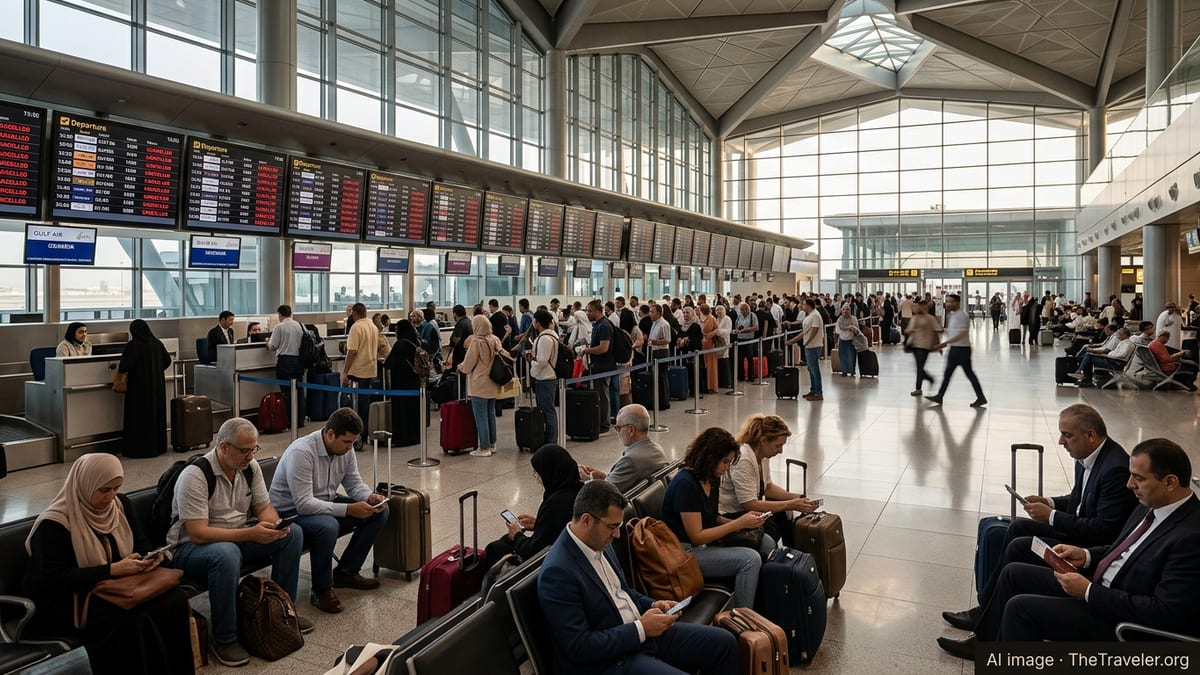
Wave of Cancellations Ripples Across Key Hubs
Published coverage from regional and international outlets indicates that more than 60 flights operated by Gulf Air, El Al and Saudia have been cancelled or significantly disrupted in recent days, concentrating around Bahrain International Airport, Jeddah’s King Abdulaziz International Airport and several connecting hubs. These changes are part of a wider pattern of schedule cuts and reroutings as carriers respond to evolving airspace restrictions and security assessments.
For Gulf Air, Bahrain’s flag carrier, reports point to repeated cancellations on routes linking Manama with major South Asian, European and Gulf cities. Travelers describing their experiences on public forums detail multiple postponements of flights between Bahrain and destinations such as Delhi, Mumbai, Frankfurt and London, with some services initially rebooked and then cancelled again as operational plans shifted.
El Al’s network has also seen sharp adjustments, with Israel’s main airline trimming flights that would normally overfly or connect through affected corridors. Publicly available information shows that departures and arrivals involving regional gateways have been consolidated or suspended on short notice, adding pressure to already congested alternative routes through Europe and the eastern Mediterranean.
Saudia, based in Jeddah and Riyadh, appears to be maintaining a larger share of its domestic and core international schedule, but has scaled back or reshaped services that intersect with the most restricted segments of Gulf airspace. Travelers report last minute timing changes, longer routings and select cancellations, particularly for flights that would usually link Saudi hubs with neighboring Gulf states.
Passengers Face Long Delays, Hotel Moves and Costly Rebookings
For travelers caught in the middle of these cancellations, the immediate impact has been extended stays, unexpected expenses and considerable uncertainty. Accounts shared from Bahrain describe visitors who had planned short trips finding themselves unable to depart for more than a week, with outbound Gulf Air flights repeatedly removed from the schedule.
Some stranded passengers report being moved between airport terminals, transit hotels and nearby city accommodation while they await clearer information on replacement flights. In Bahrain, this has included guests who checked out expecting to travel, only to discover at the airport that their flights had been cancelled, triggering another round of hotel bookings and ground transfers.
In Jeddah and other Saudi airports, travelers have described having to secure new tickets on alternative carriers at short notice, often at significantly higher prices. Those holding nonrefundable economy tickets on Saudia or partner airlines have faced difficult decisions about whether to wait for possible reinstatements, accept vouchers for future travel, or spend additional funds to reroute via less affected hubs.
For many, the most stressful element has been the lack of predictability. With timetables changing day by day, passengers have turned to airline apps, social media channels and third party flight trackers to verify whether their services are still operating, often checking repeatedly in the hours before departure.
Airlines Offer Waivers, Repatriation Flights and Partial Flexibility
In response to the disruption, Gulf Air, El Al and Saudia have each introduced varying degrees of flexibility, though policies differ by route and travel date. Public advisories and customer updates show that Gulf Air has offered rebooking without additional charges for some tickets due to depart during the current period, along with the option to request refunds where flights are formally cancelled.
Reports from affected travelers indicate that Gulf Air has also operated limited “special assistance” or repatriation flights from alternative airports such as Dammam, designed primarily to move stranded passengers back to key destinations in Europe and Asia. Seats on these services appear to be prioritized for customers already holding tickets on disrupted routes, who are invited to register details through online forms.
Saudia, according to publicly shared guidance, has allowed fee free changes or refunds on impacted flights, particularly where services have been cancelled outright or significantly rerouted. However, some routes within Saudi Arabia remain operational, and passengers whose flights are still running may not qualify for the same level of flexibility, leading to frustration among those reluctant to travel but technically still able to do so.
Information regarding El Al’s customer options suggests a similar mix of waivers and standard conditions. Travelers booked on cancelled services have generally been eligible for refunds or rebooking on alternative dates or routes, while those on flights that continue to operate but on modified schedules may face more limited choices, depending on fare rules and point of sale.
Knock on Effects for Global Connections and Travel Plans
The cancellations and reroutings have had an outsized impact beyond the immediate region because Bahrain, Jeddah and neighboring hubs serve as critical links between Asia, Europe and Africa. When Gulf Air curtails connections through Bahrain, for example, travelers between Indian metropolitan areas and European cities lose a commonly used one stop option, forcing them to compete for seats on already busy nonstops via the Gulf or secondary European gateways.
Disruptions involving El Al affect both point to point traffic to and from Israel and an array of connecting itineraries, such as those that pair European low cost carriers with onward legs to the Middle East. With some routes consolidated, passengers find themselves funneled into fewer daily departures, which can complicate same day connections and increase the risk of missed onward flights when delays occur.
For Saudia, operational changes have influenced religious travel in particular. Jeddah is a primary arrival airport for pilgrims heading to Mecca and Medina, and schedule irregularities there can cascade across tour packages, hotel stays and ground transport arrangements. Travel agents managing group itineraries report having to redraw entire trip plans to accommodate changing departure times or newly imposed transit restrictions.
These constraints also feed into broader airline network planning. Carriers outside the region, including European and Asian airlines, have been adjusting their own schedules to avoid affected airspace, sometimes adding technical refueling stops or longer routings. This can erode the time savings usually associated with preferred one stop connections, pushing some travelers to delay or cancel trips entirely.
What Travelers Can Do if Their Flight Is Affected
Publicly available guidance from airlines, aviation regulators and consumer bodies suggests several practical steps for travelers whose plans may be caught up in this wave of cancellations. The first is to monitor the status of bookings directly through airline apps or official websites in the days and hours leading up to departure, rather than relying solely on third party booking platforms or email notifications.
Where a flight has been formally cancelled, passengers are typically entitled to a choice between a refund and rebooking, although specific rights vary depending on the country of departure and the airline’s conditions of carriage. Travelers are encouraged by consumer advocates to document all communications, retain receipts for essential expenses such as accommodation and meals, and review whether their travel insurance policies offer additional coverage for disruption due to conflict related airspace issues.
Those who have not yet started their journey but are concerned about upcoming flights involving Bahrain, Jeddah or other affected hubs may wish to explore proactive changes while waiver policies remain in effect. In some cases, moving travel dates slightly earlier or later, or choosing an alternative connection point, can reduce the risk of being stranded if schedules tighten further.
Ultimately, the situation remains fluid, and observers note that both flight availability and airline policies can shift with little notice. For now, anyone planning to travel through the region is being advised, through publicly shared information and travel advisories, to build additional flexibility into their itineraries, allow more time for connections, and prepare contingency plans in case their original flights are among the dozens still at risk of cancellation.