

More news on this day
Travelers across Asia and the Middle East are facing fresh disruption as more than 20 flights linked to Thailand are canceled or heavily delayed, with Gulf Air, EL AL, Thai Airways and several other major carriers adjusting services to key hubs including Singapore, Kuwait, Kuala Lumpur and Koh Samui.
Get the latest news straight to your inbox!
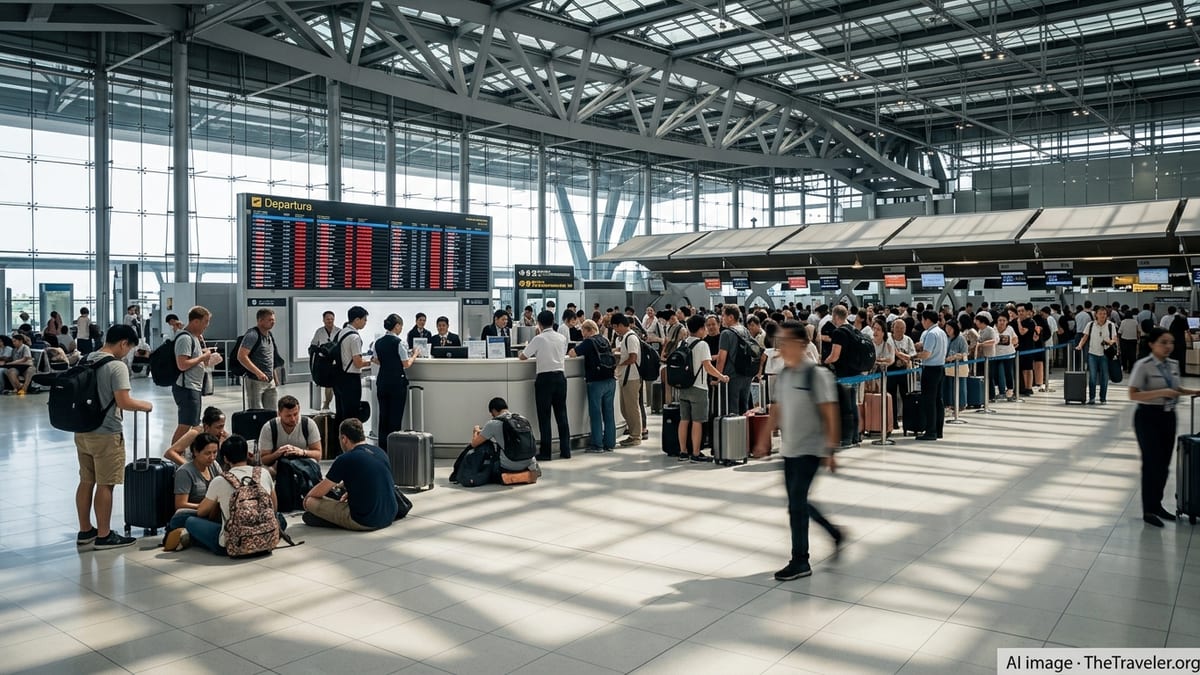
Flight Cancellations Ripple Across Popular Regional Routes
Recent schedule changes by multiple airlines are causing a knock-on effect for passengers traveling through Thailand. Reports indicate that a mix of outright cancellations, last-minute turnbacks and extended delays has affected flights on some of the region’s busiest leisure and transit corridors. Travelers connecting between Bangkok or Phuket and onward destinations such as Singapore, Kuala Lumpur, Kuwait City and island gateways like Koh Samui are among those experiencing the greatest disruption.
Publicly available flight tracking and timetable data show that more than 20 services involving Thailand over the past several days have been disrupted in some form. These disruptions include cancellations of through services to the Middle East as well as adjustments to regional links that feed major long haul networks. For many travelers, particularly those on multi-stop itineraries, the loss of a single sector has translated into missed connections and multi-day rebooking challenges.
The pattern of disruption is uneven, with some carriers maintaining near-normal schedules while others scale back operations on specific routes. Passengers report a patchwork of outcomes, ranging from smooth same-day re-accommodation on alternative airlines to being stranded for several days as seats on remaining services rapidly sell out.
Gulf Air, EL AL and Thai Airways Under Pressure
Gulf Air, EL AL and Thai Airways feature prominently in traveler accounts of the latest wave of cancellations. Publicly available information indicates that Gulf Air has offered flexible cancellation or rebooking options on selected services, reflecting broader capacity pressures on routes linking Thailand and the Gulf. Some travelers have chosen to cancel itineraries entirely and pursue refunds, while others have switched to routings that avoid traditional Gulf hubs.
EL AL’s links between Israel and Southeast Asia, often involving connections via Bangkok and other regional hubs, have also seen schedule adjustments. Airline timetables and flight tracking data point to isolated cancellations and equipment changes that have reduced the number of available seats on certain days. For travelers hoping to connect from Thailand to destinations in the Eastern Mediterranean, this has meant tighter availability and longer journey times.
Thai Airways, as Thailand’s flag carrier, sits at the center of the disruption picture. The airline operates key long haul services between Bangkok and cities in Europe, the Middle East and Australasia, as well as dense regional links to Singapore, Kuala Lumpur and beyond. Recent days have seen instances of long haul flights turning back to origin or being removed from schedules at short notice. When these services do not operate as planned, pressure cascades onto Thai’s regional network, complicating travel to and from secondary destinations such as Koh Samui.
The combined effect is a squeeze on capacity precisely as demand for travel through Thailand remains strong. Ticket prices on airlines still operating normally have climbed sharply on some corridors, making last-minute alternatives significantly more expensive for stranded travelers.
Impact on Singapore, Kuwait, Kuala Lumpur and Island Gateways
The disruptions extend across several of Southeast Asia and the Gulf’s most important aviation junctions. Singapore and Kuala Lumpur, both major hubs for regional and intercontinental travel, have seen fluctuating schedules on services to and from Thai airports. When flights originating in Thailand are canceled or retimed, downstream connections to Europe, North Asia, Australia and the Middle East can be affected.
Kuwait City has also featured in recent reports involving reduced or canceled services. Airlines linking Thailand with Kuwait and neighboring Gulf states have adjusted capacity in response to operational constraints and changing demand patterns. For passengers using Kuwait as a connection point onward to Europe or North America, this has resulted in complex rerouting, often via alternative hubs such as Istanbul, Doha or major Southeast Asian gateways.
Within Thailand, island destinations such as Koh Samui and Phuket have felt the strain as well. Travelers describe repositioning to or from these resort areas in order to stay close to whichever international gateways still offer viable exit options. When regional feeder flights to hubs like Singapore or Kuala Lumpur are disrupted, vacationers may find themselves extending hotel stays or undertaking long overland journeys to alternative airports.
These localized challenges illustrate how tightly interconnected the regional network has become. A single cancellation on a Thailand–Singapore or Thailand–Kuwait route can reverberate through multiple itineraries, affecting travelers whose final destinations are thousands of kilometers away.
What Travelers Are Experiencing on the Ground
Firsthand accounts shared on public forums portray crowded airline ticket desks, long call center queues and uncertainty about how long the disruption will last. Some travelers in Bangkok, Phuket and Koh Samui report being rebooked several days later on different carriers, often via new routings through East Asia or secondary Southeast Asian hubs rather than traditional Gulf connections.
Others describe making their own way between Thai cities to stay near the airport most likely to offer an earlier departure. For example, travelers originally holding tickets from one Thai resort airport have shifted to Bangkok or Krabi to access a broader range of outbound services. In many cases, this strategy has involved additional costs for domestic flights, ferries, buses and last-minute accommodation.
There is also a growing divergence between those able to pay premium prices for scarce seats and budget-conscious travelers who feel compelled to wait for more affordable options. Public posts suggest that some one-way fares from Thailand to Europe have risen to many times their usual levels, reflecting the sudden drop in available capacity from certain carriers.
Despite the challenges, a portion of travelers report successful workarounds: securing seats on airlines still operating near-normal schedules, leveraging flexible tickets to change dates without penalties, or routing through lesser-used hubs that still have open inventory. However, these solutions typically require rapid decision-making and a willingness to accept longer, more complex itineraries.
Key Considerations for Upcoming Trips Through Thailand
For those with imminent travel plans involving Thailand and onward connections to Singapore, Kuwait, Kuala Lumpur, Koh Samui or other regional destinations, current conditions underline the importance of preparation and flexibility. Publicly available guidance from airlines and consumer advocates emphasizes checking flight status repeatedly in the days and hours before departure, as schedules may change at short notice.
Travelers are also being encouraged, through open-source advisories and airline notices, to build in longer connection times where possible and to consider backup routing options that avoid the most affected transit points. Booking through a single carrier or alliance for multi-leg itineraries can make re-accommodation simpler if one segment is canceled, although even in these cases limited seat availability can still constrain options.
Flexible or refundable tickets, while typically more expensive, have proven valuable for travelers caught in the latest disruptions. Being able to adjust dates, change routing or switch carriers without substantial penalties can significantly reduce the stress of navigating a volatile schedule environment.
As airlines continue to refine their operations in the coming days, further adjustments to flight programs involving Thailand remain possible. Travelers planning to connect between Thailand and hubs such as Singapore, Kuwait and Kuala Lumpur are likely to benefit from monitoring updates closely and allowing extra time, budget and contingency in their plans.