

More news on this day
Gulf Air is enlarging its temporary hub at King Fahd International Airport in Dammam, adding flights to Cairo, Casablanca and Chennai as the closure of Bahrain International Airport and Bahraini airspace continues to disrupt travel across the Gulf.
Get the latest news straight to your inbox!
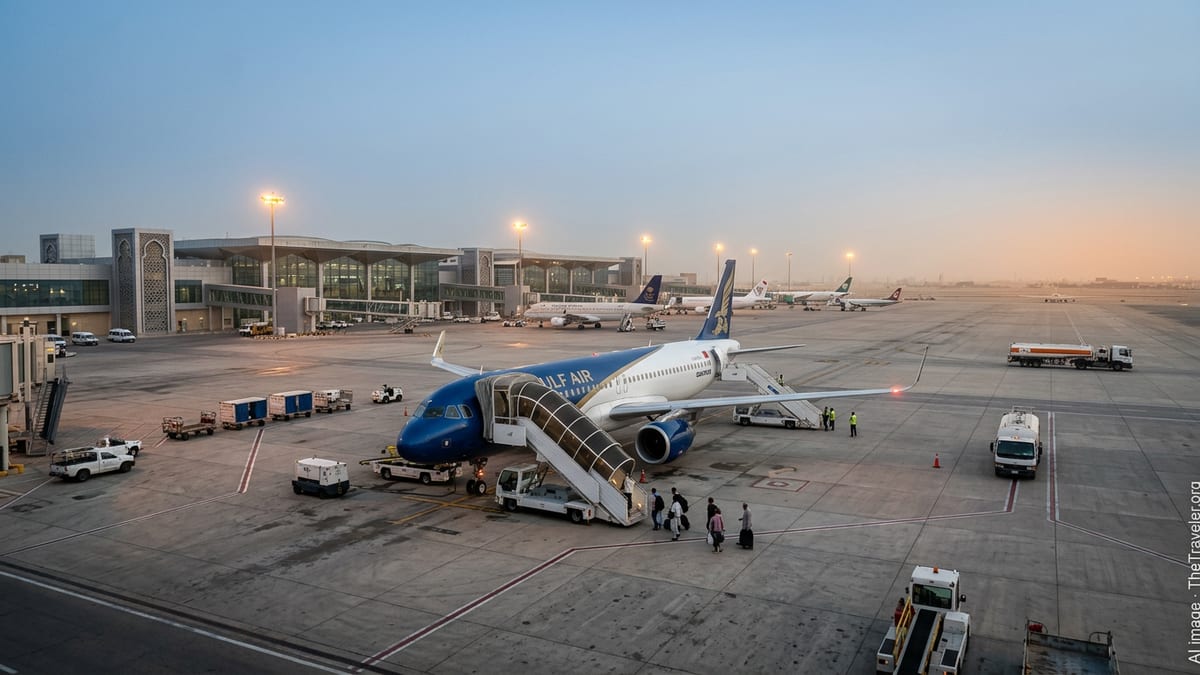
Temporary Hub in Dammam Becomes Central to Gulf Air Network
Publicly available flight information indicates that Gulf Air has consolidated much of its scheduled activity at King Fahd International Airport in Dammam, on Saudi Arabia’s Eastern Province coast, as operations at its home base in Bahrain remain suspended. The carrier began routing a limited number of commercial and repatriation flights through Dammam in early March, gradually expanding schedules as capacity and permissions allowed.
Advisories shared through airline communication channels and aviation tracking platforms show that Dammam is currently handling a mix of regional and medium-haul routes that would typically operate from Bahrain. The move effectively transforms the Saudi airport into a temporary stand-in hub, providing a critical outlet for passengers trying to leave or reach Bahrain by air.
The shift has been framed in public updates as a short-term operational response rather than a permanent realignment of Gulf Air’s network. However, the prolonged nature of the Bahrain airport closure has led to a more structured schedule from Dammam, moving beyond ad hoc rescue flights toward a recognizable, if reduced, commercial timetable.
New Links to Cairo, Casablanca and Chennai Bolster Connectivity
Recent schedule data and booking engine listings show that Gulf Air is adding services from Dammam to Cairo, Casablanca and Chennai, creating alternative options on some of its most in-demand corridors. These routes mirror key markets historically served from Bahrain, especially for expatriate workers, business travelers and leisure passengers who rely on Gulf Air for connections across the Middle East, North Africa and South Asia.
Cairo and Casablanca add resilience on westbound flows to North Africa, where Bahrain previously functioned as a convenient connecting point between the Gulf region and major Arab and Maghreb capitals. By operating from Dammam, Gulf Air is attempting to preserve at least part of this role, giving travelers a way to rebook journeys without waiting for Bahrain’s airport to reopen.
On the eastbound side, the introduction of Dammam–Chennai flights targets a large Indian diaspora that typically uses Gulf hubs for onward connections. Publicly available information indicates that frequencies on the new routes remain limited compared with pre-disruption schedules, but the additions significantly broaden the temporary network beyond the earliest wave of regional shuttle and repatriation services.
Regional Disruption Keeps Pressure on Bahrain Closure Timeline
The continued shutdown of Bahrain International Airport follows a wider pattern of airspace restrictions and security-related interruptions across parts of the Gulf, according to multiple regional advisories and incident summaries. Bahrain’s closure has had an outsized impact because of the kingdom’s role as a transfer point and because Gulf Air’s fleet and crews are normally based there.
Analysts tracking the situation note that the lack of a clear reopening timetable has complicated planning for airlines and passengers alike. Public messaging has so far emphasized that civilian operations in Bahrain cannot resume until conditions are deemed safe and infrastructure checks are complete, leaving carriers such as Gulf Air reliant on neighboring states to maintain even partial connectivity.
While some nearby airports have resumed or maintained limited activity, the sustained halt at Bahrain has created a bottleneck for traffic that would usually flow through the island state. This, in turn, has added importance to Dammam’s role and intensified interest in the gradual expansion of Gulf Air’s temporary schedule, including the new services to Cairo, Casablanca and Chennai.
Passenger Options and Logistical Challenges via Saudi Arabia
For travelers originally booked to fly through Bahrain, publicly shared airline updates and traveler accounts describe a growing reliance on overland links between Bahrain and Saudi Arabia, followed by onward flights from Dammam. The King Fahd Causeway offers a direct road route, but passengers must factor in border formalities, ground transport availability and potential congestion when planning their journeys.
Reports from the region indicate that some passengers have been rebooked directly onto Gulf Air flights operating from Dammam, while others have opted to switch to different carriers or routings entirely. Travel agents and booking platforms have been updating itineraries to reflect the new Dammam services, though seat availability may be constrained on peak days as demand concentrates on a smaller number of flights.
The operational pivot into Saudi Arabia also brings added complexity for the airline. Coordinating slots, ground handling, crew positioning and maintenance away from the primary base in Bahrain requires careful planning and close collaboration with airport and local service providers. Despite those challenges, Gulf Air’s expanding schedule at Dammam suggests that the temporary model is stabilizing, at least for the near term.
Uncertain Outlook as Airlines Await Clarity on Reopening
The evolving situation at Bahrain International Airport has left the wider aviation sector watching for signals on when regular operations might resume. Security assessments, infrastructure inspections and regional diplomatic dynamics will all play a role in determining when airspace restrictions can be lifted and commercial flying can safely restart at scale.
In the meantime, Gulf Air’s strategy of deepening its temporary presence in Dammam, and linking it to key cities such as Cairo, Casablanca and Chennai, underscores how airlines are adjusting to an extended period of disruption. Industry observers note that similar contingency hubs have been used during past regional crises, but the duration and intensity of the current closure make the scale of the shift particularly significant.
Until clearer guidance emerges on Bahrain’s reopening timeline, passengers are likely to see Dammam continue as the main operational platform for Gulf Air services in and out of the Gulf. Travelers are being advised through public channels to monitor booking systems and airline communications closely, as flight timings, frequencies and available routes may continue to change at short notice.