

More news on this day
Passengers across Oman are facing fresh uncertainty as Gulf Air and Flydubai cancel multiple services from Muscat, abruptly severing key links to Manama, Dubai and other regional hubs just as Gulf aviation struggles to stabilize after weeks of airspace disruptions.
Get the latest news straight to your inbox!
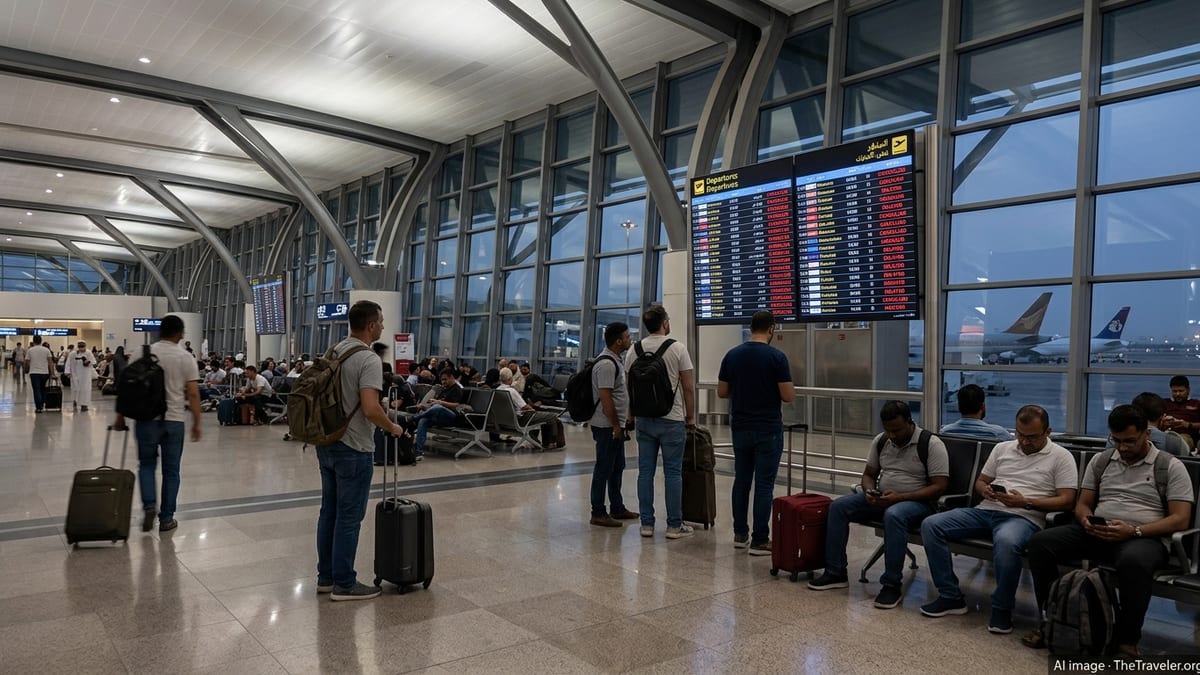
Nine Cancellations Underscore Fragile Gulf Flight Network
Reports from airline schedules and airport departure boards indicate that Gulf Air and Flydubai have withdrawn at least nine planned departures and arrivals on core Muscat routes in recent days, including Muscat to Manama and Muscat to Dubai. The affected flights span both point to point services and onward connections that typically feed wider networks across the Gulf, South Asia and Europe.
The cancellations come at a sensitive moment for regional aviation, as carriers attempt to rebuild operations following waves of airspace closures and missile and drone strikes affecting hubs in the United Arab Emirates, Bahrain and Qatar since late February 2026. Industry advisories describe a patchwork of restrictions that continues to force detours, schedule cuts and last minute changes, with Muscat increasingly used as a diversion and resilience hub.
For Oman based travelers, the loss of multiple daily options on the Muscat Manama and Muscat Dubai corridors effectively reduces access to two of the Gulf’s most important connecting hubs. Travelers who would normally rely on Gulf Air for Bahrain connections or Flydubai for Dubai links are finding fewer same day alternatives, higher fares on remaining services and longer overall journey times.
Regional Security Crisis Continues To Hit Airline Schedules
Publicly available conflict tracking and aviation safety data show that the latest wave of cancellations is rooted in the wider security crisis that has unsettled Gulf airspace since late February. Missile and drone strikes targeting infrastructure in the United Arab Emirates and neighboring states prompted temporary airspace closures, ground stops and extensive schedule reductions by major carriers including Emirates, Flydubai and others.
Client advisories issued to corporate travelers earlier this month described “ongoing Middle East airspace closures” and detailed how airlines were rerouting around sensitive zones, in some cases suspending entire routes where detours were not operationally or commercially viable. In parallel, analysis from aviation consultancy briefings highlighted Muscat International Airport’s role as an alternate gateway, taking in diversions while neighboring hubs dealt with direct impacts on runways, fuel facilities and terminal operations.
While some UAE airports have since reported a limited resumption of flights, schedules remain heavily constrained. Low cost and full service carriers alike have been cautious in reintroducing services that rely on overflight permissions or destination airports still operating under tightened security and capacity caps. The decision by Gulf Air and Flydubai to pull multiple Muscat rotations reflects that continued volatility and the operational risk of sudden route closures.
Passengers Across Oman Face Isolation And Patchwork Alternatives
For passengers on the ground in Oman, the immediate effect is a sense of isolation from key Gulf gateways. Social media posts and traveler forums from early March describe a confusing picture at Muscat International Airport, with some long haul and regional flights operating while others are repeatedly delayed, rescheduled or cancelled at short notice. Travelers report fully booked remaining services and rapidly rising fares on still active routes.
With Gulf Air’s Muscat Manama corridor trimmed and Flydubai’s Muscat Dubai frequencies reduced, passengers are increasingly pushed toward Oman Air and other carriers for access to the wider region. However, those airlines are themselves operating within the same constrained airspace environment, and some have rerouted via longer paths to avoid sensitive zones, adding hours to journey times and complicating connections.
In some cases, travelers trying to leave or reach Oman are piecing together multi leg journeys via secondary cities, using a combination of ground transport to UAE airports, regional low cost carriers, and long haul flights from alternative hubs. Reports from online travel communities reference bus connections between the UAE and Muscat, ad hoc rebookings via South Asian and Southeast Asian gateways, and growing reliance on Muscat as a safe staging point for onward travel when Gulf hubs face temporary closures.
Gulf Air And Flydubai Policies Add To Planning Uncertainty
In the midst of the changing schedules, booking and refund rules have become a critical factor. Publicly available customer updates indicate that Gulf Air has widened its cancellation and change flexibility for certain departures through late March, allowing some travelers to alter plans without standard penalties. At the same time, affected customers note that non refundable tickets and complex itineraries can still pose challenges when trying to secure full refunds or seamless rebookings.
Flydubai, which has been operating a reduced network since the height of the crisis, has advised customers in public updates and reposted notices to regularly check flight status and ensure contact details are up to date for schedule changes. Travelers sharing experiences online describe call centers and airport desks under heavy pressure, with some preferring to manage changes digitally where possible to avoid long queues and limited staff capacity.
Both airlines are balancing commercial pressures with operational uncertainty. Restoring full Muscat connectivity to Manama, Dubai and onward destinations requires not only stable security conditions but also predictable access to overflight corridors, ground handling resources and crew scheduling. Until those factors align, the pattern of selective cancellations and limited resumptions is likely to persist, keeping passengers in a state of cautious planning rather than confident booking.
What Oman Based Travelers Should Watch In The Coming Days
Travel management advisories recommend that passengers in Oman treat all near term Gulf itineraries as subject to change, particularly those involving transit through Dubai, Manama, Doha and Abu Dhabi. Travelers are urged to monitor airline notifications closely, verify the status of both outbound and inbound legs, and consider holding flexible or refundable tickets where possible, even at higher upfront cost.
Experts tracking the situation suggest that Muscat will remain an important alternative hub while other Gulf airports continue phased restarts under heightened security. This may bring further schedule adjustments as airlines rebalance fleets and crew toward routes that can operate reliably under current constraints. Oman based travelers could see additional ad hoc services appear on some days and disappear on others, as carriers respond to rapidly evolving demand and operational permissions.
For now, the cancellation of nine key Gulf Air and Flydubai flights from Muscat underlines the fragility of regional air connectivity. Until the security outlook in the wider Gulf stabilizes and airspace restrictions ease more consistently, passengers in Oman are likely to face a travel environment defined by last minute changes, scarce seats on critical links to Manama and Dubai, and continued reliance on Muscat as both gateway and refuge within a disrupted regional network.