

More news on this day
Travelers across Iraq and the wider Gulf region are facing renewed uncertainty as a cluster of cancellations by Gulf Air and Iraqi Airways disrupts at least six flights touching Baghdad, Najaf, Bahrain, Cairo and additional regional hubs.
Get the latest news straight to your inbox!
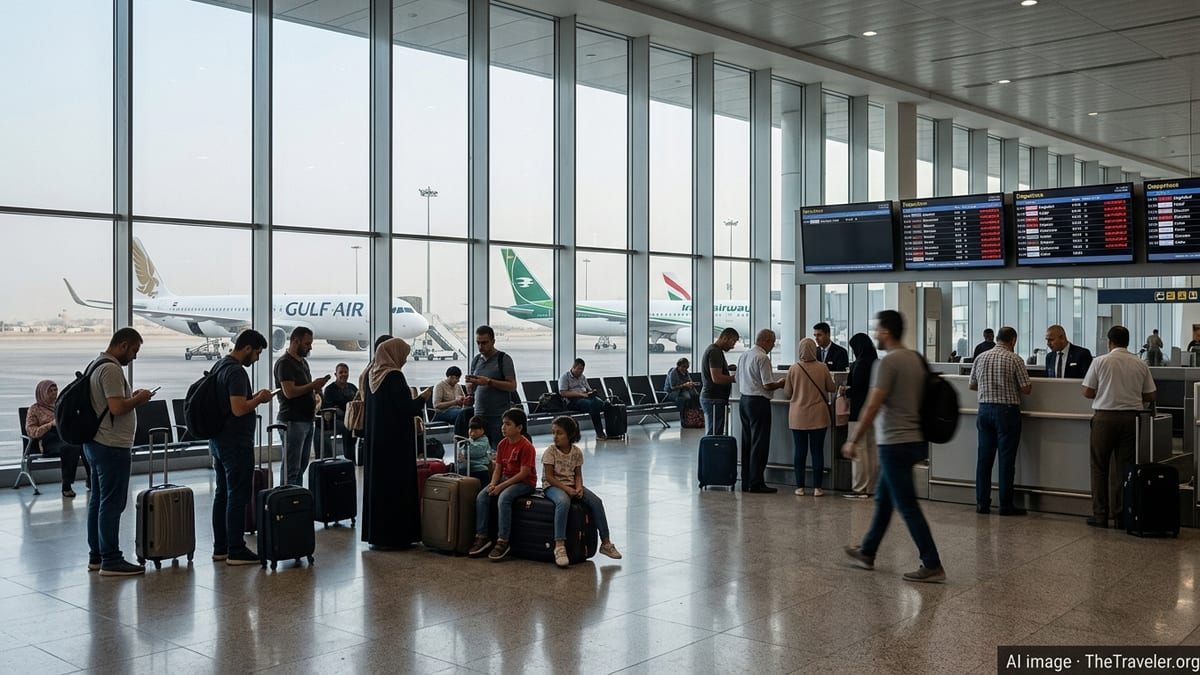
Fresh Wave of Cancellations Hits Key Middle East Corridors
Publicly available schedules and tracking data indicate that a new round of cancellations has affected services operated by Gulf Air and Iraqi Airways, compounding ongoing instability in Middle East air travel. The six grounded flights involve rotations that either originate, terminate or connect through Baghdad, Najaf, Bahrain and Cairo, with knock-on effects reported on associated routes.
The latest disruptions follow weeks of intermittent airspace restrictions and operational adjustments across Iraq and neighboring states. Regional reports describe airlines repeatedly revising timetables, shortening operating windows and, in some cases, suspending select routes on short notice as conditions evolve.
While the total number of affected passengers is still being assessed, the cancellations are creating particular challenges for travelers who rely on Baghdad and Najaf as primary gateways to and from Iraq. Many itineraries through Bahrain and Cairo have also been impacted, as both airports serve as popular connection points for journeys between Iraq, the Gulf and North Africa.
Both Gulf Air and Iraqi Airways continue to publish schedule updates and advisories, but same-day changes remain possible. Industry observers note that the pattern of rolling cancellations is making it difficult for travelers to predict which services will operate as planned.
Routes Impacted: Baghdad, Najaf, Bahrain and Cairo
The current wave of disruption includes multiple point-to-point and connecting services linking Iraq with Bahrain and Egypt. According to published coverage and timetable data, the six cancellations involve flights serving Baghdad International Airport and Najaf International Airport, together with services routed through Bahrain International Airport and Cairo International Airport.
Baghdad remains one of the most affected nodes, with Iraq’s capital acting as both an origin and transit point for regional and long-haul itineraries. When a Gulf Air or Iraqi Airways rotation into or out of Baghdad is cancelled, passengers on onward connections often face rebooking challenges, longer layovers or unplanned overnight stays.
Najaf, a major religious travel hub, is also experiencing ripple effects. The city’s airport typically handles high volumes of regional pilgrims and visiting families, many of whom route via Bahrain or Cairo to reach secondary destinations in the Gulf, North Africa or Europe. Even a small cluster of cancellations can displace hundreds of travelers in peak periods.
At the same time, Bahrain and Cairo are handling diverted and rescheduled traffic from multiple carriers across the region. Adjustments by Gulf Air, as Bahrain’s national airline, can quickly alter the balance of available seats on popular connection banks, while Iraqi Airways’ changes influence capacity into and out of Iraq’s main cities.
Regional Instability Continues to Weigh on Airline Operations
The cancellations come against the backdrop of wider regional instability that has affected airspace over parts of the Gulf and Iraq in recent weeks. Open-source reporting describes periods of restricted flight corridors, rerouting around certain areas and temporary suspensions of commercial services by several Middle Eastern carriers.
In this context, Gulf Air and Iraqi Airways are operating within a complex and shifting operational environment. Adjustments to flight paths to avoid sensitive airspace can lengthen routes, increase fuel burn and compress aircraft utilization, sometimes forcing airlines to trim schedules or consolidate frequencies.
Aviation analysts cited in recent regional coverage suggest that carriers are prioritizing safety margins and compliance with regulatory directives when making go or no-go decisions on individual flights. As a result, cancellations may cluster on particular days or routes where airspace constraints, crew duty limits and airport slot availability intersect.
The broader situation has also affected airline network planning. Some carriers have introduced short-term capacity on alternative corridors, while others, including Gulf Air and Iraqi Airways, have focused on maintaining core routes and selectively suspending services judged to be operationally vulnerable.
Knock-On Effects for Passengers and Travel Agencies
For travelers, the six cancelled flights represent more than a series of isolated schedule adjustments. Reports from booking platforms and travel forums highlight a growing number of disrupted itineraries, especially for passengers who built complex journeys around connections in Bahrain or Cairo.
Travel agencies serving Iraqi, Gulf and diaspora communities are contending with a spike in rebooking requests as customers seek new routings that avoid potential chokepoints. According to publicly available information from industry intermediaries, some passengers are opting for alternative hubs in the wider region, accepting longer travel times in exchange for a perception of greater schedule reliability.
Refunds, credits and change-fee policies remain a focal point for affected customers. Recent published guidance from several Middle Eastern carriers, including Gulf Air, describes temporary flexibility measures on tickets for flights scheduled during periods of heightened disruption. However, travelers report that policy details can vary by route, fare type and booking channel, underscoring the importance of checking current conditions case by case.
Travelers connecting to long-haul services beyond the Gulf and Egypt also face additional risk, as a missed regional leg can invalidate onward segments or trigger no-show penalties if tickets are not promptly reissued. Agencies and travelers are therefore monitoring departure boards closely and encouraging early contact with airlines when disruption appears likely.
What Travelers Should Watch in the Coming Days
With operational conditions still fluid, passenger advocates and travel advisers are encouraging anyone booked on Gulf Air or Iraqi Airways services touching Baghdad, Najaf, Bahrain or Cairo to monitor their reservations frequently. Same-day and near-term cancellations may continue as airlines respond to changing airspace and operational guidance.
Publicly available information suggests that more conservative planning, such as allowing longer connection times and avoiding tight same-day links through regional hubs, may reduce the risk of severe disruption. Travelers organizing essential trips, including medical visits or time-sensitive family events, are being urged to build additional flexibility into their itineraries wherever possible.
Airlines across the Middle East are expected to refine schedules as the regional security picture evolves. If airspace restrictions ease, carriers such as Gulf Air and Iraqi Airways may gradually restore suspended frequencies, but aviation observers caution that full normalization of timetables could lag behind initial announcements.
For now, the latest cluster of six cancellations underscores how quickly conditions can shift for passengers moving through Iraq and neighboring states. The situation remains dynamic, and further updates to flight operations are likely as airlines balance safety, regulatory compliance and the pressing demand for connectivity across the region.