

More news on this day
Travel across Iraq faced fresh disruption as at least six Gulf Air and Iraqi Airways flights were cancelled on Saturday, affecting key routes linking Baghdad, Najaf, Bahrain, Cairo and additional regional destinations amid continuing airspace restrictions and security tensions.
Get the latest news straight to your inbox!
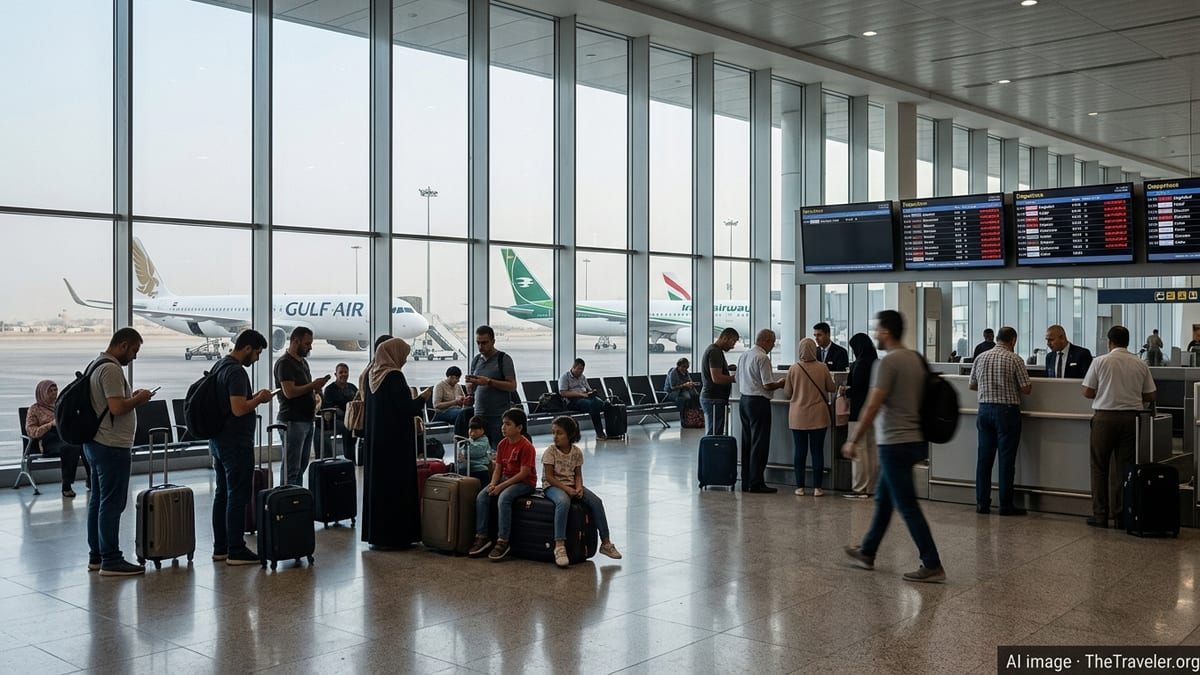
Regional Tensions Feed Into New Wave of Flight Cancellations
Published coverage on March 21 indicates that the latest round of cancellations involving Gulf Air and Iraqi Airways is part of a broader pattern of Middle East airspace restrictions that has intensified since late February. Several states in the region, including Iraq and Bahrain, have implemented periodic limitations on civil aviation as military activity and security alerts continue.
Advisories from travel management companies and aviation risk consultancies in recent weeks describe a patchwork of closures, restricted corridors and sudden operational pauses across multiple countries. These measures have already led to widespread schedule changes for major Gulf and regional carriers, and the new cancellations in and out of Iraq extend that disruption into the busy spring travel period.
Although specific flight numbers vary by day, the six affected services reported on Saturday cut directly into the core network that connects Iraq to neighboring hubs. The impact is particularly visible on routes between Baghdad and Bahrain, Najaf and Bahrain, as well as links from Iraq to Cairo that are frequently used by both business travelers and religious visitors.
Publicly available information suggests that airlines are reassessing risk on a rolling basis, taking into account shifting military dynamics, overflight permissions and the availability of safe diversion routes. This has made schedules less predictable, with last-minute adjustments now common on routes touching Iraqi airspace.
Baghdad and Najaf Hit as Key Iraq Gateways Face Operational Strain
Baghdad International Airport, Iraq’s primary international gateway, has been especially exposed to regional turbulence. Earlier in March, reports highlighted temporary disruptions and delays around Baghdad as airlines rerouted or suspended services during heightened security alerts. The latest cancellations add to that strain, reducing connectivity at short notice for passengers already navigating a volatile operating environment.
Religious city Najaf, a major entry point for Shia pilgrims from across the region, has also been caught up in the latest schedule cuts. Gulf Air and Iraqi Airways services to and from Najaf are often timed to meet demand for religious tourism, as well as connecting traffic through Gulf hubs to wider Asia and Europe. The cancellation of Najaf-bound flights limits options for travelers who had structured trips around specific religious observances and fixed hotel or tour arrangements.
For both Baghdad and Najaf, the combination of restricted airspace and reduced frequencies has narrowed the pool of alternative routes. Travelers who would ordinarily switch between regional carriers or nearby hubs are encountering the same constraints across multiple airlines, as carriers respond in broadly similar ways to evolving risk assessments.
Airport operational updates circulating in recent days point to extended check-in times and evolving security protocols, further complicating journeys even for flights that continue to operate. Passengers are being encouraged by many travel advisers to arrive earlier than usual and to monitor departure boards for late changes.
Bahrain and Cairo Connections Disrupted as Gulf Air Adjusts Operations
Bahrain’s role as a transfer and business hub means that any reduction in Gulf Air services quickly reverberates through regional travel patterns. Recent community reports and advisory notes have already described Gulf Air’s temporary operational adjustments, including the use of alternative airports and expanded refund or rebooking options for March travel.
The cancellation of flights linking Bahrain with Baghdad and Najaf affects not only point-to-point traffic but also onward connections via Bahrain to destinations such as London, Mumbai and Southeast Asia. Gulf Air’s network is structured around timed banks of flights in and out of Bahrain, so the loss of Iraqi feeder services can lead to missed long-haul connections and complex rebooking scenarios for affected travelers.
Cairo, another key node for travel between Iraq, the wider Middle East and North Africa, has also been drawn into the latest disruption. Cancellations on routes between Iraq and the Egyptian capital add pressure to an already busy airport that has been managing wider regional knock-on effects from airspace restrictions and reroutings.
Travel forums and passenger accounts in recent days highlight congestion at airline customer-service desks in Bahrain and Cairo, as travelers seek clarification on rerouting options, hotel arrangements and refunds. While many carriers have introduced temporary flexibility policies, the volume of change requests is placing additional strain on call centers and airport agents.
Iraqi Airways Faces Further Headwinds Amid Ongoing Compliance Push
The cancellations involving Iraqi Airways come at a sensitive time for the national carrier, which has been working to rebuild its international reputation and expand its network after years of sanctions, conflict and safety-related restrictions. Aviation industry publications over the past year have detailed efforts by Iraqi authorities and the airline to complete safety audits, upgrade procedures and move toward a fuller return to European and regional markets.
In this context, the latest disruptions underscore how external security and geopolitical factors can quickly override commercial planning. Even as Iraqi Airways pursues fleet modernization and regulatory compliance, its operations remain exposed to decisions on airspace access, regional conflict dynamics and the risk thresholds adopted by foreign airports and insurers.
Domestic travelers relying on Iraqi Airways for links between Baghdad, Najaf and other Iraqi cities, as well as for international services to nearby capitals, now face increased uncertainty. With at least some Iraqi Airways flights among the six cancellations, passengers must pivot to a smaller field of alternatives at short notice, often at higher fares.
Industry observers note that recurring suspensions and rapid timetable changes can complicate longer-term route development and partnership plans. Codeshares, interline agreements and tour-operator packages are particularly sensitive to reliability metrics, and repeated disruptions may slow efforts to deepen cooperation with foreign carriers.
What Passengers Can Expect in the Coming Days
Available advisories suggest that airspace and scheduling conditions across Iraq and neighboring states are likely to remain fluid in the short term. As military and political developments evolve, civil aviation regulators may adjust restrictions with little warning, prompting further tactical cancellations or reroutings by airlines such as Gulf Air and Iraqi Airways.
Passengers booked on upcoming flights touching Baghdad, Najaf, Bahrain or Cairo are being encouraged by many travel consultancies to track their bookings closely through official airline channels and airport information feeds. Given the pace of change, same-day or even last-minute modifications are possible, particularly for flights relying on specific corridors through contested airspace.
Travel-risk firms continue to recommend that passengers retain flexibility in their plans where possible, including refundable accommodation and adaptable ground transport arrangements. Many carriers in the region, including Gulf Air, have in recent weeks adopted temporary waivers on change fees or expanded refund options for travel in March, although terms differ by airline and ticket type.
For now, the six new cancellations affecting routes between Iraq, Bahrain, Cairo and additional regional points serve as another reminder of how quickly Middle East aviation conditions can shift. Until airspace restrictions ease on a sustained basis, travelers can expect a higher likelihood of disruption on journeys that cross or connect through Iraq and its neighboring air corridors.