

More news on this day
Major schedule changes by Gulf Air, Qatar Airways and other carriers are disrupting seven key routes in and out of Singapore, hitting links to Bahrain, Doha and Manila as regional airspace closures ripple across global travel plans.
Get the latest news straight to your inbox!
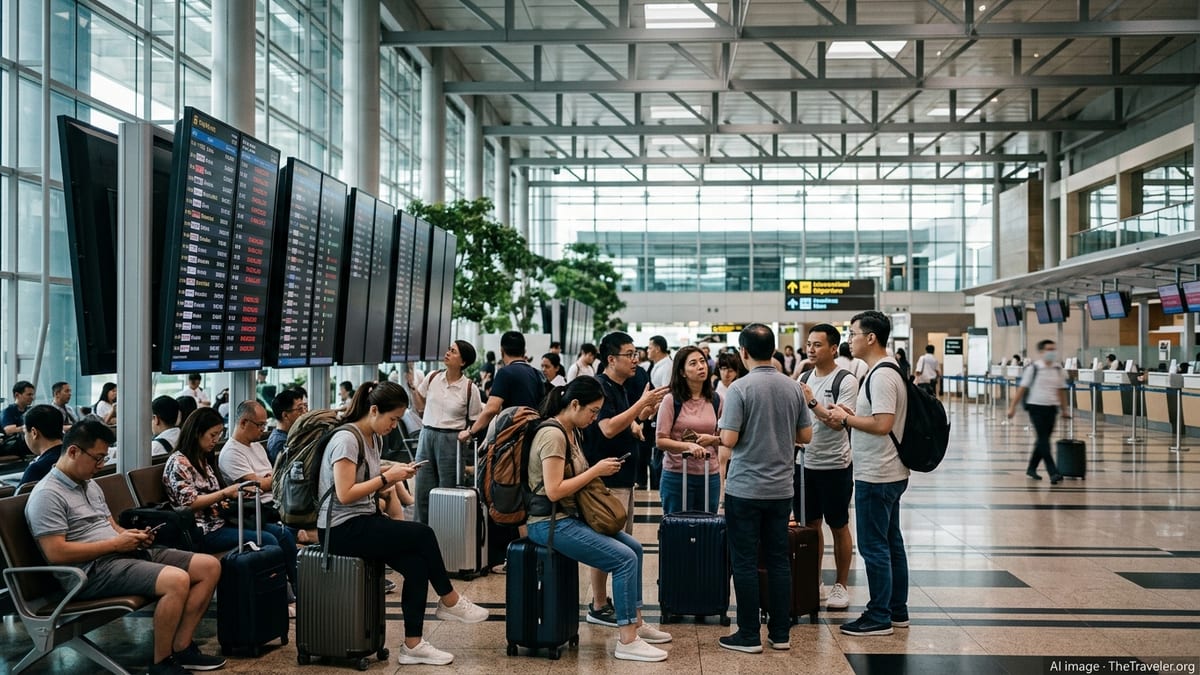
Seven Singapore Flights Scrapped As Regional Closures Deepen
Published coverage and live schedule data indicate that at least seven regularly scheduled flights touching Singapore have now been cancelled or indefinitely suspended, primarily affecting connections to Bahrain, Doha and Manila. The disruptions are tied to ongoing closures of airspace across parts of the Gulf, which have forced airlines to either ground aircraft or send services on lengthy detours.
Gulf Air’s links between Bahrain and Singapore are among the most visibly affected. Flight-tracking information shows that the airline’s GF165 and GF166 services between Bahrain International Airport and Singapore Changi have been repeatedly cancelled in recent weeks, and Bahrain’s wider airspace shutdown has now led to a broader suspension of scheduled operations.
Qatar Airways services routed through Doha have also faced a rolling wave of cancellations and retimings affecting Singapore-bound itineraries. Passengers connecting between Southeast Asia and Europe via Doha report seeing flights to and from Changi removed from schedules or shifted onto alternative routings, with some itineraries rebooked through other Asian hubs instead of Qatar.
In parallel, disruptions on Manila-linked services are emerging as Gulf carriers adjust their networks. Reports describe Doha–Manila and Bahrain–Manila sectors being cancelled or rerouted, undermining previously reliable one-stop options between Singapore and the Philippines that relied on Gulf hubs for onward connections.
Gulf Air Suspends Bahrain Network, Cutting Direct Singapore Link
The most clear-cut change concerns Bahrain’s flag carrier. Public statements and regional coverage note that Gulf Air has paused all inbound, outbound and overflight operations as Bahrain’s civil aviation authorities keep national airspace closed. The airline has framed the move as a temporary safety measure but has not yet provided a firm restart date.
Before the suspension, Gulf Air operated the only nonstop flights between Bahrain International Airport and Singapore Changi, a roughly eight-hour link that functioned as a niche but important corridor for business travellers and expatriates. With Bahrain’s airspace now effectively shut, that nonstop option has disappeared from booking systems, forcing travellers to route via other hubs in the Middle East or Asia.
Some aircraft have reportedly been repositioned out of Bahrain to nearby airports to maintain operational flexibility and allow limited special services. Separate regional reporting points to Gulf Air mounting occasional repatriation and relief flights from alternative gateways, but these do not restore the previous regular timetable to Singapore.
For passengers who had already booked Bahrain–Singapore trips, the suspension translates into refunds, date changes or complex reroutings. Travel agents and airline channels are advising customers to check booking records frequently, as flights that still appear on long-range timetables can be pulled closer to departure while the airspace shutdown continues.
Qatar Airways Cuts and Reroutes Doha Connections Via Singapore
Qatar Airways has not issued a single consolidated list of cancelled Singapore flights, but publicly available information and traveller accounts point to a pattern of rolling adjustments across its network. Multiple passengers with March itineraries from Europe and the Middle East to Singapore via Doha report seeing their Doha–Singapore sectors cancelled or heavily retimed.
Some travellers have been rebooked onto alternative routes that bypass Doha altogether, including itineraries on partner airlines via hubs such as Bangkok, Manila and other Southeast Asian gateways. Others have obtained refunds and secured new tickets on competing carriers that are not constrained by Gulf airspace closures in the same way.
Doha’s Hamad International Airport, usually one of the region’s busiest transit hubs, has seen sustained disruption since late February as airspace closures and regional tensions triggered widespread schedule cuts. Analysts quoted in recent coverage suggest that Qatar Airways is prioritising certain long-haul markets while trimming or suspending other routes, which can leave connecting services to Singapore vulnerable to last-minute adjustments.
For Singapore-bound passengers starting their journeys in Europe or North America, these changes can turn a straightforward one-stop trip via Doha into a multi-stop routing through several Asian hubs, with additional travel time and a greater risk of missed connections.
Knock-On Impact For Manila Links And Regional Connectivity
The turbulence in Gulf operations is echoing along routes to and from Manila, an important labour and leisure market closely tied to both the Middle East and Southeast Asia. Coverage of recent days describes multiple Manila–Doha and Manila–Bahrain flights being cancelled, curtailed or diverted as airlines respond to evolving restrictions and operational challenges.
Those changes matter for Singapore because many travellers between the Philippines and the wider world rely on triangular routings that include Changi and Gulf hubs. When a Manila–Doha or Manila–Bahrain leg disappears, it can instantly unravel a multi-city itinerary that also features Singapore, forcing travellers to reshuffle plans at short notice.
Some passengers report being rerouted onto alternative services via Manila, with onward travel to Singapore operated by different carriers. Others are opting to abandon Gulf connections altogether in favour of point-to-point flights between Singapore and Philippine cities, even when this involves higher fares or less flexible conditions.
Industry observers note that Southeast Asian hubs such as Singapore, Bangkok and Kuala Lumpur are seeing an uptick in transfer traffic as airlines and passengers reconfigure journeys to avoid the most heavily restricted parts of Middle Eastern airspace. While that shift helps keep some trips viable, it also concentrates pressure on already busy regional schedules.
What Travellers Through Singapore Should Expect Now
With Bahrain’s airspace still closed and Qatar Airways reshaping its Doha operations, the overall picture for Singapore-bound itineraries involving Gulf stops remains fluid. Timetables can change with only a few days’ notice, and flights that appear bookable may later be withdrawn or rerouted as airlines react to evolving restrictions and operational constraints.
Travellers with upcoming trips linking Singapore to Bahrain, Doha or Manila through Gulf hubs are experiencing longer journey times, extended layovers and, in some cases, unexpected overnight stays. Published guidance from airlines and airports consistently recommends checking booking references regularly, monitoring email and app notifications and allowing extra time for connections where possible.
Travel-management firms and passenger-rights organisations highlight that, in many jurisdictions, travellers on cancelled flights are entitled to refunds or alternative transport, though the exact rules vary by ticket type and departure point. In practice, rebooking options can be limited during peak disruption, particularly on popular routes between Europe and Asia that once relied heavily on Gulf transit hubs.
For now, the seven cancelled or suspended Singapore-linked flights represent a visible sign of a wider reshaping of air corridors between Asia, the Middle East and Europe. Until clearer timelines emerge for the reopening of key Gulf airspaces, passengers using Singapore as a gateway should be prepared for continued uncertainty on routes touching Bahrain, Doha and Manila.