

More news on this day
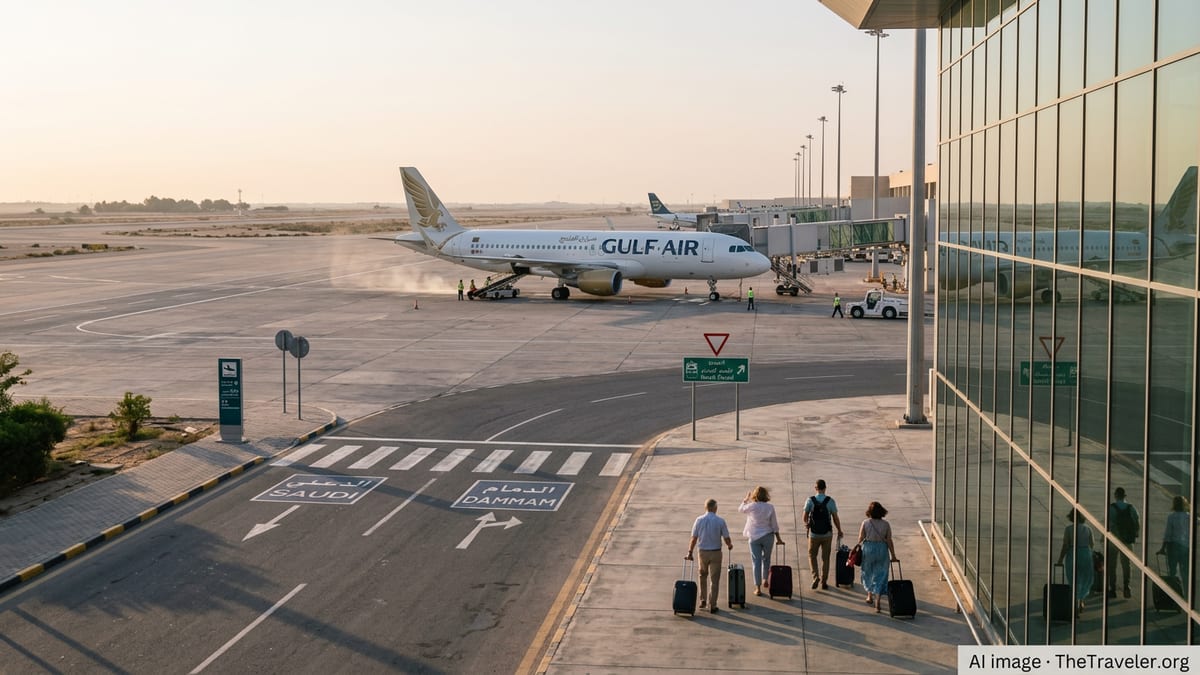
Gulf Air has introduced temporary flight changes, including new routings via King Fahd International Airport in Dammam, after the closure of Bahrain’s airspace led to widespread disruption of services through its Manama hub.
Get the latest news straight to your inbox!
Regional Airspace Disruptions Force Rapid Rerouting
The closure of Bahrain’s airspace in late February 2026 has added to a broader wave of aviation disruption across the Middle East, with multiple states restricting or suspending overflight due to regional tensions and security concerns. Publicly available operational updates describe Bahrain’s airspace and airport operations as temporarily suspended, placing immediate pressure on Gulf Air’s hub-and-spoke network through Bahrain International Airport.
Industry and aviation operations reports indicate that Bahrain’s shutdown has coincided with restrictions in nearby Kuwait and Qatar, while Saudi Arabian airports, including Dammam, remain open under various Gulf-facing airspace limitations. Airlines serving the region have been forced to cancel, reroute or consolidate services, and passengers are being encouraged to anticipate last-minute changes, longer journey times and constrained seat availability on alternative routes.
Against this backdrop, Gulf Air has begun to adapt its schedules, using neighboring gateways to keep some passenger flows moving. Temporary routings via Dammam are emerging as one of the most significant adjustments for travelers who would normally connect through Bahrain.
Gulf Air’s Temporary Use of Dammam as a Gateway
According to publicly shared travel updates and passenger communications, Gulf Air is now operating a limited number of temporary commercial flights via King Fahd International Airport in Dammam, on Saudi Arabia’s Eastern Province coast. These services are being used as a workaround while Bahrain’s airspace remains closed, allowing the airline to maintain some connectivity for long-haul and regional passengers who would otherwise be stranded.
Reports from travelers and regional aviation trackers suggest that Gulf Air has focused these temporary operations on key origin and destination markets, including routes that typically rely on Bahrain as a central connection point. In some cases, passengers who were scheduled to connect in Manama are being rebooked to start or continue their journeys from Dammam instead, subject to seat availability and local entry requirements.
The airline’s use of Dammam is described as a stopgap measure rather than a full relocation of its hub. Frequencies remain significantly reduced compared with normal Bahrain-based operations, and schedules are being adjusted with limited advance notice as regional airspace conditions evolve.
Rebooking, Refunds and What Passengers Can Expect
Updated ticketing bulletins and travel advisories indicate that Gulf Air has put in place a set of temporary rebooking policies for passengers affected by the Bahrain airspace closure. For some departure dates, passengers are being offered at least one free change, with penalties and service charges waived and, in certain instances, fare differences also removed when travel is rebooked within a defined time window from the original departure date.
Separate public communications cited by travelers suggest that customers with travel dates falling within the main disruption period have the option to rebook their journeys to later dates or to request refunds, depending on fare conditions and the type of ticket purchased. These policies appear to be time-limited, with specific end dates for fee-free changes and for the completion of new travel.
Passengers report that rebooking is not always straightforward in practice, with high demand for limited seats on alternative routings and occasional difficulties using online manage-booking tools. Many travelers are turning to customer-service channels, travel agents and airport ticket desks to obtain updated itineraries, including potential reroutes via Dammam or on partner airlines where available.
Given the fluid situation, aviation observers advise that passengers monitor their booking status regularly, check for schedule changes close to departure and allow substantial extra time for airport formalities and possible ground transfers between Bahrain and Saudi Arabia.
Travel via Dammam: Logistics and Ground Transfers
Reports shared by affected travelers in the region describe a developing pattern in which some Gulf Air customers are transported by road from Bahrain to Dammam to board outbound flights. The two cities are linked by the King Fahd Causeway, which normally supports heavy commuter and commercial traffic between Bahrain and Saudi Arabia. During the current disruption, this land corridor is serving as a practical bridge to an operational international airport while Bahrain’s airspace remains off-limits.
Accounts of recent journeys indicate that passengers are being given specific reporting times and meeting points in Bahrain before being moved in organized groups to King Fahd International Airport. Travel times can vary depending on causeway traffic volumes and border formalities, and passengers are being cautioned to expect extended overall journey durations compared with standard itineraries through Bahrain International Airport.
While Dammam’s airport itself remains operational, the wider pattern of regional airspace restrictions can still affect departures and arrivals. Travelers using Dammam as a temporary gateway are therefore advised, in publicly available guidance, to remain aware that onward flights may be subject to delay or route changes at short notice as airlines navigate restricted corridors and altered flight paths.
These logistical complexities underscore the importance of maintaining up-to-date contact details with airlines and booking agents, enabling carriers to communicate last-minute adjustments, transport arrangements and documentation requirements for cross-border ground transfers.
Planning Ahead While Bahrain Airspace Remains Closed
With no firm public timeline yet for the full reopening of Bahrain’s airspace, aviation analysts and travel industry briefings suggest that disruption to Gulf Air’s normal schedule is likely to continue in the near term. Temporary measures such as reduced frequencies, rerouted services via Dammam and one-off repatriation-style flights may remain part of the operating picture until regional security assessments support a broader resumption of standard operations.
For travelers who have not yet started their journeys, general travel-industry guidance points to several practical steps. These include checking the latest airline travel advisories before purchasing tickets, favoring itineraries that allow for flexibility, and confirming visa or entry requirements if a reroute through Dammam or another regional gateway becomes necessary.
Passengers with existing bookings on Gulf Air are being encouraged, in public-facing updates, to review the most recent rebooking and refund options associated with their travel dates. Those holding time-sensitive tickets, such as for study start dates, medical appointments or major events, may wish to explore alternative routings on other carriers that do not rely on Bahrain overflight, even if this involves additional connections.
As the situation evolves, observers note that Gulf Air’s use of Dammam illustrates how Gulf carriers are leveraging nearby airports and cross-border infrastructure to preserve a degree of connectivity in the face of unprecedented regional airspace closures. Travelers are likely to face continued inconvenience and uncertainty, but new routings via Dammam provide a partial lifeline for those needing to move in and out of the region while Bahrain’s skies remain closed.