

More news on this day
Gulf Air is temporarily rerouting some of its flagship services through King Fahd International Airport in Dammam, Saudi Arabia, after the closure of Bahrain’s airspace forced sweeping changes to flights linking Manama with London, Mumbai and Bangkok.
Get the latest news straight to your inbox!
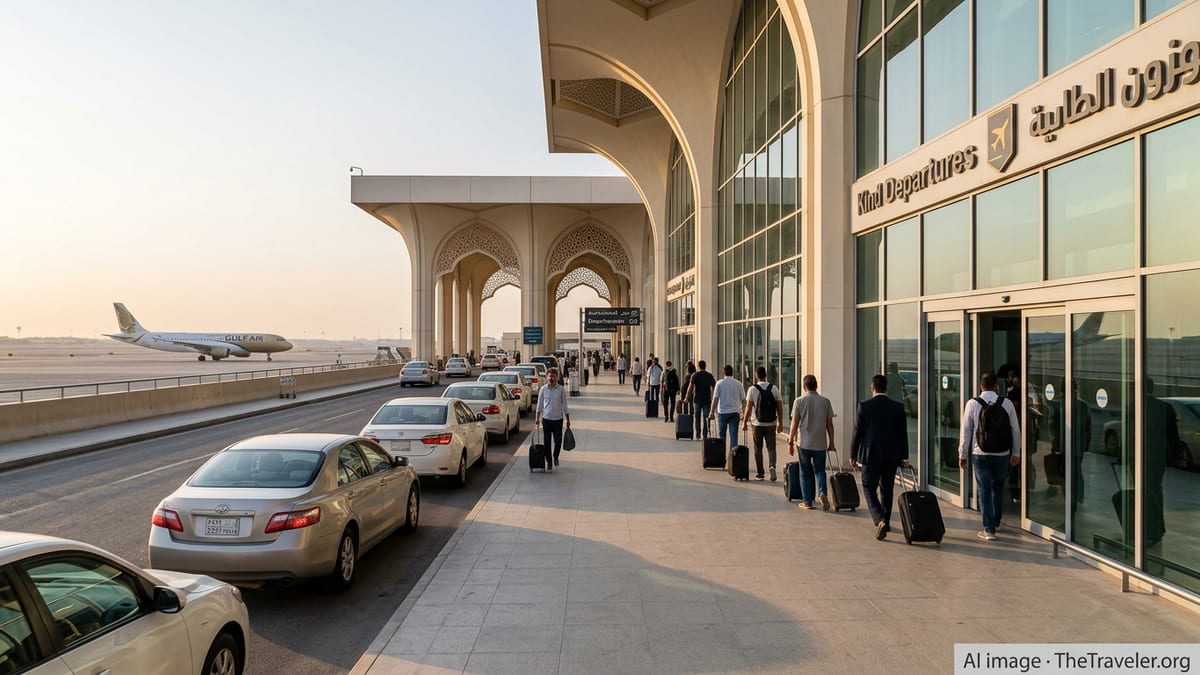
Emergency Rerouting Through Saudi Arabia
Publicly available travel updates indicate that Gulf Air has begun using Dammam’s King Fahd International Airport as an interim operating point for a limited number of flights normally routed via Bahrain. The shift follows the closure of Bahrain’s airspace in early March 2026, part of a wider regional aviation disruption connected to escalating security tensions in the Gulf. With Bahrain International Airport effectively shut to routine commercial traffic, the national carrier has turned to neighbouring Saudi Arabia to keep some long haul links open.
Reports shared by passengers and airport staff on social platforms describe Gulf Air arranging ground transfers from Bahrain to Dammam so that travellers can join special services operating from Saudi territory. These flights have been highlighted in community updates as critical options for those trying to reach key destinations such as London, Mumbai and Bangkok while regular schedules remain suspended. The arrangements are described as limited in number and subject to short notice changes as conditions evolve.
Operational summaries from logistics and freight operators also show King Fahd International Airport among the few major Gulf gateways still handling international movements under constrained airspace conditions. While Saudi airspace bordering the Gulf is reported as restricted, Dammam’s airport remains open, making it one of the closest viable alternatives for airlines that usually hub in Bahrain.
Impact on Routes to London, Mumbai and Bangkok
The rerouting decision is particularly significant for passengers booked on Gulf Air’s high demand connections from Bahrain to London, Mumbai and Bangkok. These routes form part of the carrier’s core long haul portfolio and are widely used by business travellers, students and leisure passengers transiting through its Manama hub. Since the airspace closure, many of these travellers have faced cancellations, rolling delays and uncertainty around onward connections.
According to publicly shared rebooking guidance, some London services traditionally departing Bahrain have been reconfigured to depart from Dammam instead, with eligible passengers offered seats on these supplemental flights. Online posts from travellers based in Bahrain outline being advised to travel by road to Saudi Arabia, clear border formalities and then board Gulf Air services to London from King Fahd International Airport.
Similar patterns are emerging for routes serving South and Southeast Asia. Individuals holding tickets on Gulf Air itineraries between Mumbai and European cities via Bahrain report being informed of schedule changes and potential use of Dammam as a temporary staging point. Travel discussion threads also reference limited opportunities for passengers bound for Bangkok to secure space on specially arranged departures from Saudi Arabia while routine Bahrain flights remain suspended.
For many customers, the changes mean longer journey times, additional ground segments and more complex border crossings. However, for those needing to reach study, work or medical commitments in London, Mumbai or Bangkok, the redirected flights via Dammam are being treated as a vital stopgap while the regional airspace situation stabilises.
Regional Aviation Disruption and Safety Context
The Gulf Air adjustments are unfolding against a backdrop of broader airspace closures and reroutings across the Middle East. Aviation summaries compiled by international operators describe Bahrain among several states that have restricted commercial overflights following heightened security concerns linked to the ongoing conflict involving Iran and neighbouring countries. Nearby airspaces over parts of Qatar, Kuwait, Iraq and sections of the Gulf are also described as constrained or closed for regular traffic.
In response, major carriers across the region have reduced or suspended flights, diverted aircraft to alternative hubs and redesigned long haul routings to avoid affected corridors. Flight tracking data and airline advisories show services to and from Europe, South Asia and Southeast Asia being pushed south or west, with additional fuel stops and more circuitous paths adding complexity and cost to operations.
Gulf Air, with its primary hub located in Bahrain, faces particular exposure to these disruptions. Publicly available briefings on the situation describe the airline as operating only a fraction of its normal schedule, focusing on evacuation-style flights and limited commercial services where safe air corridors and airport capacity exist. The tactical use of Dammam as a temporary point for select London, Mumbai and Bangkok flights fits within this pattern of constrained but targeted operations.
What Affected Travelers Are Being Told to Do
Passenger experiences shared online suggest that those booked on Gulf Air services over the coming days are being encouraged to check their flight status frequently and remain in contact with the airline or their travel agent. Many travellers report that original itineraries via Bahrain no longer appear on departure boards or booking systems, even though alternative options via Dammam may be made available at short notice as approvals and aircraft positioning allow.
Some Bahrain-based passengers describe receiving instructions to register interest in special flights via contact centres or official social media channels so they can be allocated seats on limited Dammam departures. Others indicate that they have been offered date changes, refunds or the option to reroute on different carriers once more stable paths to their final destination become available.
Travel forums and advisory posts consistently urge passengers with imminent journeys to London, Mumbai or Bangkok to allow extra time for any overland transfer to Saudi Arabia, carry all relevant travel and visa documentation, and be prepared for evolving security checks along the way. The situation is being portrayed as fluid, with the possibility that additional Gulf Air services could be added or withdrawn as regulators review airspace safety and regional tensions shift.
Outlook for Bahrain and Dammam Operations
Logistics briefings monitoring Middle East airspace note that Bahrain International Airport remains closed to normal traffic as of mid March 2026, with no firm public timeline for a full reopening. Industry analysts quoted in regional coverage suggest that any restoration of Gulf Air’s Bahrain hub operations will depend on sustained improvements in the security environment and the establishment of reliably safe flight corridors in and out of the Gulf.
Until that occurs, Dammam is expected to retain an outsized role in the carrier’s contingency planning. King Fahd International Airport’s proximity to Bahrain and its established infrastructure for international operations make it a practical focal point for temporary services. However, capacity constraints, competing demands from other airlines and the need to comply with Saudi airspace restrictions are likely to limit how many Gulf Air flights can be accommodated.
For now, the airline’s temporary shift of selected London, Mumbai and Bangkok flights to Dammam underlines how rapidly Gulf aviation patterns can be reshaped by geopolitical risk. Travelers planning to transit the region in the coming weeks are being advised, through publicly available advisories and community reports, to treat schedules as subject to change and to monitor developments closely as Bahrain works toward reopening its skies.