

More news on this day
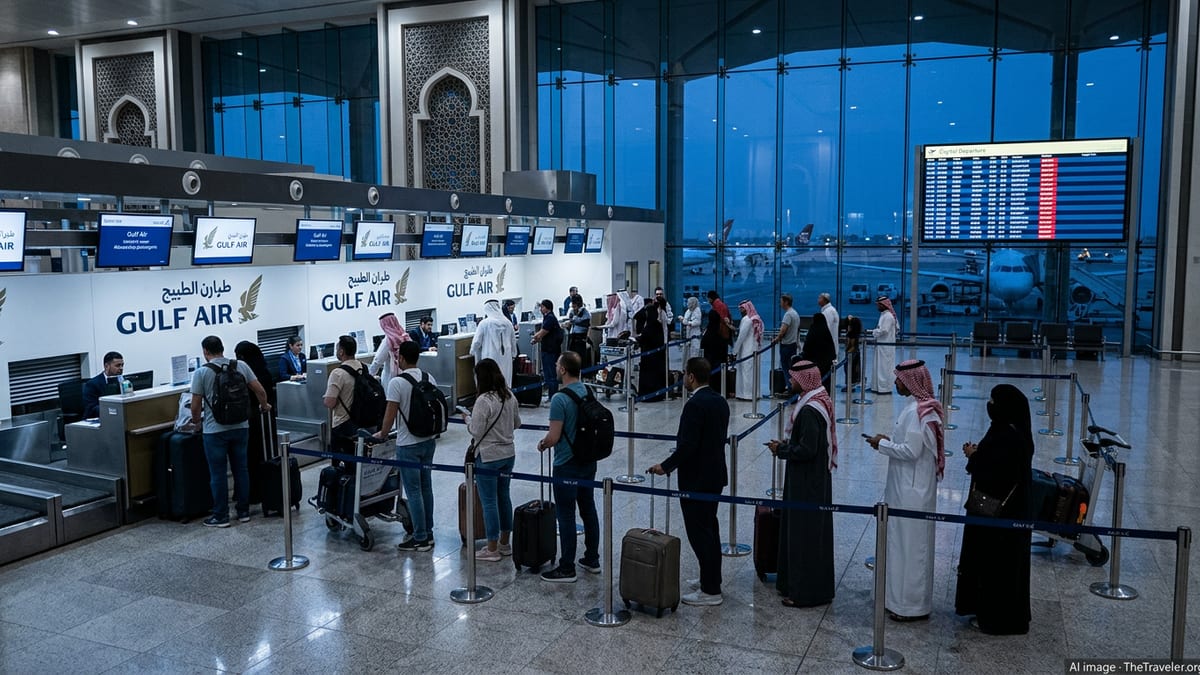
Gulf Air is channeling thousands of stranded passengers through Dammam in eastern Saudi Arabia as Bahrain’s airspace remains closed amid regional conflict, creating a complex but workable detour for tourists trying to enter or leave the Gulf.
Get the latest news straight to your inbox!
Why Bahrain’s Airspace Is Closed And How Gulf Air Responded
Bahrain’s aviation shutdown is part of a wider pattern of airspace restrictions across the Gulf following the escalation of the 2026 Iran war, which has seen missile and drone activity directed at targets in several states. Published aviation advisories for Middle East and Persian Gulf airspace describe extensive risk areas, and publicly available information shows that Bahrain’s flight information region has been subject to ongoing restrictions for commercial traffic.
According to regional coverage of the conflict, infrastructure in Bahrain has come under fire, with reported casualties and damage linked to Iranian strikes. As a result, Bahrain International Airport, the home hub of Gulf Air, has been effectively taken offline for regular passenger services, forcing the airline to disperse its fleet to safer airports in neighboring Saudi Arabia.
Publicly available travel alerts and passenger accounts indicate that Gulf Air has concentrated much of this contingency operation on King Fahd International Airport in Dammam, about 90 kilometers from Manama by road. Instead of flying into Bahrain, tourists are being routed to Dammam and then moved overland across the King Fahd Causeway when security conditions allow.
This shift has transformed Dammam from a secondary regional gateway into a critical relief hub almost overnight, with check-in, security screening, and customs functions absorbing large numbers of passengers who would normally connect through Bahrain.
How The Dammam Detour Works For Stranded Tourists
Reports from travelers and airline-facing advisories describe a system built around special Gulf Air flights into and out of Dammam, coupled with organized ground transport for Bahrain-based passengers. In practical terms, many tourists who originally booked itineraries such as “City X to Bahrain” now find themselves rebooked to Dammam, with their Bahrain segment replaced by a coach transfer.
Public discussion among Gulf Air staff and passengers suggests that repatriation-style flights from Dammam to major destinations such as London and Karachi are being assembled on a rolling basis, with travelers urged to register for available seats and wait for confirmations. Buses are then arranged from collection points in Bahrain to Dammam, where passengers clear Saudi border checks before proceeding through the airport.
Capacity remains constrained. With Gulf Air’s normal bank of hub connections out of action, flights are fewer and schedules more irregular than at the Bahrain hub. Tourists report last-minute changes, extended wait times, and overnight stays either in Bahrain or Dammam as the airline juggles aircraft, crew, and rapidly evolving airspace permissions.
Nevertheless, the Dammam bridge has become one of the few consistent options for travelers who need to get in or out of Bahrain and the wider Gulf while direct flights remain suspended, especially for those holding Gulf Air tickets issued before the crisis.
What Travelers Need To Do Before Flying
Tourists booked on Gulf Air in the coming days face a very different journey from the one they originally planned, and preparation is critical. Publicly available guidance from airlines and slot coordinators for the region stresses that all travel plans should be treated as provisional while airspace restrictions remain in place, and that passengers should expect rerouting and schedule changes on short notice.
Travelers should verify their current departure and arrival airports directly through booking tools or airline communications, checking whether Bahrain has been replaced with Dammam or another Saudi gateway. Because the Dammam routing involves crossing an international land border, passengers must also make sure their passports, visas, and any necessary transit permissions are valid for both Saudi Arabia and Bahrain, not just the original destination.
Given the likelihood of delays and re-timings, tourists are advised to build in generous buffers for onward land or air connections outside the Gulf. Published advisories emphasize the volatile security context and the potential for airspace to reopen only gradually, meaning that even once restrictions begin to lift, temporary routings through Dammam and other regional airports could remain in place for some time.
Insurance is another key consideration. Policy terms differ widely in how they treat war-related disruption and airspace closures, so travelers may need to contact their providers or review policy documents to understand what costs related to rerouting, hotels, or missed connections might be recoverable.
On The Ground In Dammam: Airport And Border Realities
For tourists who do reach Dammam, the experience differs from a standard Gulf hub transit. King Fahd International is a modern facility, but it is not configured as a like-for-like replacement for Bahrain’s long-established transfer operation. Passenger reports describe longer queues at immigration, security, and check-in counters at peak times, as Gulf Air’s displaced traffic overlaps with regular Saudi-bound travelers.
The road journey between Bahrain and Dammam runs across the King Fahd Causeway, a vital link that can itself face congestion and occasional security measures, especially during periods of heightened alert. Depending on traffic and checks, tourists have reported that the drive can range from just over an hour to several hours, turning what used to be a short airside connection in Bahrain into a multi-stage trip involving buses, waiting areas, and repeated document inspections.
Despite the strain, there are signs of increasing organization. Accounts from airline staff and travelers point to dedicated desks, holding areas, and coordinated bus convoys to move groups between Bahrain and Dammam, minimizing the risk of individuals being left behind or missing flights because of unpredictable traffic or processing times.
Even so, travelers should consider packing hand luggage with essentials such as medication, chargers, snacks, and a change of clothes, in case they are held up at the border or in Dammam longer than expected.
Regional Outlook And The Road Ahead For Gulf Air Passengers
Broader aviation analyses of the current Middle East situation underline that Bahrain’s closure is part of a wider network of suspended or restricted airspace across several Gulf and neighboring countries. Some states have already begun limited reopenings, while others maintain tight controls, reflecting both security assessments and the pace of diplomatic developments.
For Gulf Air, the immediate priority remains keeping a basic corridor of connectivity open for its core markets while safeguarding crews and passengers. The Dammam routing provides a pragmatic, if imperfect, solution that hinges on Saudi Arabia’s relative stability, the capacity of King Fahd International Airport, and the continued viability of the causeway as a road link.
For tourists, the key message is to remain flexible and informed. Routes that once seemed routine, such as transiting Bahrain on the way to Europe or Asia, now carry an added layer of uncertainty. The Dammam detour may persist even after initial airspace restrictions begin to ease, as airlines and regulators test and scale up direct services cautiously.
Until the security environment improves and Bahrain’s airspace is fully restored to normal operations, travelers using Gulf Air should assume that Dammam will continue to feature prominently in their plans, and should prepare for a journey that is longer, more complex, but still manageable with the right information and expectations.