

More news on this day
New cancellations by Gulf Air and several United Arab Emirates based carriers are intensifying travel disruption across key long haul and regional routes, with passengers on services linking Auckland, Bahrain, Lahore and other major hubs facing fresh uncertainty as the regional security crisis continues to weigh on airline schedules.
Get the latest news straight to your inbox!
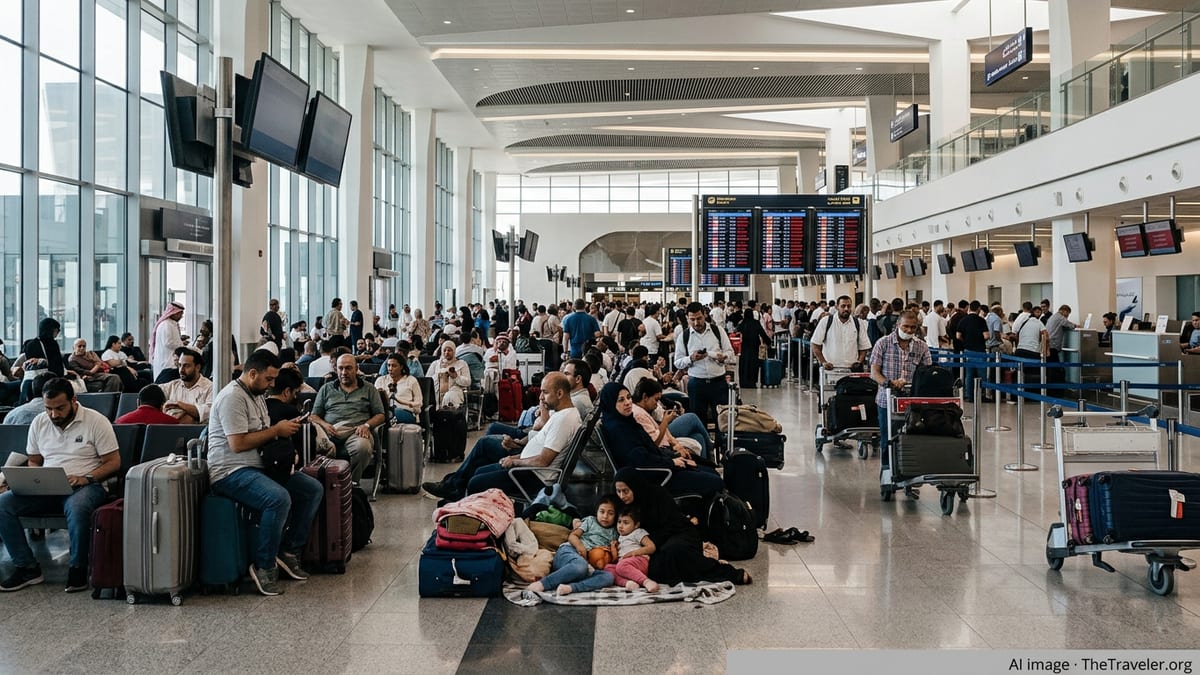
Fresh Wave of Cancellations Hits Gulf and South Asia Routes
Published coverage and live flight board data indicate that a new round of cancellations has swept through parts of the Gulf network in recent days, compounding disruption that began with widespread airspace closures on 28 February. Gulf Air has continued to trim departures on its Bahrain centered network, including services to and from Lahore, while major UAE based airlines operate reduced schedules that remain vulnerable to rapid operational changes.
Tracking data for Gulf Air’s Lahore connection shows repeated cancellations on the Bahrain–Lahore rotation through late March, underlining the fragility of links between Pakistan and the Gulf at a time of heightened demand from migrant workers and family travelers. Airline advisories distributed to trade partners in early March also reference revised ticketing procedures for customers affected by the closure of Bahrain airspace, highlighting how the carrier is still unwinding the initial shock to its timetable.
From the UAE, long haul connections that rely on Dubai and Abu Dhabi as transit points continue to see selective cancellations or capacity reductions. Reports focused on March 30 describe only a partial restoration of services at Dubai International and Zayed International, with alerts still flagging delays and cancellations on specific departures and arrivals despite a broader push toward normal operations.
The combination of Gulf Air’s ongoing cuts and selective suspensions by Emirates, Etihad Airways and low cost affiliates is creating pockets of severe disruption along certain corridors, particularly where travelers rely on a single dominant carrier or hub for onward connections.
Lahore Passengers Face Prolonged Disruption
The impact has been especially visible at Lahore’s Allama Iqbal International Airport, where local coverage earlier in March described more than a dozen flights to the UAE, Qatar and Bahrain being cancelled in a single day after successive rounds of schedule changes. Flights to Dubai, Abu Dhabi, Doha, Bahrain and Guangzhou were among those removed from departure boards, stranding passengers who had already endured days of uncertainty.
Within that broader wave, Gulf Air’s Bahrain link has been a recurring flashpoint. Published flight logs and news summaries note that both the Lahore to Bahrain and Bahrain to Lahore legs have been scrubbed on multiple dates, narrowing options for travelers whose itineraries depend on transiting through Manama to reach onward destinations in Europe, the Middle East and North America.
UAE based airlines have also adjusted their Pakistan operations. While services to some cities such as Multan have begun to resume with limited schedules, partial cancellations by other carriers remain in place, producing an uneven patchwork of options across Pakistan’s main international gateways. For Lahore, where long haul links are heavily dependent on Gulf hubs, even the cancellation of a relatively small number of daily flights can translate into hundreds of disrupted journeys.
Passengers attempting to rebook from Lahore report having to wait for confirmation of whether flights will operate before arranging new connections, given that many standard travel insurance policies treat the current situation as an exceptional disruption related to conflict and airspace closures.
Long Haul Links to Auckland Strain Under Reduced Schedules
The cancellations are also rippling into ultra long haul markets, with Auckland featuring prominently in disruption updates circulated by airlines and passenger communities. Emirates, which operates one of the primary Gulf links to Auckland, sharply curtailed its regular network when UAE airspace first closed and has since been rebuilding operations using a mix of limited commercial services and designated repatriation flights.
Lists of operating flights shared in early March showed selected Dubai to Auckland services continuing under special schedules, while other rotations were cancelled outright. Even as more flights appear on operating rosters toward the end of the month, travelers bound for New Zealand still report uncertainty about whether upcoming departures will go ahead as planned or be withdrawn at short notice.
The complexity of Auckland itineraries, which typically involve long multi segment journeys and onward domestic or regional connections, means that each cancellation can trigger a cascade of changes. Some travelers have been forced to redesign entire itineraries when a single Gulf sector is removed, particularly where tickets combine multiple carriers or include time sensitive events such as cruises, tours or family gatherings.
Advisories from travel industry analysts note that while demand for routes connecting Australasia with Europe and the Middle East remains strong, airlines are prioritizing safe corridors and operational resilience over restoring full pre crisis capacity to every market. This leaves long haul destinations like Auckland exposed to short notice cuts whenever routing constraints tighten.
Airspace Closures and Security Concerns Drive Operational Choices
The latest cancellations cannot be separated from the wider regional security environment. A series of Iranian missile and drone strikes targeting states across the Gulf has prompted temporary airspace closures and restrictions in Bahrain, Qatar and the United Arab Emirates since late February, according to open source timelines summarizing the conflict.
Initial responses included blanket suspensions of commercial flights to and from Dubai, Abu Dhabi and other major Gulf hubs, effectively freezing some of the world’s busiest transit corridors. As defensive measures have taken effect and governments have clarified safe routing options, airlines have gradually restarted services along selected corridors, but with reduced frequencies and increased buffers to allow for sudden changes in airspace status.
Industry analysis published in late March highlights that daily flight cancellations across the Middle East have fallen sharply from the early March peak but remain elevated for carriers with key hubs in affected states. Gulf Air, Kuwait Airways and Iraqi Airways are cited as having recorded some of the highest cancellation rates since the crisis began, while Emirates, Etihad Airways, Air Arabia and flydubai are described as operating growing but still constrained networks.
Operational documents from logistics and cargo operators also point to a patchwork of restrictions across the region, with certain airports listed as suspended or heavily delayed for both passenger and freight services. That underlying fragility continues to feed into airline scheduling decisions, ensuring that even routes which have resumed service remain vulnerable to further interruption.
What Travelers on Affected Routes Can Expect Next
For passengers booked on Gulf Air or UAE based airlines on sectors touching Auckland, Bahrain, Lahore and other regional hubs, publicly available guidance suggests that disruption will likely persist into April even as more flights return. Many carriers have expanded travel waivers, allowing customers to rebook without change fees, obtain travel credits, or request refunds where flights are cancelled.
Gulf Air’s advisories to distribution partners outline specific refund and reissue options for tickets affected by airspace related cancellations, though the exact remedies vary depending on point of sale and fare rules. UAE airlines including Emirates and Etihad Airways have kept disruption policies in place for travel spanning late February to mid April, offering flexibility on date changes and, in some cases, routing adjustments to alternative gateways.
Consumer advocates and legal guides emphasize that passenger rights in this environment are shaped by a mix of international frameworks and local regulations, with entitlement to hotel accommodation, meal vouchers or rebooking on other carriers depending on the jurisdiction where a journey begins and the airlines involved. Travelers are being urged to keep records of cancellation notices, boarding passes and receipts for additional expenses in case compensation claims are pursued later.
With schedules continuing to evolve daily, specialists recommend that travelers monitor airline apps and airport departure boards closely, avoid self rebooking on complex multi airline itineraries without confirming entitlement to reimbursement, and build in extra time and flexibility where possible. Until airspace conditions stabilize fully, routes that rely on Gulf hubs, including key links to Auckland, Bahrain and Lahore, are expected to remain among the most exposed to sudden cancellation.