

More news on this day
Gulf Air is cancelling additional flights as Bahrain International Airport remains severely constrained, leaving passengers stranded across the network and disrupting key links between Manama, Singapore and other major hubs in Asia, Europe and the Middle East.
Get the latest news straight to your inbox!
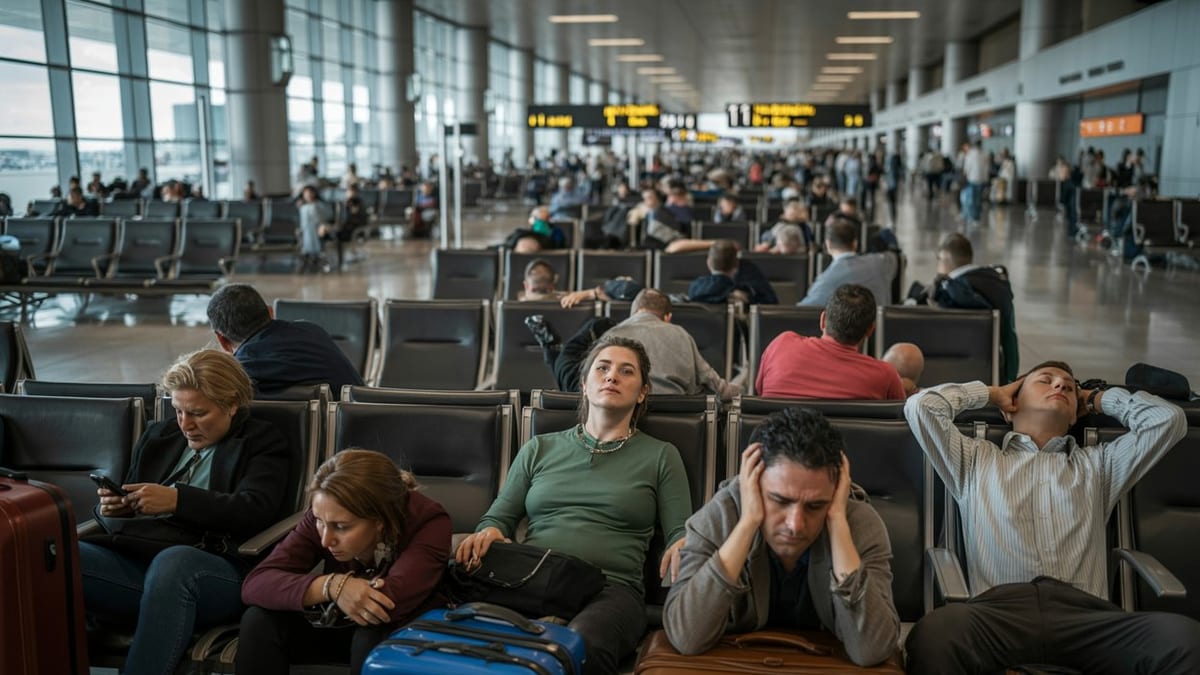
Image by Travel And Tour World
Regional Conflict Keeps Bahrain Airspace Under Tight Restrictions
Publicly available information shows that Bahrain remains at the center of a wider Gulf aviation crisis sparked by regional conflict and missile and drone activity targeting infrastructure across several states. Security concerns have kept Bahrain’s airspace under strict controls, with only a narrow set of approved routes operating on a limited basis.
Recent situation reports indicate that Bahrain International Airport is permitting only a small number of carefully coordinated departures under special clearances, effectively shutting down most regular commercial schedules. That has left Gulf Air, the country’s flag carrier, struggling to operate its hub-and-spoke model and to move aircraft and crew in and out of Manama.
Industry and risk advisories describe this as a prolonged, not momentary, disruption. Airlines have been forced to divert or cancel flights, reposition aircraft to alternate airports, and negotiate complex routings that avoid contested airspace. For Gulf Air, whose operations are built around Bahrain International Airport, the restrictions have translated directly into wave after wave of cancellations.
In parallel, aviation and travel reports emphasize that the crisis is regional in scope. Carriers in Saudi Arabia, the United Arab Emirates, Qatar and Oman have also faced mass cancellations and delays, creating a knock-on effect across codeshares and onward connections that would normally flow through Bahrain.
Gulf Air Cuts Deeper Into Network as Stranded Passengers Mount
Operational data and travel-industry coverage indicate that Gulf Air has progressively deepened its cuts to scheduled services as the crisis has dragged on. Earlier reductions focused on trimming frequencies and consolidating flights, but the latest updates point to full cancellations on a growing number of routes touching Bahrain.
Advisories aimed at travel agents and ticketing partners show that Gulf Air has activated special refund and rebooking policies for customers whose flights were due to depart in late February and March. These documents outline options for full refunds, date changes within specified windows, and in some cases rerouting via alternative gateways, reflecting the scale of cancelled services.
Travel news outlets tracking daily disruption figures across the Middle East report that Bahrain has experienced dozens of cancellations on peak days, with Gulf Air among the most affected operators. Passengers connecting through Manama have found themselves stuck in transit zones, requeued for scarce seats on later flights or bussed to alternative airports as the airline restructures its network on short notice.
Social media posts and passenger accounts describe long waits at Bahrain International Airport, with hotel accommodations, meal vouchers and rebooking assistance varying by ticket type and point of purchase. While some travelers have been moved onto replacement flights within a day, others report being stranded for several days as capacity remains tight and demand for outbound seats far exceeds supply.
Key Singapore Route and Asian Links Heavily Disrupted
The Bahrain to Singapore corridor has emerged as one of the most visible casualties of Gulf Air’s ongoing disruption. Flight-tracking and schedule-monitoring services show that multiple Gulf Air services associated with Singapore Changi have been cancelled or heavily delayed in recent days, interrupting a key eastbound connection for travelers from Europe and the Middle East.
Travel trade coverage notes that cancellations involving Singapore have had an outsized impact because this route feeds a large number of onward connections into Southeast Asia and the wider Asia-Pacific region. When Bahrain to Singapore flights are pulled, affected passengers not only lose their direct sector but also miss follow-on services to destinations such as Bangkok, Jakarta, Kuala Lumpur and Australian gateways.
Airport-focused reporting from Singapore highlights a pattern of cancellations and significant schedule gaps on flights to and from Bahrain, adding to broader operational strain at Changi, where other airlines are also recalibrating their Middle East schedules. For many travelers who originated in Europe or North America, Bahrain would normally serve as the crucial mid-point; now, itineraries involving Manama and Singapore are among the hardest to salvage without a complete rebooking on a different carrier.
Industry observers point out that this has implications beyond leisure travel. Corporate travel programs and freight-sensitive itineraries that rely on the Bahrain–Singapore axis for efficient access to Asian financial centers and manufacturing hubs are being forced to reconfigure routings, often at higher cost and with longer total journey times.
Temporary Workarounds via Saudi Arabia Offer Limited Relief
As Bahrain’s own airspace remains tightly constrained, Gulf Air has begun leaning more heavily on neighboring Saudi Arabia as a lifeline. Schedule tools and travel advisories note that the airline is operating a limited number of services via King Fahd International Airport in Dammam, which is being used as a temporary operational base for select routes.
Regional travel guidance indicates that some Bahrain-origin passengers are being rebooked onto itineraries that start or end in Saudi Arabia rather than Bahrain, with ground transfers linking Manama and Dammam. This arrangement can restore connectivity in certain cases, but it is far from a full substitute for a functioning hub at Bahrain International Airport and comes with additional visa and logistics considerations for travelers.
Reports from frequent-flyer communities suggest that capacity on these alternative routings is extremely tight. Seats on Dammam-operated flights are often prioritized for passengers whose original Bahrain tickets have already been disrupted, and new bookings can be difficult to secure at short notice. For those who do obtain seats, journeys may involve longer routings that detour around sensitive airspace, adding hours to total travel time.
At the same time, wider Middle East disruption means that Dammam itself is not immune to cascading delays and schedule changes. Travel commentators warn that while the Saudi workaround can help certain Gulf Air customers, it remains a patchwork solution subject to rapid change as the regional security picture evolves.
What Affected Travelers Should Do Now
For passengers booked on Gulf Air through Bahrain in the coming days, publicly available guidance across aviation and travel channels converges on a few practical steps. The first is to treat all Bahrain-related itineraries as highly fluid. Schedules that appear in booking systems may not reflect last-minute cancellations or airspace-related restrictions imposed after tickets were issued.
Travel experts recommend that passengers monitor their bookings closely through the airline’s official digital channels and sign up for flight-status alerts where available. Many recent advisories emphasize that rebooking windows and refund eligibility are governed by specific travel dates and ticket-issue periods, so travelers should check the exact conditions that apply to their fare before making decisions.
Those already stranded at Bahrain International Airport or at downline destinations such as Singapore are encouraged, in published advice, to stay in close contact with the airline or their travel agent for written confirmation of any new arrangements, including hotel stays, meal vouchers and revised flight numbers. Documentation can be important for later claims with travel insurers, many of which treat armed conflict and related airspace closures as special circumstances with distinct policy rules.
Looking ahead, route-planning commentary across the industry suggests that travelers who have not yet departed may wish to consider alternative routings that bypass Bahrain entirely until there is clear evidence of a sustained reopening of its airspace and a stable Gulf Air schedule. With cancellations continuing to ripple through key links such as the Bahrain–Singapore route, flexibility on dates, airlines and transit points remains crucial for anyone planning to cross the region in the near term.