

More news on this day
Air travel across the Middle East lurched into crisis this weekend as U.S. and Israeli strikes on Iran triggered sweeping airspace closures over Iran, Israel, the United Arab Emirates and Qatar, forcing Emirates, Qatar Airways, Etihad, Turkish Airlines and Lufthansa to cancel or reroute flights and leaving Dubai’s hotel sector and global chains such as Hilton and Marriott bracing for a sharp tourism shock at the height of the winter travel season.
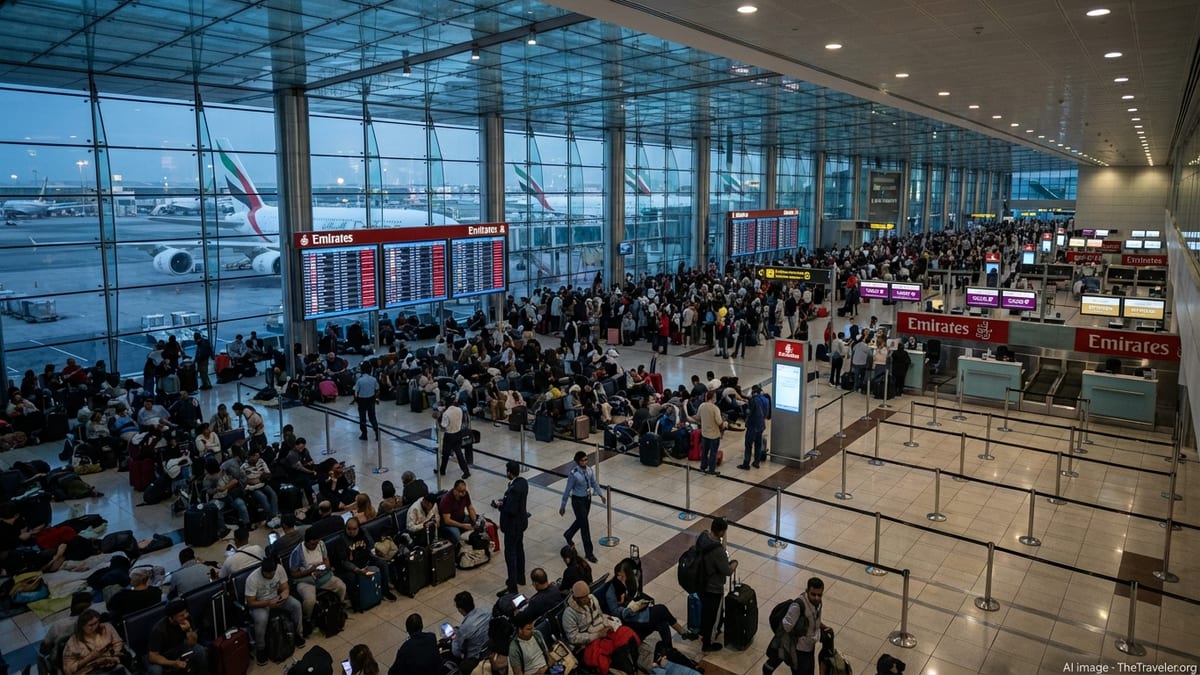
Airspace Lockdown Empties Skies Over the Gulf
Within hours of the initial strikes on Iran late Friday and into Saturday, civil aviation authorities in at least eight states, including Iran, Israel, Iraq, Jordan, Qatar, Kuwait, Bahrain and the UAE, moved to shut or heavily restrict their skies to civilian traffic. Flight-tracking maps that normally show dense corridors of jets linking Europe, Asia and Africa instead displayed large holes over West Asia, as aircraft diverted around the eastern Mediterranean, the Red Sea and Saudi Arabia.
Iran’s civil aviation regulator announced that national airspace was closed until further notice, while Israel’s transport ministry issued a similar blanket ban on civilian flights. The UAE and Qatar declared temporary closures described as partial and precautionary, but in practice the restrictions were severe enough to halt most commercial operations in and out of Dubai, Abu Dhabi and Doha, three of the world’s most important long-haul hubs.
By Saturday evening, aviation analytics firms estimated that more than a fifth of all scheduled arrivals into the broader Middle East had been canceled, with total disruptions surpassing 1,800 flights once outbound services were included. Analysts warned that even a short-lived closure would create a days-long cascade of missed connections, diverted aircraft and stranded crews across multiple continents.
Europe’s aviation safety regulator issued a conflict-zone bulletin highlighting a high risk to civil aviation across affected airspace and advising carriers to avoid the region. With Russian skies already largely inaccessible to many Western airlines because of the war in Ukraine, the loss of key Gulf corridors further constricted Europe–Asia routings, forcing longer detours, extra fuel burn and more schedule padding.
Emirates, Qatar Airways and Etihad Confront Hub Paralysis
The deepest shock hit the Gulf’s so-called super-connectors. Dubai-based Emirates, the world’s largest long-haul airline by international passenger traffic, suspended all operations to and from Dubai International and Al Maktoum International after the UAE announced partial airspace closure. The move turned the world’s busiest international airport into an overnight holding pen for tens of thousands of passengers unable to depart or connect.
Qatar Airways likewise halted arrivals and departures at Hamad International in Doha after Qatari airspace was closed, advising customers that services would resume only once restrictions were lifted and cautioning that early flights would likely suffer significant delays. In Abu Dhabi, Etihad Airways suspended all departures from Zayed International Airport until at least early Sunday afternoon local time, canceling inbound flights scheduled to arrive before that window and diverting some services back to their origin points.
The three hub carriers together typically move around 90,000 passengers a day through Dubai, Doha and Abu Dhabi. Their networks are built on tightly timed connecting banks that funnel travelers between Europe, Africa, Asia and Australasia. The sudden shutdown of those banks created ripple effects for national carriers and low-cost airlines feeding into Gulf hubs, from India’s IndiGo and Air India to European leisure operators and African regional airlines.
Industry consultants noted that for now the crisis is primarily an operational shock rather than a collapse in traveler demand. If airspace reopens quickly, airlines can gradually restore schedules, albeit with some aircraft and crews out of position. The real financial hit, they said, stems from lost aircraft productivity, disrupted cargo flows, higher insurance premiums and war-risk surcharges layered on top of already elevated fuel costs.
Turkish Airlines, Lufthansa and Global Carriers Reroute
The fallout stretched well beyond the Gulf. Turkish Airlines, which has in recent years challenged the Gulf giants with its own Istanbul hub strategy, canceled services to Lebanon, Syria, Iraq, Iran and Jordan through at least Monday and suspended flights to Qatar, Kuwait, Bahrain, the UAE and Oman for the weekend. The carrier is also rerouting eastbound flights to avoid closed airspace, adding flying time and complicating crew scheduling.
In Europe, Lufthansa and group airlines canceled flights to Tel Aviv, Beirut, Amman, Erbil and Tehran until early March and temporarily halted services to Dubai and Abu Dhabi. Swiss, KLM, Air France and several low-cost European operators also axed or diverted flights into the region, while some, such as British and Virgin-branded carriers, shifted routings to avoid Iraqi and Iranian skies even where their destinations remained open.
North American airlines suspended flights to Tel Aviv and, in some cases, to Doha, citing security assessments and the difficulty of safely transiting the region while multiple conflict zones overlap. Indian, North African and Russian carriers joined a widening list of airlines either suspending operations into affected countries or dramatically reshaping flight plans to skirt prohibited airspace.
Aviation analysts warned that if airspace closures persist for more than a few days, airlines that depend on thin profit margins on long-haul routes will face mounting pressure. With Russian routes constrained in the north and West Asian corridors restricted in the south, some Europe–Asia sectors could become uneconomical, prompting more cancellations and further stranding travelers.
Dubai Hotels and Global Chains Brace for Tourism Shock
On the ground in Dubai, the abrupt halt in air traffic is already reverberating through the hospitality sector. Dubai International routinely handles well over 200,000 passengers a day in peak winter months, many of whom stay overnight in the city’s vast inventory of upscale hotels or break their long-haul trips with short stopover stays. With outbound flights suspended and inbound services curtailed, hotels reported a rush of distressed bookings from stranded transfer passengers alongside a wave of cancellations from leisure travelers unable to reach the emirate.
Global brands including Hilton and Marriott, which operate extensive portfolios of beachfront resorts and business hotels across the UAE, have begun activating contingency plans first devised during the pandemic. These include flexible rebooking policies, waivers for no-show penalties on conflict-affected itineraries and the rapid reallocation of staff to properties near the airports to handle an influx of unplanned overnight guests.
Revenue managers in Dubai’s major hotels now face a delicate balancing act. On one hand, occupancy rates may spike in the short term as transit passengers are forced into longer stays. On the other, high-spending holidaymakers from Europe, Russia and Asia could delay or cancel trips amid safety concerns and uncertainty over when flights will normalize. If the conflict drags on, forward bookings for the upcoming Ramadan and Easter holiday periods could soften, jeopardizing a crucial stretch of the city’s tourism calendar.
Travel advisors said corporate bookings for conferences and exhibitions, a cornerstone of Dubai’s strategy to position itself as a year-round business events hub, are also at risk. Event organizers may be reluctant to commit to large gatherings when key feeder markets in Europe and Asia cannot be guaranteed smooth air access, potentially undercutting room demand at major convention hotels.
Travelers Face Delays, Confusion and Tough Choices
For individual travelers, the crisis has translated into a familiar but deeply frustrating mix of last-minute cancellations, long queues at airport service desks and uncertainty over refunds or rebookings. At major hubs from Dubai to Istanbul to Frankfurt, passengers spent hours waiting for updates as airlines worked to rebuild schedules around closed skies and crowded diversion airports.
Airlines have urged customers to check their flight status before heading to the airport, sign up for mobile notifications and be prepared for multi-day disruptions. Some carriers are offering free rebooking or refunds for journeys touching affected countries, though the generosity of policies varies widely by airline and ticket type. Travel-insurance providers are bracing for a spike in claims tied to trip interruption and additional accommodation costs.
Experts advised travelers with flexible plans to postpone nonessential trips involving connections through the Gulf or Israel until there is clarity on airspace reopenings. For those already en route, they recommended accepting airline-provided hotel accommodation, retaining all receipts for incidental expenses and keeping itineraries as simple as possible, avoiding multiple separate tickets on different airlines that can complicate rebooking.
With no clear timeline yet for a full resumption of normal air traffic, the Middle East’s role as a vital bridge between continents has been abruptly curtailed. How quickly Emirates, Qatar Airways, Etihad, Turkish Airlines, Lufthansa and their peers can restore confidence in the safety and reliability of these routes will help determine the scale and duration of the shock facing Dubai’s hotels and the wider global travel economy.