

More news on this day
Widening conflict centered on Iran has choked off key Middle East air corridors, forcing Emirates, Qatar Airways and Etihad to ground most flights and unleashing a sudden wave of cancellations that is costing hotels in the United Arab Emirates, Thailand and Cyprus millions of dollars in lost bookings.
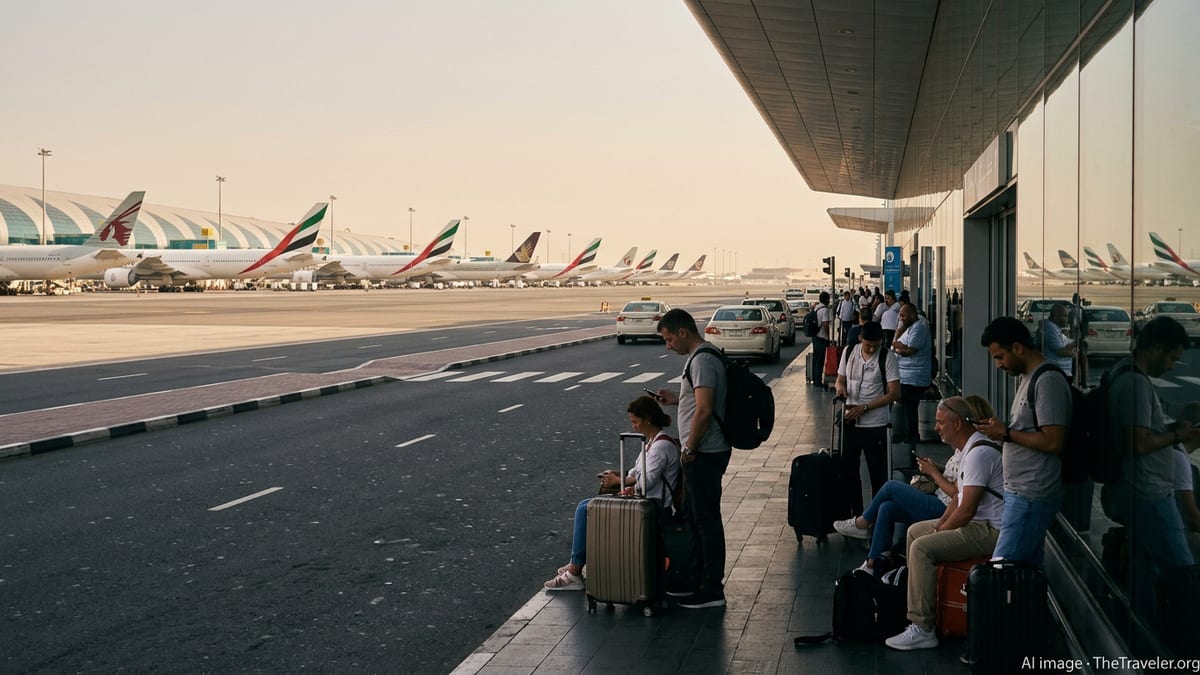
Hub Airlines Struggle as Airspace Closes
Emirates, Qatar Airways and Etihad, three of the world’s most influential long-haul carriers, have seen their operations slashed in recent days as airspace closures ripple across the Gulf. Data from aviation analytics firms show cancellation rates for services touching the United Arab Emirates and Qatar surging to some of the highest levels globally after strikes on Iran triggered a cascading series of flight bans.
Dubai based Emirates has temporarily suspended its full regular passenger schedule, operating only a skeleton roster of repatriation and cargo flights while it reroutes around closed skies. Abu Dhabi’s Etihad has similarly grounded most commercial services, with only limited departures allowed on restricted corridors and at off peak times. In Doha, Qatar Airways has faced the most severe squeeze, with its home hub effectively cut off by the closure of Qatari airspace and only a small number of relief flights operating through specially approved routes.
Industry analysts estimate that the three Gulf carriers together normally carry around 90,000 transit passengers a day through Dubai, Abu Dhabi and Doha. With the majority of those journeys now cancelled or indefinitely delayed, global connectivity between Europe, Asia, Africa and Australasia has been abruptly severed, leaving aircraft parked on the tarmac and reservation systems overwhelmed by rebooking requests.
Although some authorities have begun experimenting with tightly controlled “safe corridors” for repatriation flights, executives caution that meaningful restoration of long haul schedules will depend on a broader easing of security restrictions, something diplomats say remains unlikely in the short term as the conflict shows little sign of abating.
Stranded Travelers and Vanishing Holiday Seasons
The impact is being felt acutely at ground level by travelers who depended on the Gulf hubs to reach leisure destinations across Asia and the Mediterranean. Many tourists bound for beach resorts in Thailand and Cyprus discovered their journeys unravelling overnight as connecting flights via the United Arab Emirates and Qatar were cancelled en masse.
Travel agents in Europe and Australia report that customers with long planned itineraries to Phuket, Krabi and Koh Samui have been left scrambling to find alternative routings that avoid the Gulf entirely. With seats on remaining indirect services at a premium and some regulators advising against flying through adjacent airspace, thousands of would be holidaymakers are opting to abandon or postpone trips rather than pay higher fares and endure marathon detours.
On Cyprus, which relies heavily on feeder traffic from Gulf carriers to supplement direct services from Europe, hoteliers along the southern coast say early spring occupancy has dropped sharply in just a few days. Rooms that had been blocked for package tours and independent travelers via Dubai, Abu Dhabi or Doha are being released back into inventory as cancellations roll in, with some resorts warning that April and May booking curves now look more like low season than the crucial early summer ramp up.
At Dubai’s own beach and city hotels, the atmosphere is similarly subdued. Properties that normally benefit from transit passengers adding stopover nights report an immediate falloff in arrivals. Corporate groups and conferences timed to coincide with major trade fairs have also been disrupted as delegates are either unable to travel or choose to participate virtually instead.
Millions Lost Across UAE, Thai and Cypriot Hotel Markets
Tourism boards and hotel associations across the affected destinations are racing to quantify the financial hit. Preliminary estimates from consultants in Dubai suggest that properties in the United Arab Emirates could forgo tens of millions of dollars in room revenue if current flight suspensions stretch through mid March, a figure that does not yet capture lost spending on dining, shopping and entertainment linked to international visitors.
In Thailand, where Gulf carriers have become key partners in drawing high spending travelers from Europe, the Middle East and Africa, industry leaders are warning of a sudden hole in demand layered on top of an already fragile post pandemic recovery. One Bangkok based analyst said major resort islands risk losing an entire peak shoulder season week for every few days that connections via the Gulf remain severely curtailed, compounding pressure on employers that only recently rehired staff to meet resurgent demand.
Cyprus, long marketed as an easily accessible sun and sea destination with convenient one stop links via Dubai and Doha, is facing similar headwinds. Local hotel groups say group tours, wedding parties and long stay bookings from Northern Europe have been particularly hard hit, with some large properties seeing block cancellations worth hundreds of thousands of euros for stays over the next month.
Across all three markets, operators stress that even if flights resume gradually in the coming days, the revenue already lost is unrecoverable. Unlike business travel, which can sometimes be rescheduled, leisure trips tied to school holidays or fixed annual leave are typically cancelled outright when air connectivity fails, leaving empty rooms and sunk marketing costs in their wake.
Tourism Officials Pivot to Damage Control
Faced with a rapidly evolving crisis, tourism authorities in the United Arab Emirates, Thailand and Cyprus are shifting from promotion to damage control. Officials are in close contact with airlines and major tour operators, seeking clarity on when reliable schedules might resume so that they can update prospective visitors and adjust marketing campaigns.
Some destination marketing organizations are discussing short term incentive packages to encourage rebookings later in the year rather than outright cancellations, including flexible date policies, added value offers and relaxed deposit terms for tour partners. Hotel groups in Dubai and Abu Dhabi say they are waiving many change fees for guests whose travel depends on Emirates and Etihad services, in a bid to salvage future stays once flights return.
Thai tourism representatives are focusing on diversifying access by highlighting alternative gateways in Southeast Asia for travelers willing to reconfigure their plans, while acknowledging that the loss of fast one stop Gulf connections will inevitably depress arrivals from certain long haul markets. In Cyprus, local officials are lobbying European carriers to add capacity from key source cities to offset at least part of the lost traffic from Gulf hubs.
Behind the scenes, industry associations are also pushing for clear, coordinated communication from aviation regulators, arguing that conflicting travel advisories and sudden schedule changes are deepening traveler anxiety and leading to unnecessary cancellations well beyond the immediate conflict zone.
Uncertain Outlook as Conflict Drags On
Despite limited signs of operational progress, such as tentative safe corridors and partial hub reopenings, the broader outlook for air travel through the Gulf remains highly uncertain. Airlines continue to warn that schedules may change at short notice, with some carriers extending suspension windows day by day as they weigh security assessments and diplomatic signals.
For tourism dependent economies in the United Arab Emirates, Thailand and Cyprus, the timing of any recovery is critical. Every week that Gulf hubs remain constrained increases the risk that travelers will redirect their spending to destinations reachable via unaffected corridors in Europe, the Americas or East Asia. Analysts note that once customers form new habits and discover alternative routings, some of that diverted demand may not fully return even after normal operations resume.
Hotel owners, travel agents and airline partners are therefore preparing for a scenario in which the current disruption extends beyond an immediate security crisis into a longer term reshaping of customer flows. Many are revisiting contingency plans drafted during the pandemic, from dynamic pricing strategies to more diversified source market mixes, in case the conflict driven shock to Gulf aviation proves prolonged.
For now, with much of the region’s sky still effectively closed and flagship carriers Emirates, Qatar Airways and Etihad operating at a fraction of their usual capacity, the tourism clock is ticking. Each grounded aircraft and cancelled itinerary represents not only stranded passengers but also a growing ledger of lost nights and missed opportunities in beach resorts and city hotels from Dubai to Phuket and the shores of Cyprus.