

More news on this day
Rapidly shifting airspace bans and security fears tied to the escalating Israel–Iran conflict have forced Gulf giants Qatar Airways, Emirates, Etihad and Flydubai to suspend or sharply curtail services, severing key aviation arteries through the United Arab Emirates and Qatar and sending shockwaves through hotels and tour operators worldwide.
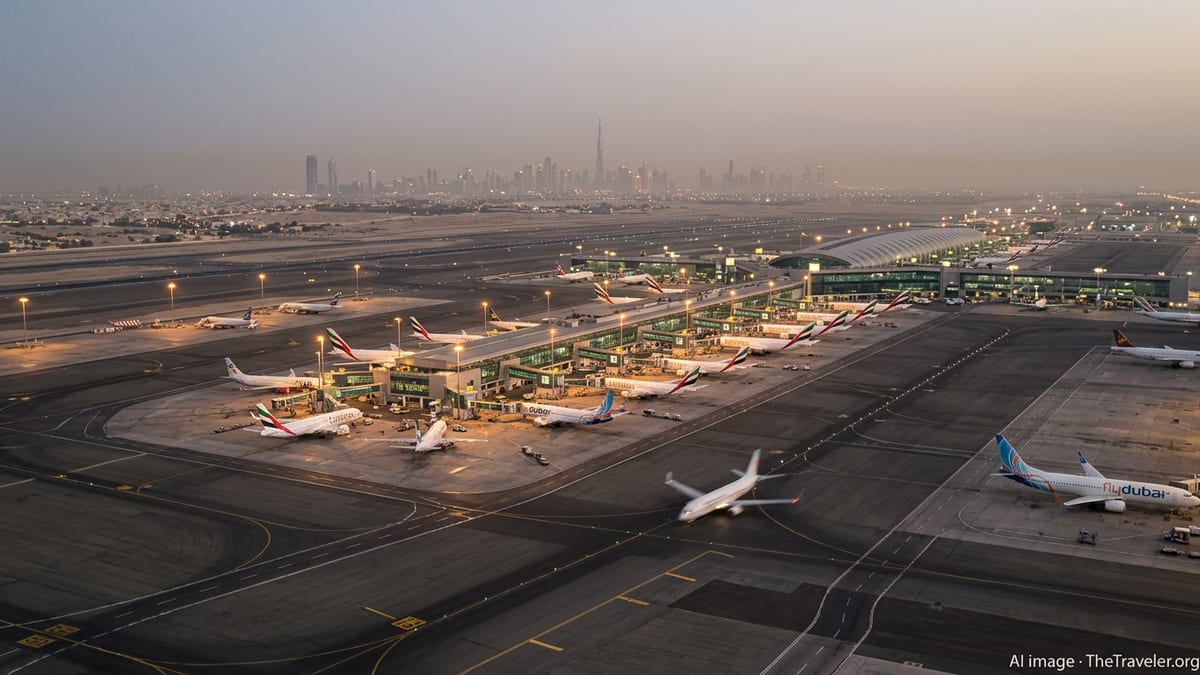
Flight Suspensions Choke Off the Gulf’s Global Hubs
Since late February 2026, as US and Israeli strikes on Iran triggered retaliatory attacks and sweeping airspace closures, the Gulf’s biggest carriers have been pushed into an unprecedented retrenchment. Emirates, Etihad, Qatar Airways and Flydubai have all suspended large parts of their networks, with some routes completely halted and others operating only as ad hoc relief services.
Authorities in Iran, Israel, Iraq, Qatar, Bahrain and the United Arab Emirates have restricted or closed airspace to civilian traffic, forcing airlines to cancel or reroute thousands of flights. Aviation analytics firms estimate that more than 2,000 Middle East flights were scrubbed in just the first three days of the crisis, with cancellations now exceeding 15,000 worldwide as the disruption spreads along long haul corridors between Europe, Africa and Asia.
Dubai, Abu Dhabi and Doha, normally among the world’s busiest international transit hubs, have seen their roles dramatically diminished almost overnight. Qatar Airways temporarily halted regular schedules from Doha before announcing only a handful of relief flights, while Emirates and Etihad have repeatedly extended suspensions on services across Iran, Iraq, Lebanon and Israel, and Flydubai has kept much of its regional network grounded despite a limited restart.
The result is a patchwork of restrictions and last minute operational decisions that leave passengers relying on real time updates rather than published timetables. Governments and airlines alike continue to warn travellers not to go to the airport unless their flight has been explicitly confirmed.
What This Means for Travellers Through the UAE and Qatar
For travellers, the immediate impact is confusion and vastly reduced connectivity. Hundreds of thousands of passengers have been stranded in recent days, many stuck in Gulf airports or in cities where their onward flights have simply disappeared from departure boards. With regional airspace fragmented, alternative routings often require circuitous journeys via Central Asia, Africa or southern Europe, adding hours in the air and stretching airline crew and fleet resources.
Major carriers are offering free rebooking and, in some cases, refunds for trips scheduled in the first half of March. Emirates and Etihad have both widened their waiver policies for tickets issued before the latest escalation, while Qatar Airways is prioritising stranded passengers on newly announced relief services. Even with these measures, call centres are overloaded, and some customers report waiting days for confirmation of new itineraries.
Travel advisories from Western governments now caution against all travel to Iran, Iraq and Israel and advise against non essential trips to the UAE, Qatar and neighbouring Gulf states. That guidance has prompted corporations to pull staff from postings in the region and cancel conferences, while leisure travellers are postponing or completely rerouting spring holidays that would normally pass through Dubai or Doha.
Insurance questions are compounding the uncertainty. Many standard policies treat war related disruption differently from routine delays, leaving travellers unsure about compensation for missed cruises, prepaid safaris or tours linked to now cancelled flights. Consumer advocates are urging passengers to keep every document and communication from airlines and hotels to strengthen future claims.
Hospitality Giants Brace for a Sharp Short Term Shock
The sudden throttling of Gulf air traffic is already being felt along the hotel corridors of Dubai, Abu Dhabi and Doha, where properties run by global brands such as Hilton, Marriott and IHG typically depend on high transit and stopover volumes. With flight schedules slashed, occupancy has swung from near peak levels during the winter travel season to abrupt drops in key business and leisure segments.
Downtown city hotels and airport properties are the first to experience the whiplash. Some are full with stranded passengers on airline distress rates, while others report a wave of cancellations from corporate groups and high spending leisure travellers who no longer wish to transit the region. This creates an uneven revenue picture: rooms may be occupied, but at far lower nightly yields than anticipated just weeks ago.
Resort properties in Dubai’s beach districts and on Abu Dhabi’s islands face a different challenge. Their model relies heavily on predictable inbound flows from Europe, Russia and Asia, routing through the now disrupted hubs. With many of those visitors reassessing their plans, operators are scrambling to pivot toward domestic and regional guests, discounting heavily to fill rooms over the coming weeks.
Hospitality executives say that the medium term impact will depend on how quickly airlines can restore reliable schedules and how long travel advisories remain in place. If limited flights resume steadily through late March, they expect demand to return first from markets less sensitive to geopolitical risk, followed by more cautious European and North American travellers.
Global Supply Chains and Business Travel Caught in the Crossfire
The strategic role of Emirates, Etihad, Qatar Airways and Flydubai extends well beyond passenger tourism. All four are critical links in global business travel and air freight, moving executives, high value cargo and time sensitive components between manufacturing clusters in Asia, Africa and Europe. The suspension of many passenger flights has therefore spilled quickly into disruptions for supply chains and corporate mobility.
Freight capacity has tightened as passenger wide bodies, which carry substantial cargo in their bellies, remain grounded or are forced onto longer routes. Logistics companies report rising rates and delays for shipments ranging from electronics to pharmaceuticals, with knock on effects for industries that rely on just in time delivery. Some cargo only operators are adding extra services around the conflict zone, but they cannot fully absorb the lost capacity of the big Gulf passenger fleets.
Corporate travel managers are rushing to rework policy and routing, diverting staff away from the Gulf where possible and leaning harder on virtual meetings. For firms that still need to move teams through the region, risk assessments now include not only security considerations but the likelihood of sudden airspace changes leaving employees unable to return home on schedule.
The long haul nature of many of these trips also magnifies fatigue and cost. Itineraries that once required a single overnight stop in Dubai or Doha may now involve two or more connections and lengthy layovers in less familiar hubs, eroding productivity and increasing travel budgets at a time when companies are already wary of geopolitical risk.
Outlook: Gradual Reopenings, Lingering Caution
Airline statements in recent days point to a cautious, phased reopening strategy rather than a rapid snapback. Emirates and Etihad have begun scheduling a limited number of flights out of the UAE, prioritising repatriation and essential travel while keeping broad suspensions in place over Iran, Iraq, Lebanon and Israel. Qatar Airways is taking a similar approach from Doha, focusing first on clearing backlogs of stranded passengers.
Industry analysts say the key variables are security assessments of missile and drone risks, the stability of regional air traffic control and the willingness of insurers to underwrite operations along contested corridors. Even once basic connectivity is restored, many carriers are expected to avoid overflying certain countries, adding permanent extra time and cost to some of the world’s most popular long haul routes.
For Gulf destinations and global hospitality brands, the coming weeks will be a test of resilience and flexibility. Marketing campaigns that once highlighted seamless global connectivity are being retooled around safety, flexible booking and value, while hotels work more closely with airlines and tourism boards to manage flows of distressed and returning guests.
Travellers planning trips through the UAE and Qatar in March and April are being advised to monitor airline alerts closely, keep itineraries flexible and be prepared for last minute changes. The region’s role as a crossroads of global travel is unlikely to fade, but the current crisis underscores how quickly geopolitics can upend even the most carefully built aviation and tourism networks.