

More news on this day
Gulf carriers are scrambling to handle a wave of emergency repatriation demands, with Kuwait Airways confirming 2,000 urgent return requests as regional conflict chokes airspace and throws the Gulf’s tourism-driven aviation model into turmoil.
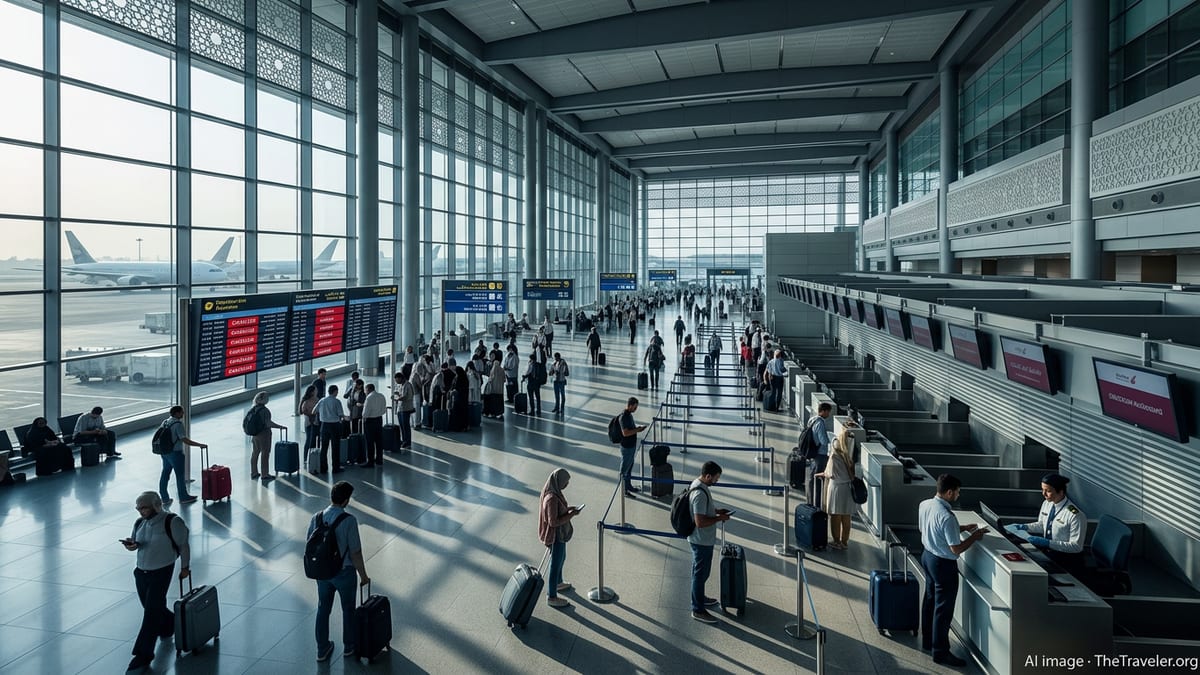
Repatriation Pressure Mounts on Flag Carriers
Kuwait Airways disclosed on Friday that it has received around 2,000 requests from citizens and residents abroad seeking to return home, a stark illustration of how rapidly the regional security crisis has rippled into commercial aviation. The airline’s chairman said the carrier is coordinating with Kuwait’s foreign ministry and civil aviation authorities to prioritize special services and land routes for those stranded across Europe, the Middle East and Asia.
Special flights have already begun operating, including services routed via Saudi Arabia’s Dammam to bring Kuwaiti nationals home from London and other European cities under heightened security arrangements. Kuwait Airways has also opened registration for passengers willing to travel back to Kuwait through Saudi territory from cities such as London, Paris, Milan, Istanbul, Cairo and Amman, an unusual workaround that underscores the severity of airspace closures.
Across the wider Gulf, the picture is similar. Emirates, Qatar Airways and Air Arabia are operating only a fraction of their normal schedules, focusing on repatriation and essential cargo while regular commercial services remain suspended or sharply reduced. Airlines are warning customers not to approach airports unless they hold confirmed seats on these limited flights, as terminals struggle with crowd control and strained staffing.
Industry data suggest that tens of thousands of travelers are either stranded or forced into convoluted itineraries as Gulf hubs lose their status, at least temporarily, as the default crossroads between Europe, Asia and Africa. For carriers that built their brands on seamless global connectivity, the sudden pivot to emergency airlift is both operationally taxing and reputationally sensitive.
Emirates, Qatar Airways and Air Arabia Cut to Skeleton Schedules
In the United Arab Emirates, Emirates and Air Arabia have extended suspensions and capacity cuts on numerous routes as the conflict involving Iran, the United States and Israel triggers rolling airspace closures across the region. Recent advisories show Emirates consolidating operations into a limited number of repatriation and essential flights from Dubai, with many destinations served only sporadically or not at all.
Sharjah-based Air Arabia has similarly pushed back the resumption of regular services, maintaining only a small network of flights aimed at clearing backlogs of stranded passengers. Gulf-focused outlets report that since the start of March, UAE carriers combined have transported tens of thousands of people on restricted schedules, a fraction of the traffic that normally flows through Dubai, Abu Dhabi and Sharjah each week.
Qatar Airways has begun operating relief flights out of Doha following temporary authorisation from Qatari aviation authorities to use carefully controlled corridors. These flights, directed to key European hubs such as London, Paris, Madrid, Rome and Frankfurt, are designed primarily to evacuate stranded travelers rather than restart tourism or business traffic. Hamad International Airport remains under constrained operations, with standard commercial schedules still largely suspended.
For all three giants, the operational complexity is immense. Flight planners must constantly adjust routings to avoid newly restricted airspace, while ground teams juggle changing manifests, last‑minute crew assignments and airport access controls. The result is a patchwork of services that can change by the hour, making advance planning nearly impossible for passengers and tour operators.
Tourism Economies Across the Gulf Face a Sudden Shock
The disruption arrives at a critical time for Gulf tourism, which has spent the last several years positioning itself as a global leisure and events powerhouse. Analysts estimate that more than 23,000 flights have been cancelled across Gulf airports since the crisis began, erasing millions of seats and abruptly halting the inflow of visitors who power hotels, malls and attractions from Dubai to Doha.
Economic research houses now warn that international arrivals to the broader Middle East could fall by double digits this year if the conflict and associated airspace restrictions persist. The Gulf Cooperation Council economies are particularly exposed, since they rely heavily on air‑arriving tourists and on their role as transfer hubs for long‑haul journeys between continents. Tourism boards that only months ago were touting record visitor numbers are now focused on crisis messaging and refund policies.
Destinations that market themselves as safe, efficient stopovers are grappling with images of shuttered terminals, stranded travelers and departure boards filled with cancellations. Travel agents report a surge in clients rerouting via alternative hubs in Europe and Asia, or postponing trips altogether until the security situation and flight schedules stabilize.
The shock is not limited to leisure travel. Meetings, incentives and major events that underpin high‑spending segments of Gulf tourism are also vulnerable, especially if delegations struggle to obtain guaranteed air links into and out of the region. For now, many organizers are in wait‑and‑see mode, assessing whether the current disruption will be measured in weeks or in many months.
Shifting Routes and Emerging Alternative Gateways
With Dubai, Abu Dhabi and Doha severely constrained, airlines and travelers are turning to alternative gateways to keep some traffic flowing between Europe, Asia and Africa. Muscat in Oman has emerged as one of the few Gulf airports maintaining more regular operations, positioning itself as an emergency bridgehead for passengers seeking overland connections into neighboring states.
Beyond the Gulf itself, carriers are increasingly routing flights through hubs such as Istanbul, Athens, Singapore and Hong Kong to avoid the most heavily restricted airspace. This adds hours to some journeys and pushes up fuel consumption, ticket prices and crew costs. Low‑cost carriers that once depended on Gulf stopovers are particularly exposed, as their thin margins leave less room to absorb higher operating expenses.
For tourism flows, these shifts mean that secondary cities and non‑Gulf hubs may temporarily gain market share as transfer points and short‑break destinations. However, most analysts see this as a redistribution born of necessity rather than a permanent reordering of travel patterns. Once security concerns ease and airspace fully reopens, the scale and infrastructure of Gulf hubs are expected to draw traffic back, though perhaps not at the same growth trajectory.
In the interim, governments across the region are weighing how much to invest in interim connectivity solutions, such as enhanced land links and cross‑border rail and coach services, to support both residents and tourists. Any progress on that front could have lasting implications for multi‑destination itineraries in the Gulf once skies are safer.
What Travelers and the Tourism Sector Should Expect Next
Travel experts caution that while repatriation operations by Kuwait Airways, Emirates, Qatar Airways and Air Arabia have brought some relief to stranded passengers, the broader disruption is likely to persist for weeks at least. The pace of recovery will depend heavily on the trajectory of the conflict, the reopening of key flight information regions and the speed at which airlines can safely restore normal schedules.
In the near term, tourists with plans to transit or holiday in the Gulf are being advised to maintain flexible bookings, monitor airline and government advisories closely, and consider alternative routings that bypass the most affected hubs. Many carriers are offering fee‑free rebooking or credits, but outright refunds can be limited given that disruptions stem from geopolitical events rather than airline decisions.
For Gulf tourism authorities, the priority is twofold: managing the immediate crisis while preparing a compelling recovery narrative aimed at restoring traveler confidence when restrictions ease. That may involve targeted marketing campaigns, temporary fare incentives in partnership with airlines, and high‑profile events designed to signal a return to normality.
How swiftly that message takes hold will shape the region’s tourism landscape well beyond the current emergency. The 2,000 urgent return requests logged by Kuwait Airways are emblematic of a wider story, in which Gulf carriers sit at the center of a conflict‑driven shock that is testing the resilience of one of the world’s most aviation‑dependent tourism regions.