

More news on this day
Major Middle Eastern airlines have begun operating limited evacuation flights to move tens of thousands of stranded passengers out of the Gulf, offering a sliver of hope amid one of the worst disruptions to global air travel since the pandemic.
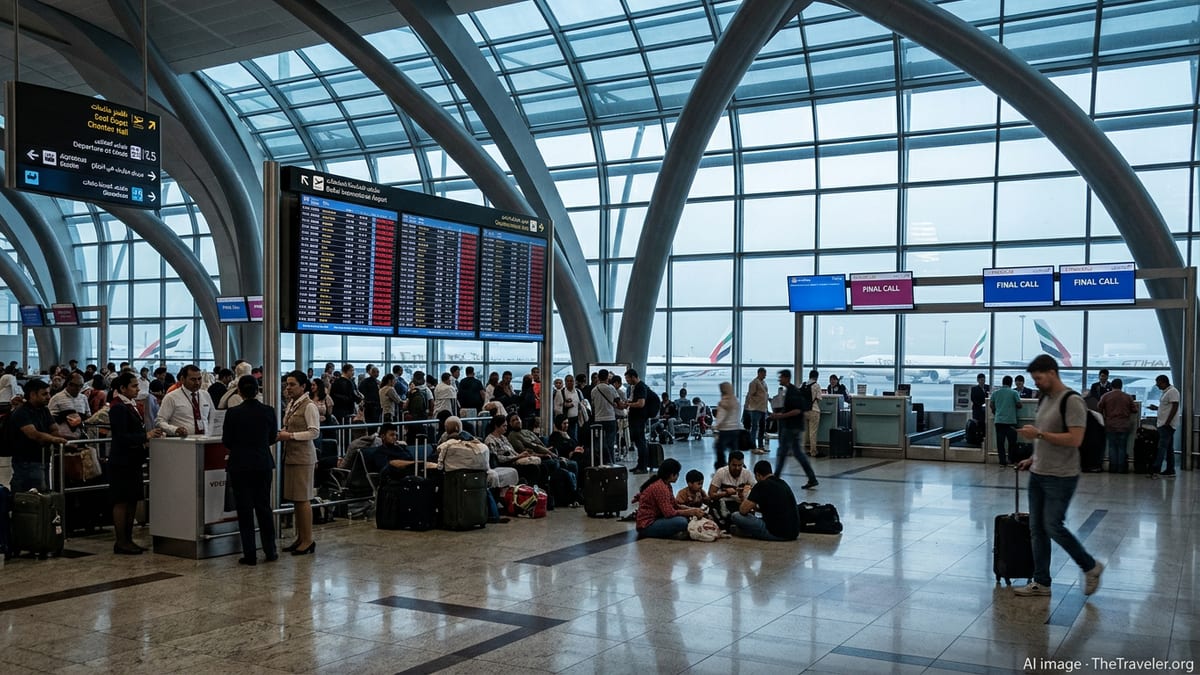
Selective Departures From Gulf Mega-Hubs
After a weekend of near-total shutdown, a small but symbolically important number of flights began departing on Monday and Tuesday from key Gulf hubs including Dubai and Abu Dhabi. Flag carriers Emirates and Etihad, alongside low-cost operator Flydubai, have restarted a narrow slate of services focused largely on evacuating passengers who were trapped when airspace closures rippled across the region.
Officials in Dubai described the restart as a “limited resumption of operations,” stressing that most scheduled services remain grounded and urging travelers not to approach airports unless contacted directly by their airline. Flight-tracking data indicates that more than three quarters of flights to and from Dubai and more than half of operations in Abu Dhabi are still cancelled, underscoring how fragile the recovery remains.
Airlines have prioritized high-demand long-haul routes and key regional connections in their first wave of departures. Etihad flights to European gateways such as London, Paris and Amsterdam, as well as select destinations in the Middle East and Asia, have been among the earliest to take off as carriers focus on clearing backlogs of transit passengers who were marooned mid-journey when the crisis erupted.
Smaller Gulf airlines, including Air Arabia and Flydubai, are operating a handful of services from the United Arab Emirates, but their schedules bear little resemblance to normal operations. The result is a patchwork of available seats that are being allocated primarily to passengers already in the system rather than new bookers.
Stranded Travelers Face Long Waits and Uncertain Routes
The partial restart comes as hundreds of thousands of passengers remain scattered across airports, hotels and improvised accommodation from the Gulf to Europe and Asia. With airspace over Iran, Iraq, Israel and several Gulf states still heavily restricted or completely closed, airlines have been forced to weave complex detours or cancel services outright, leaving many travelers with no clear path home.
Inside the region’s terminals, scenes are marked by exhaustion and fraying tempers as passengers queue for hours to rebook flights, secure hotel vouchers or obtain basic information. Check-in halls in Dubai, Abu Dhabi and Doha have seen lines stretching across concourses, even as authorities try to reduce crowds by contacting eligible passengers directly for re-accommodation on the limited departures now available.
Because the main Gulf hubs sit at the crossroads of Europe, Asia and Africa, the disruption has cascaded well beyond the Middle East. Airports from London and Paris to Mumbai, Bangkok and Singapore are contending with waves of missed connections and aircraft stranded out of position. Airlines warn that it could take days before they can begin stitching their global networks back together, even under a best-case security scenario.
For many travelers, rerouting now involves circuitous journeys that avoid the conflict zone entirely, adding hours of flying time and stretching already thin crew and aircraft resources. Some are opting to remain in place and wait for direct flights to resume rather than risk complex itineraries that may themselves unravel as the situation evolves.
Governments Step In With Special Evacuation Flights
As commercial schedules collapsed, governments have moved to organize evacuation flights for their citizens caught in the region. Authorities from countries including the United States, Germany, the United Kingdom, Israel, the Philippines and India are coordinating closely with Gulf carriers and local regulators to secure precious takeoff and landing slots at the few airports still able to handle limited traffic.
Many of these flights are operating as one-off or short series services, using widebody aircraft typically assigned to long-haul routes. Seats are being allocated via embassy registrations and priority lists that place vulnerable travelers, families with children and those with urgent medical needs at the front of the queue. In several cases, governments have warned that opportunities to leave may remain sporadic as security assessments shift.
At Dubai and Abu Dhabi, buses are now shuttling selected passengers back from hotels where they had been housed during the shutdown, delivering them directly to security checkpoints for outbound flights. Similar scenes are playing out in Doha and at secondary airports across the Gulf, where authorities are trying to manage the flow to prevent overcrowding in already stretched terminals.
Despite these efforts, diplomats acknowledge that evacuations will likely be measured in days and weeks rather than hours. With more than 9,000 flights cancelled across key regional airports since the crisis began, the sheer volume of people needing to move far exceeds the capacity of the ad hoc schedules now in place.
Global Networks Scramble to Adapt
Beyond the immediate humanitarian imperative, the conflict has upended the finely tuned logistics that underpin global aviation. Major European and Asian carriers have suspended flights to several Middle Eastern destinations and, in many cases, are avoiding regional airspace altogether, opting for longer routes that skirt the conflict zone and add significant time and fuel costs to long-haul journeys.
Indian carriers provide a stark example of the patchwork response. While Emirates has cautiously reopened bookings to Dubai from Indian cities such as Mumbai, Delhi and Chennai, Air India has extended the suspension of flights to and from multiple Gulf destinations until at least March 3. Its low-cost affiliate Air India Express is preparing only a gradual restart, initially resuming services to Muscat and delaying broader Gulf operations until later in the week.
Air cargo capacity has also been sharply curtailed, affecting industries that rely on just-in-time deliveries through Gulf hubs. Analysts estimate that a significant portion of global air freight capacity touching the Middle East has been disrupted, with knock-on effects for supply chains in Europe, Asia and Africa. Some freight forwarders are shifting volume to ocean shipping, but those routes are themselves challenged by heightened tensions in regional waters.
Aviation experts note that even if airspace restrictions ease quickly, it will take time for airlines to reposition crews and aircraft, rebuild schedules and clear the passenger backlog. Many warn that travelers should brace for elevated disruption, last-minute changes and higher fares on affected routes for some time to come.
Travelers Confront a New Era of Uncertainty
For individual passengers, the crisis has reinforced how quickly conflict can redraw the global travel map. Travel insurers and consumer advocates report a surge in inquiries as people scramble to understand their rights to refunds, rebooking and alternative transport, particularly for itineraries that connect through the Gulf’s major hubs.
Some travelers have managed to secure seats on the first wave of departing flights, often after days in airport hotels or sleeping in terminals. Others, including tourists, migrant workers and students, are facing more open-ended waits, reliant on updates from airlines and consulates that are themselves racing to keep pace with rapidly changing conditions.
Industry analysts say the episode is likely to prompt both airlines and travelers to rethink route planning and risk assumptions. Although the Gulf’s geographic position and infrastructure make its hubs difficult to replace, prolonged instability could push carriers to diversify more traffic through alternative gateways in Europe, Central Asia and Africa where feasible.
For now, the sight of the first planes lifting off from Dubai, Abu Dhabi and Doha is providing at least a psychological lift to those still stranded. Yet with large swaths of regional airspace effectively closed and the security outlook uncertain, the path back to anything resembling normal air travel remains long, and far from guaranteed.