

More news on this day
Emirates has become the latest major Gulf carrier to confront sparsely filled cabins, mass cancellations and costly detours, as war involving Iran and sweeping airspace restrictions trigger a sharp passenger exodus from the Gulf’s once-booming aviation hubs.
Get the latest news straight to your inbox!
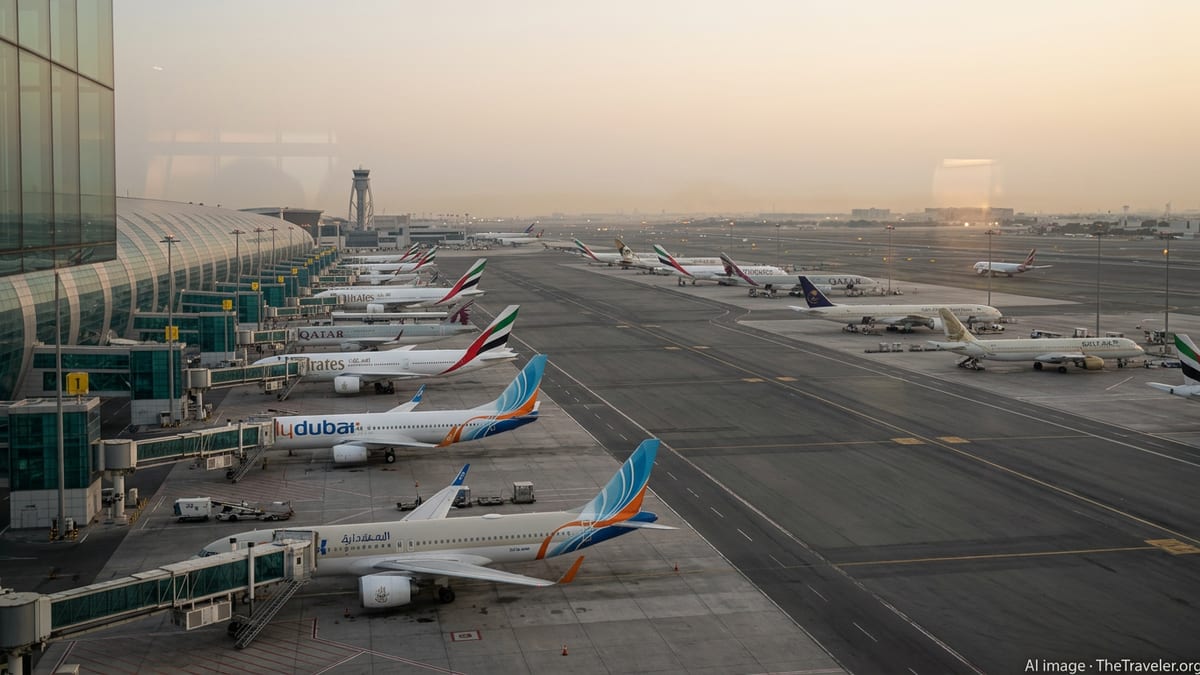
War Shuts Skies and Hollows Out Gulf Hubs
The joint United States and Israeli campaign against Iran, and subsequent missile and drone strikes across the Gulf, have upended air travel on routes that once relied heavily on Dubai, Abu Dhabi and Doha as transit gateways. Published coverage from global outlets describes rapid-fire airspace closures at the end of February 2026 that temporarily halted commercial aviation across parts of the United Arab Emirates, Qatar and neighboring states, disrupting hundreds of thousands of journeys in a matter of days.
Data and reporting compiled since early March indicate that many of the flights now operating through the region are running at sharply reduced load factors. With tourists and corporate travelers wary of transiting perceived conflict zones, key long-haul connections between Europe, Asia and Africa that previously relied on near-full widebodies are seeing large numbers of empty seats, even as some services resume on reduced schedules.
This sudden reversal comes after years in which Gulf aviation was held up as a growth engine for local economies. Analysis in international business media now characterizes aviation and tourism as among the sectors most exposed to prolonged conflict, citing forecasts of weaker GDP growth and falling visitor arrivals if security fears and airspace constraints persist through 2026.
Emirates, Qatar Airways and Etihad Cut Capacity and Block Seats
Emirates, based in Dubai, suspended most passenger operations during the initial wave of strikes and airspace closures before gradually restarting a limited schedule in early March. Industry-focused outlets report that, even as services resume, the airline is keeping seat inventory blocked on many near-term departures to avoid selling tickets it may not be able to honor, while also offering fee waivers and refunds for disrupted passengers.
Qatar Airways has been hit even harder. Reports on recent flight activity suggest that its Doha hub, which depends almost entirely on transfer traffic, has seen operations curtailed to a small number of repatriation and essential services. With many travelers now seeking to avoid overflying or transiting the central Gulf corridor altogether, Qatar’s wide global network has effectively been decoupled from some of its highest-yield connecting traffic.
Etihad Airways in Abu Dhabi has followed a similar pattern, restarting flights on a reduced basis and warning that schedules remain subject to last-minute changes as airspace permissions shift. Aviation analysts quoted in regional business coverage note that Etihad was already in the midst of a multi-year restructuring, and that the latest shock could slow its recovery if premium and corporate demand fails to return quickly.
Low-cost sister carrier flydubai, which relies heavily on short- and medium-haul routes into neighboring Gulf, Middle Eastern and Central Asian markets, is also operating a trimmed schedule. With many of its traditional leisure destinations now deemed higher risk or constrained by route detours, the airline faces both weaker demand and higher per-seat operating costs.
Saudia, Gulf Air and Regional Rivals Navigate Volatile Demand
Saudi Arabia’s flag carrier Saudia, together with Bahrain-based Gulf Air and other regional airlines, is similarly contending with a mix of cancellations, reroutes and softening demand. Earlier rounds of regional tensions in 2025 had already prompted temporary airspace closures over parts of the Gulf, and executives from these carriers previously acknowledged noticeable dips in passenger volumes whenever conflict flared.
In the current crisis, publicly available flight and schedule data suggest that Saudia has managed to resume a majority of its services, but with altered routings on some international sectors to avoid conflict zones. Industry commentary indicates that some of these flights are departing with relatively low passenger loads, reflecting both wariness among tourists and uncertainty among residents considering non-essential trips.
Gulf Air, which had reported a recovery in bookings after earlier airspace disruptions last year, now faces renewed instability. Analysts note that smaller carriers with less diversified networks are especially vulnerable to swings in regional confidence, as they lack the large long-haul markets and alliance feed that might help offset a sharp downturn in point-to-point Gulf traffic.
Beyond the core Gulf states, airlines such as Turkish Airlines and regional competitors in South Asia have also been forced to cancel or reroute flights that traditionally used Gulf airspace and hubs as bridges between continents. That has contributed to a wider softening of passenger demand on overlapping corridors, further pressuring yields.
Airspace Closures, Detours and Soaring Costs Squeeze Profitability
The most immediate operational challenge for airlines based in or overflying the Gulf is the loss of direct air corridors. With Iranian, Iraqi and parts of Gulf airspace subject to tighter restrictions, many carriers now face lengthy detours either north over the Caucasus or south via the Arabian Sea and Red Sea. Industry analyses explain that each additional hour in the air can add hundreds of thousands of dollars in monthly fuel and crew costs for a large long-haul operator.
Travel trade publications have estimated that Emirates, Qatar Airways, Etihad, flydubai, Saudia, Turkish Airlines and others together face more than 23,000 flight cancellations linked to the latest Middle East crisis, alongside losses running into tens of billions of dollars once higher fuel prices and operational complexity are factored in. These figures underscore how quickly regional conflict can erode thin profit margins, even for carriers that entered 2026 from a position of apparent strength.
Load factors, a key measure of how full aircraft are, are also under pressure. Global airline associations had already flagged a slowdown in passenger growth in 2025 as geopolitical risks mounted. The latest war-related disruptions appear to have deepened that trend for Middle Eastern carriers, where capacity has not fallen as quickly as demand, leaving more empty seats on many routes that remain in operation.
For hub-focused Gulf airlines, this dynamic is particularly painful. Their business models are built on efficiently aggregating transfer traffic from multiple regions onto high-frequency widebody flights. When one or more of those feeder markets shrinks because travelers reroute via alternative hubs or postpone trips, the economics of the entire connecting bank can be undermined.
Tourism Shock Raises Questions Over Gulf Hub Strategy
The aviation turmoil is feeding into a broader tourism downturn across the Gulf. Economic analyses published in recent days point to a sharp fall in visitor numbers to major destinations such as Dubai, Abu Dhabi and Doha, where high-end hotels and attractions had benefited from years of branding the region as a safe, convenient stopover and winter-sun getaway.
Forecasts cited by industry consultancies now warn that tourist arrivals to the wider Middle East could drop by double digits in 2026 compared with earlier projections, with Gulf cities among the hardest hit if security concerns linger. That would compound the immediate hit from empty seats on inbound flights, as airlines and tourism authorities typically work hand in hand to fill capacity with promotional fares and packages.
In the longer term, aviation experts say the current crisis is testing the resilience of the Gulf hub model. Some analysis suggests that prolonged instability could accelerate a shift in traffic toward alternative transit points in Europe and Asia, particularly for travelers uncomfortable with itineraries routed through active or recently active conflict zones.
For now, the region’s airlines are focused on tactical responses: waiving change fees, adjusting schedules day by day, and seeking new routings around restricted skies. Whether those measures will be enough to coax passengers back into their cabins, and refill the empty flights now departing the Gulf, will depend largely on how long the war and associated airspace restrictions endure.