

More news on this day
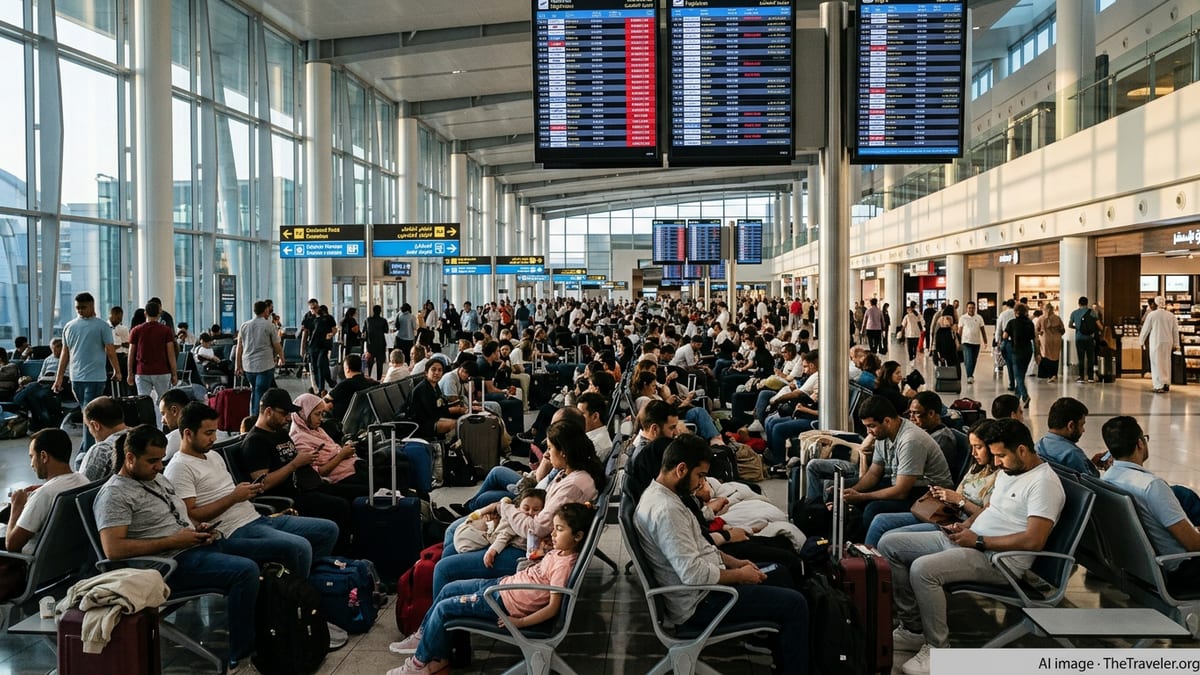
Hundreds of travellers remain stranded in the United Arab Emirates as airports in Dubai, Abu Dhabi and Sharjah continue to grapple with widespread travel disruptions, with at least 48 flight cancellations and 56 delays reported across carriers including Gulf Air, Saudia and Qatar Airways.
Get the latest news straight to your inbox!
Regional Airspace Closures Keep UAE Hubs Under Strain
Commercial aviation in the Gulf remains severely disrupted following weeks of conflict-related airspace closures across the United Arab Emirates, Bahrain, Qatar and several neighboring states. Published aviation and security advisories indicate that UAE airspace has faced intermittent shutdowns and restrictions since late February, forcing carriers to cancel or reroute services through Dubai, Abu Dhabi and Sharjah.
Dubai International and Abu Dhabi’s Zayed International are among the world’s busiest transfer hubs, and reduced operations at these airports have had an outsized impact on global connectivity. Publicly available flight-tracking data and airline updates show that only a limited number of services are operating on adjusted routings and schedules, while a significant share of planned departures remain grounded.
Sharjah International Airport, a key base for low-cost and regional operators, has also been affected as airlines adjust to altered flight paths and slot allocations. According to industry bulletins, the cumulative effect of airspace restrictions, security reviews and operational constraints has translated into a rolling pattern of cancellations and extended delays across all three UAE gateways.
Travel analysis referencing the ongoing situation describes a cascading impact, where even airports that have technically reopened for “exceptional” or limited operations are unable to absorb the backlog of passengers whose journeys were interrupted during the height of the shutdowns.
Gulf Air, Saudia and Qatar Airways Face Mounting Schedule Disruptions
Among the hardest-hit carriers are Gulf-based airlines that rely heavily on the UAE and wider region as a transfer corridor between Europe, Asia and Africa. Passenger advisories and airline status pages indicate that Gulf Air continues to face extensive cancellations, with Bahrain’s ongoing airspace closure preventing normal operations and disrupting services to and from Dubai and other UAE airports.
Saudia has also implemented wide-ranging changes to its network. Operational updates from the region describe suspended or significantly reduced services on routes linking Saudi Arabian cities with Dubai, Abu Dhabi, Doha and other key Gulf destinations. Passengers booked on these flights have been encouraged through public notices to verify schedules shortly before travel, as timetables remain subject to late adjustments.
Qatar Airways, which depends on dense regional connectivity to feed its long-haul network, is contending with the closure and tight restrictions of Qatari airspace, as well as knock-on effects from neighboring countries. Published coverage notes that these constraints have forced the carrier to pare back departures and arrivals, affecting itineraries that normally use Dubai, Abu Dhabi or Sharjah as part of multi-leg journeys.
Other international and regional airlines, including Emirates, Etihad Airways and several Asian and European carriers, have also modified operations in response to the evolving security and airspace environment. While some have resumed selective services, publicly available information shows that schedules remain far from normal, with last-minute cancellations and delays still commonplace.
Hundreds of Travellers Face Long Waits, Rebookings and Limited Options
For passengers caught in the middle of these disruptions, the operational challenges translate into long queues, uncertain departure times and complex rebooking processes. Reports from regional media and travel advisories describe travellers waiting in terminal halls for new flight allocations, often with limited clarity on when their journeys can continue.
With 48 cancellations and 56 delays recorded across affected carriers on a recent day of operations, the backlog of disrupted travel plans continues to grow. Many travellers connecting via Dubai, Abu Dhabi or Sharjah have been forced to reroute through alternative hubs in Saudi Arabia or Oman where airspace and airport capacity permit, often at short notice and with extended journey times.
Accommodation and welfare arrangements depend heavily on each airline’s policies, and publicly available information suggests a patchwork response as carriers balance large numbers of stranded passengers against operational and safety constraints. Some travellers have managed to secure seats on limited outbound flights, while others remain in transit zones awaiting confirmation of new itineraries.
Travel forums and passenger advisories highlight particular challenges for those with onward connections to destinations where flights are also curtailed or rerouted due to the wider regional situation. This has left some travellers facing multiple consecutive cancellations or missed connections before securing a confirmed route home.
Authorities Pivot to Exceptional Flights as Hubs Reopen Gradually
In response to the persistent disruption, aviation authorities and airport operators in the UAE have shifted to an “exceptional operations” footing, according to official notices and local press coverage. This approach prioritises specific outbound services intended to move stranded passengers while regular commercial schedules remain significantly reduced.
Airlines such as Emirates and Etihad have progressively introduced limited services from Dubai and Abu Dhabi, described in public statements as repositioning, cargo and repatriation-style flights. Although these operations have provided a partial outlet for travellers stuck in the country, they fall short of restoring the full range of pre-crisis frequencies and destinations.
Sharjah International Airport has similarly focused on enabling controlled departures where operationally feasible, with carriers required to coordinate closely on slot timings and approved routings that avoid restricted or high-risk airspace. Travel industry circulars note that the pace of normalization is likely to be gradual, conditioned by broader security assessments across the region.
Passenger-facing information repeatedly urges travellers not to proceed to the airport without confirmed flight details, reflecting the fluid nature of the situation. Check-in counters are reported to be opening only for specific services, and some terminals are operating with reduced capacity while safety checks and infrastructure assessments continue.
What Travellers Should Expect in the Coming Days
Though some improvement is evident compared with the peak of the shutdowns, publicly available data and airline updates suggest that disruption at Dubai, Abu Dhabi and Sharjah will persist in the short term. The combination of damaged infrastructure, altered air routes and continuing airspace restrictions means carriers are unlikely to operate full timetables in the coming days.
Travel experts and industry bulletins recommend that passengers maintain flexible plans, monitor flight status tools closely and stay alert to rebooking options offered by airlines. Many carriers serving the UAE have introduced temporary waivers for change fees on affected routes, though the availability of alternative seats remains limited on high-demand corridors.
As Gulf Air, Saudia, Qatar Airways and other regional airlines work through backlogs, the pattern of daily cancellations and delays is expected to remain uneven, with periods of relative stability punctuated by renewed schedule changes. Travellers with non-essential journeys are being advised in public guidance to consider postponing trips until operations stabilize further.
For now, the experience of hundreds of stranded travellers in the UAE reflects a wider shock to global aviation, with the Gulf’s role as a crucial bridge between continents laid bare by the cascading effect of airspace closures and airport disruptions across the region.