

More news on this day
Unprecedented airspace closures across the Gulf have brought Dubai, Doha and Abu Dhabi’s powerhouse hubs to an abrupt halt, stranding tens of thousands of travelers and exposing how vulnerable global tourism is to fast-escalating regional tensions.
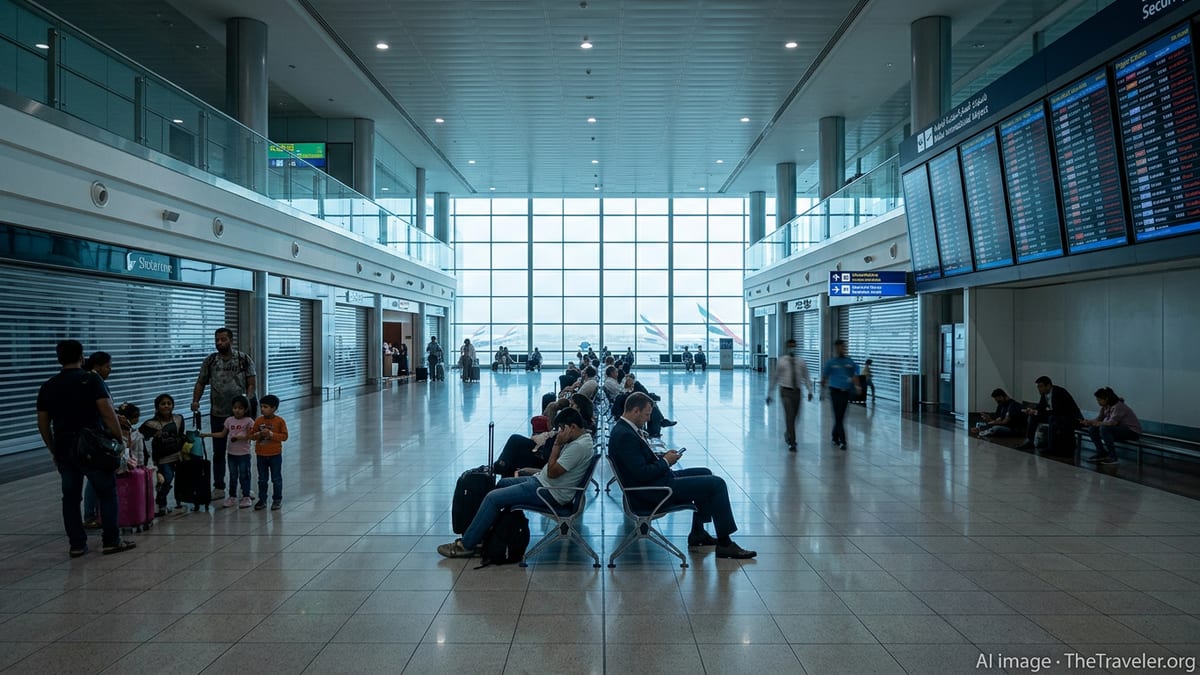
Strategic Hubs Go Quiet as Conflict Escalates
Dubai International, Hamad International in Doha and Abu Dhabi’s Zayed International Airport have all seen normal commercial operations largely suspended since February 28, after US and Israeli strikes on Iran triggered waves of retaliatory attacks and sweeping airspace closures across the region. Authorities in the United Arab Emirates, Qatar and neighboring states moved quickly to shut their skies to civilian traffic, forcing airlines to ground or divert thousands of flights and turning some of the world’s busiest transit hubs into makeshift waiting halls.
In Dubai, limited flights have begun to trickle out, but traffic remains a fraction of normal levels. Airport officials say constrained air corridors, heightened military activity and the need to inspect infrastructure after reported strike damage mean that any restart must be gradual. Abu Dhabi is facing a similar situation, with only a small number of departures and arrivals operating under strict security protocols while the wider airspace picture remains unstable.
Doha’s Hamad International, which has been directly affected by Iranian missile volleys and the complete closure of Qatari airspace, remains effectively shut to routine passenger operations. Qatar Airways has extended its suspension of flights and is updating passengers in 24-hour increments, underscoring just how fluid the crisis remains. For now, one of the world’s most highly rated hub-and-spoke systems has been reduced to silence.
Thousands Stranded and a Patchwork of Limited Reopenings
The immediate human impact is visible in terminals where departure boards are dominated by red cancellation notices. Aviation data providers estimate that more than ten thousand flights have been cancelled or rerouted across the Gulf since the crisis began, with Dubai and Doha absorbing much of the disruption. Transit passengers are among the hardest hit, many finding themselves unexpectedly stuck far from home with little clarity on when they can move again.
Authorities in the UAE have been working with airlines to provide emergency accommodation, food and basic services for stranded travelers, particularly at Dubai’s massive Terminal 3. Some embassies have organized repatriation flights or encouraged citizens to seek alternative routings via Europe, South Asia or Africa, but options remain limited as carriers scramble to design new flight paths that avoid contested skies.
While Dubai and Abu Dhabi have cautiously reopened a small number of corridors, prioritizing long-haul connections to major cities, capacity is sharply constrained. Airlines are focusing on clearing backlogs of passengers already in the system, meaning tourists with upcoming trips face rebookings that stretch days or even weeks into the future. At Doha, where flight operations are still suspended pending safety assurances from regulators, the wait is even more uncertain.
Airlines Confront Operational and Financial Shock
For Gulf carriers that have spent decades building global super-connector networks, the shutdowns represent both an operational nightmare and a financial shock. Emirates, Etihad and Qatar Airways have all issued broad waivers allowing free date changes or refunds for tickets covering the crisis period, a necessary step to preserve customer goodwill but one that will weigh heavily on balance sheets in the short term.
The airlines are also grappling with complex fleet and crew challenges. Aircraft are scattered across diversion airports from Europe to South Asia, leaving schedulers to juggle positioning flights, crew duty limits and maintenance windows in an environment where airspace permissions can change with little notice. Cargo operations, vital for high-value shipments that usually move through these hubs, are similarly disrupted, creating backlogs and rippling into global supply chains.
Insurance and fuel costs are another mounting concern. Rerouted flights that detour around closed skies can add hours to journey times, burning more fuel and requiring additional crew. Underwriters are watching closely as the risk profile for operating in parts of the Middle East shifts day by day. Analysts warn that if the crisis persists, airlines may be forced to trim schedules well beyond the conflict zone to protect their networks from further shocks.
Tourism Hotspots Face a Critical Stress Test
Beyond the immediate aviation chaos, the closures pose a serious test for Gulf tourism strategies that have leaned heavily on seamless connectivity. Dubai, Doha and Abu Dhabi have worked for years to reposition themselves as destination cities with world-class museums, resorts and events, supported by dense air links that channel visitors from every continent. With those links abruptly interrupted, hotels, tour operators and retail businesses are seeing a sudden wave of cancellations and no-shows.
Luxury properties that depend on high-spending transit visitors converting layovers into stopovers report occupancy plunging within days. Major attractions and shopping districts are noticeably quieter, particularly in Dubai, where international arrivals are a key driver of spending. Event organizers are reassessing upcoming conferences, sports tournaments and cultural festivals, with some quietly exploring relocations or postponements if reliable air access cannot be guaranteed soon.
Regional tourism boards are treading a fine line, projecting calm and emphasizing long-term resilience while avoiding any suggestion that safety concerns are being downplayed. Their message to international markets is that these are extraordinary circumstances rooted in security decisions, not in any loss of confidence in the destinations themselves. Whether that message sticks will depend heavily on how quickly predictable air links can be restored.
What Travelers and the Industry Should Expect Next
For now, travelers with imminent plans involving Dubai, Doha or Abu Dhabi should prepare for continued uncertainty. Industry experts say that even if airspace restrictions begin to ease in the coming days, the backlog of grounded aircraft and displaced passengers means it could take a week or more before anything resembling normal schedules return. Passengers are being urged to wait for direct confirmation from airlines before heading to airports and to consider flexible routings that avoid the Gulf entirely if their travel is not time sensitive.
Tour operators and corporate travel managers are increasingly looking at alternative hubs in Europe, Turkey and South Asia to keep itineraries viable. Some leisure travelers are rebooking to destinations served by nonstop flights from their home markets, bypassing the need for a Gulf transit altogether. If the crisis is prolonged, this temporary workaround could accelerate a broader rebalancing of global air traffic flows, eroding some of the dominance that Gulf hubs have enjoyed in the long-haul market.
For the tourism industry, the coming weeks will be a barometer of resilience. A swift de-escalation and phased reopening would likely see demand rebound, aided by pent-up travel plans and still-strong brand recognition for Gulf destinations. A drawn-out conflict or repeated closures, however, could prompt both airlines and travelers to bake more caution into their long-term planning. Either way, the events of early 2026 have delivered a stark reminder that even the most sophisticated aviation and tourism ecosystems remain at the mercy of geopolitics.