

More news on this day
Rapidly widening military tensions between Iran, the United States and Israel triggered sweeping airspace closures across Qatar, the United Arab Emirates and Kuwait on Saturday, unleashing fresh chaos across global aviation networks just as the Gulf’s hubs were handling peak weekend traffic.
Gulf Aviation Authorities Move to Shut or Curb Skies
Civil aviation regulators in Qatar, the UAE and Kuwait imposed sudden restrictions on airspace use on February 28 after coordinated US-Israeli strikes on Iranian targets and subsequent Iranian missile launches raised fears of spillover attacks on Gulf territory. The closures, framed as temporary and precautionary, immediately affected key corridors that link Europe and North America with Asia and the Indian Ocean region.
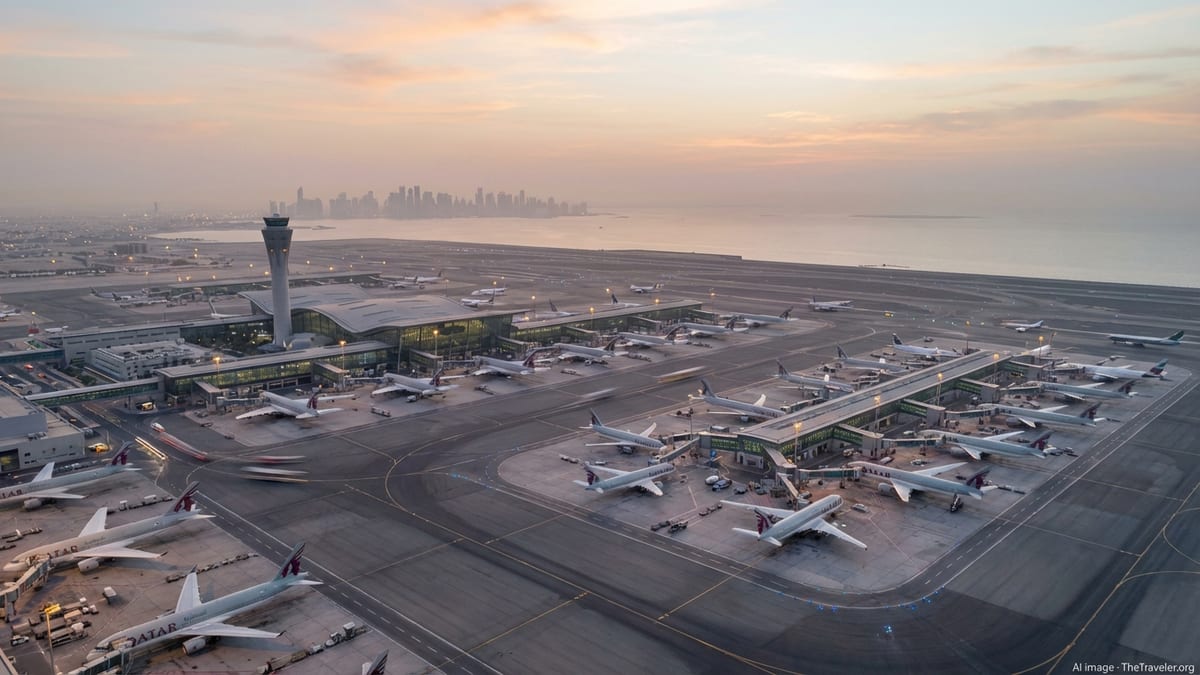
In Doha, Qatari authorities confirmed a halt to most air traffic after air defence systems intercepted at least two inbound Iranian missiles, urging residents to stay indoors and away from military facilities. The move effectively throttled movements through Hamad International Airport, one of the world’s busiest long-haul transit hubs, as aviation officials reassessed risks to overflying traffic.
The UAE’s General Civil Aviation Authority announced a partial closure of national airspace, describing the measure as exceptional and aimed at ensuring flight safety amid reports of explosions in Abu Dhabi and Dubai. While not a blanket shutdown, the restrictions forced carriers to hold, divert or cancel services that would normally traverse congested air corridors over the country.
Kuwait’s Directorate General of Civil Aviation separately confirmed that all flights to Iran had been suspended until further notice, citing the full closure of Iranian airspace and the broader security situation. Officials warned that additional services relying on Iranian or adjacent Gulf airspace could also face delays as routes were redrawn around emerging no-go zones.
Iranian Airspace Closure Adds Long-Haul Complexity
The measures in the Gulf came on top of Iran’s own decision to close its airspace for at least several hours following the initial wave of strikes on Tehran and other cities. A Notice to Airmen (NOTAM) issued by Iranian authorities halted most overflights, abruptly severing a crucial east-west aviation artery that many carriers use to shorten journeys between Europe and Asia.
Airlines and flight-tracking data showed long-haul services already in the air being rerouted in real time, with some aircraft forced to divert to alternative airports or return to their points of origin. Kazakhstan’s Air Astana group, for example, canceled all flights to the Middle East for the day and reported that services from Almaty and Astana bound for Dubai, Doha and Medina had either turned back or diverted, including at least one widebody flight sent to Delhi.
European and Asian airlines began systematically avoiding Iranian airspace, echoing earlier guidance from the European Union Aviation Safety Agency that urged carriers to steer clear of the region amid mounting security risks. With both Iranian skies and parts of the Gulf route structure constrained, dispatchers were left scrambling to find longer, fuel-intensive paths through Turkey, the Caucasus, North Africa or the Arabian Sea.
The resulting congestion on secondary routes raised concerns about knock-on delays and crew-duty challenges rippling through timetables for days. Aviation analysts noted that the Middle East, already a heavily militarised theatre, has become increasingly difficult for civilian planners to navigate safely without substantial margin for geopolitical surprises.
Hub Airports in Doha, Dubai and Beyond Face Heavy Disruption
The latest closures immediately hit some of the world’s most important connecting hubs. Qatar Airways, based in Doha, temporarily halted much of its operation as authorities paused traffic flows in and out of Hamad International, stranding transfer passengers and forcing widespread rebooking. The carrier, a key bridge between Europe, Africa, Asia and Oceania, had previously rerouted flights around conflict zones but now faces constraints at its own base.
In the UAE, airports in Dubai and Abu Dhabi saw a wave of delays and cancellations as the airspace restrictions took effect. Emirates, flydubai and Etihad Airways began canceling services to hotspots and holding others on the ground while air traffic controllers worked to implement revised procedures. Some inbound flights were diverted to alternate airports outside the immediate risk area, while others were kept in airborne holding patterns before being cleared for extended approaches.
Further north, Kuwait International Airport scaled back operations connected to Iran and potential overflight corridors, while warning passengers to check with airlines before heading to terminals. The cumulative effect across Gulf hubs has been an abrupt reduction in regional and long-haul connectivity at a time when many carriers were operating near pre-crisis capacity.
Travel agents in Europe, India and Southeast Asia reported a surge in inquiries from passengers seeking to reroute away from the region altogether, including via longer pathways through Central Asia or Africa. However, capacity on those alternatives is limited, and many travelers are being offered only delayed departures or full refunds.
Global Airlines Cancel, Divert and Reroute
Major international airlines reacted within hours as the scale of the airspace shutdown became clear. Several European carriers, including Lufthansa and Wizz Air, suspended flights into the wider conflict zone, while others such as Air France and Iberia Express focused on cancellations to Israel and nearby destinations already affected by earlier hostilities. India’s Air India and IndiGo halted scheduled services to the Middle East, citing both the Iranian closure and the widening Gulf restrictions.
Turkish Airlines, which often operates dense schedules through Iranian and Gulf airspace, pulled back from some routes amid the heightened risk environment. Flight data also showed Gulf-based carriers cancelling services into Iran and Iraq and trimming frequencies on some intra-regional routes judged to be too close to potential missile trajectories or military assets.
Industry groups described an atmosphere of intense operational stress, with airline operations centers running continuous risk assessments and contingency plans. Dispatchers must now factor in not only the absence of direct routes but also the possibility of sudden additional closures if the conflict widens or if further strikes target Gulf infrastructure.
The International Air Transport Association urged governments to provide clear, timely information on airspace status and military activity, warning that uncertainty complicates efforts to keep passengers and crews safe while maintaining essential connectivity. Aviation insurers are also reassessing risk premiums for overflights in affected flight information regions, costs that could ultimately filter into fares if the crisis drags on.
Passengers Face Delays, Longer Routes and New Safety Advisories
For travelers, the most immediate consequences are delays, cancellations and longer flight times on routes that do operate. Airlines have advised passengers transiting through Doha, Dubai, Abu Dhabi and Kuwait City to monitor their bookings closely and expect last-minute changes as the situation evolves by the hour.
Some flights between Europe and South or Southeast Asia are now planned with substantial detours, adding hours to journey times and requiring technical stops for refueling. Crew-rest limitations are forcing further schedule adjustments, with airlines prioritizing repatriation of stranded passengers and essential links over discretionary capacity.
Governments have updated travel advisories for the Gulf and Iran, urging citizens to reconsider non-essential travel and to register with consular services if already in the region. Embassies, including US missions, have encouraged residents to stay away from military bases and critical infrastructure that could become targets in any further exchange of fire.
While aviation safety regulators emphasize that commercial flights will not operate in airspace assessed as being at direct risk of attack, the sudden removal of multiple key corridors highlights how exposed global travel remains to geopolitical shocks. With the military confrontation between Iran, the US and Israel still unfolding, airlines and passengers alike are bracing for an extended period of volatility across one of the world’s busiest crossroads.