

More news on this day
Fresh disruptions across Gulf airspace on March 8 are causing another wave of delays and cancellations for airlines that rely on Middle Eastern hubs, as regional authorities cautiously reopen limited corridors while keeping key routes restricted amid ongoing military tensions.
Patchwork Reopenings Keep Airlines in Holding Pattern
After more than a week of rolling airspace closures linked to the escalating conflict involving Iran, the United States and Israel, Gulf aviation authorities spent March 8 fine-tuning a patchwork of reopenings that has left carriers struggling to restore reliable schedules. Partial corridors have reopened over parts of the Persian Gulf, but large swaths of sky remain effectively off-limits for civilian traffic, forcing operators to choose between cancellations and lengthy detours.
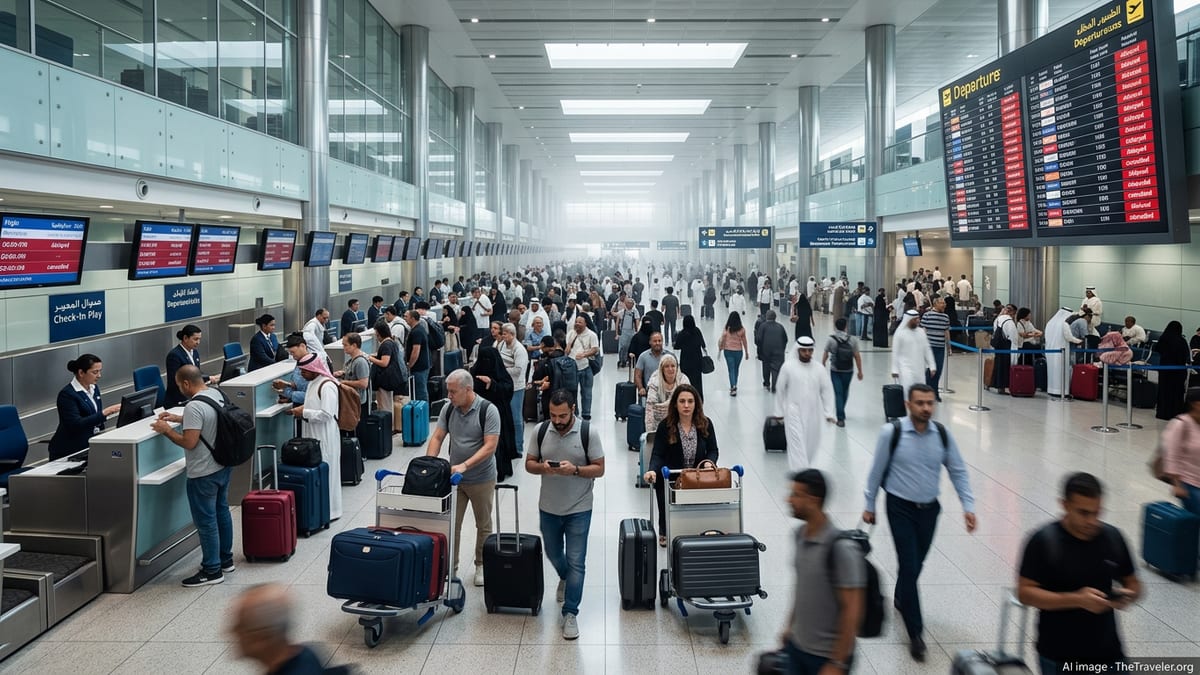
Regional airlines that form the backbone of global east–west travel are operating with constrained networks. Some have cautiously resumed select flights, while others maintain widespread suspensions into and across the Gulf. The mixed picture has created a day of uncertainty for passengers, with flight status boards in Dubai, Doha, Abu Dhabi, Manama and Kuwait City showing an uneven blend of departures, heavily delayed services and outright cancellations.
Authorities have framed the current configuration as a safety-first approach while they monitor the risk of further missile and drone activity. Industry analysts say the risk calculus has shifted dramatically in recent days, and that even as parts of the airspace reopen, traffic flows will remain disrupted well beyond March 8 as airlines rebuild schedules and reposition aircraft and crew.
European regulators have also extended their conflict-zone advisories over the Middle East and Gulf region, underscoring ongoing concern about flying near potential military activity. That guidance is pushing many non-regional airlines to avoid the most affected areas entirely, amplifying the impact on long-haul routes between Europe, Asia and Africa.
Major Carriers Extend Cancellations and Reroute Traffic
Across the region, airlines are taking divergent approaches as they balance safety, operational complexity and commercial realities. Some Gulf-based carriers have maintained near-total suspensions of flights traversing the most contested airspace, while restoring a subset of regional services along safer corridors that skirt conflict zones.
Others are leaning heavily on rerouting, with long-haul flights to and from Europe and Asia tracking far to the north or south of the Gulf. These detours add hours to flight times and require additional fuel and technical stops, stretching aircraft utilization and crew duty limits. For travelers, that has translated into overnight delays, missed connections and last-minute aircraft swaps as airlines juggle constrained fleets.
A number of European and Asian airlines have extended pauses on their services into key Gulf hubs through at least March 8, citing both safety assessments and the limited availability of stable routings. Several carriers that usually rely on Dubai, Doha or Abu Dhabi as critical transfer points are instead funnelling passengers through alternative hubs in Turkey, Egypt and southern Europe, reshaping familiar global travel patterns almost overnight.
Low-cost and leisure-focused airlines have been particularly exposed, as their thinner schedules and tighter margins leave less flexibility to absorb long detours or prolonged groundings. Many have opted to cancel outright rather than operate markedly inefficient routings, compounding the disruption for seasonal holiday traffic and migrant worker flows to and from the Gulf.
Ripple Effects Stretch From Europe to South Asia
While the most immediate impact is being felt in Gulf airports, the consequences on March 8 are radiating across a broad swath of the global aviation network. Major European hubs have reported elevated levels of delays and missed connections tied to late-arriving or cancelled flights from the Middle East, adding strain to already busy weekend schedules.
In South Asia, airports such as Mumbai and other major Indian gateways have logged hundreds of cancellations and schedule changes over the past week as airlines cut or consolidate services that normally pass through Gulf hubs. The knock-on effects have included congested terminals, long customer-service queues and difficulties rebooking passengers onto alternative routings, especially on popular labour and family-visit corridors.
Further afield, North American and Asia-Pacific travelers are seeing the disruption in the form of stretched itineraries and unexpected stopovers. Journeys that previously relied on single-stop connections through the Gulf are being replaced with multi-leg routings via Europe, Central Asia or Africa, often at the cost of longer travel times and reduced flight frequency.
Aviation consultants warn that even if airspace conditions continue to improve, global schedules may take weeks to fully stabilize. Aircraft and crews are out of their normal rotations, and airlines are juggling not just safety concerns but also complex commercial and legal obligations to transport stranded passengers while managing mounting operational costs.
Passengers Confront Uncertainty, Confusion and Added Costs
For travelers on March 8, the evolving airspace restrictions are translating into a day of uncertainty. Many woke up to find their flights delayed, rerouted or cancelled with little advance warning, as airlines adjusted operations in real time to shifting guidance from aviation authorities and military risk assessments.
At Gulf hubs and connecting airports in Europe and Asia, passengers have reported long waits at service desks and limited information about rebooking options. Some airlines are offering hotel accommodation and meal vouchers for those stranded overnight, while others are directing passengers to online self-service tools that are themselves strained by surging traffic.
Travelers with time-sensitive trips, including religious pilgrims, business travelers and residents returning from holidays, face particular challenges. Rerouted flights may arrive at different times or even different airports than originally planned, complicating onward ground transport and domestic connections. In some cases, passengers are purchasing entirely new itineraries on alternate airlines just to reach their destinations, then seeking reimbursement later.
Insurance coverage is another grey area, as policies vary in how they treat disruptions linked to conflict-related airspace closures. Travel agents and consumer advocates are urging passengers to keep detailed records of expenses, communications with airlines and any official advisories issued for their routes and destinations.
What Travelers Should Expect in the Coming Days
Industry observers say March 8 is likely to mark a transitional phase rather than a clean reset for Gulf aviation. With parts of the airspace cautiously reopened but key conflict-zone advisories still in place, airlines are expected to continue cancelling and consolidating flights at short notice while testing newly available routings.
Passengers booked on services that overfly or connect through the Gulf in the coming days are being urged to monitor their flight status frequently, use airline apps and sign up for mobile alerts. Many carriers are waiving change fees for affected routes, allowing customers to reroute through alternative hubs or shift their travel dates, although fare differences may still apply.
Corporate travel managers are revising routing guidelines, in some cases instructing employees to avoid itineraries that rely on Gulf connections until operational patterns stabilize. Tour operators with group itineraries built around Middle Eastern hubs are racing to rework programs, especially for departures scheduled in the next one to two weeks.
Analysts say the longer-term question is how quickly confidence in Gulf hubs can be restored once airspace fully reopens. The region’s super-connector airports have been central to global travel for more than a decade, but the scale of the current disruption is prompting airlines and passengers alike to reassess their exposure to a corridor that, at least for now, no longer feels as predictably open as it once did.