

More news on this day
Asia-to-Europe flyers are facing marathon journeys, abrupt cancellations, and soaring fares as sweeping airspace closures across the Gulf sever some of the world’s busiest long-haul corridors.
Get the latest news straight to your inbox!
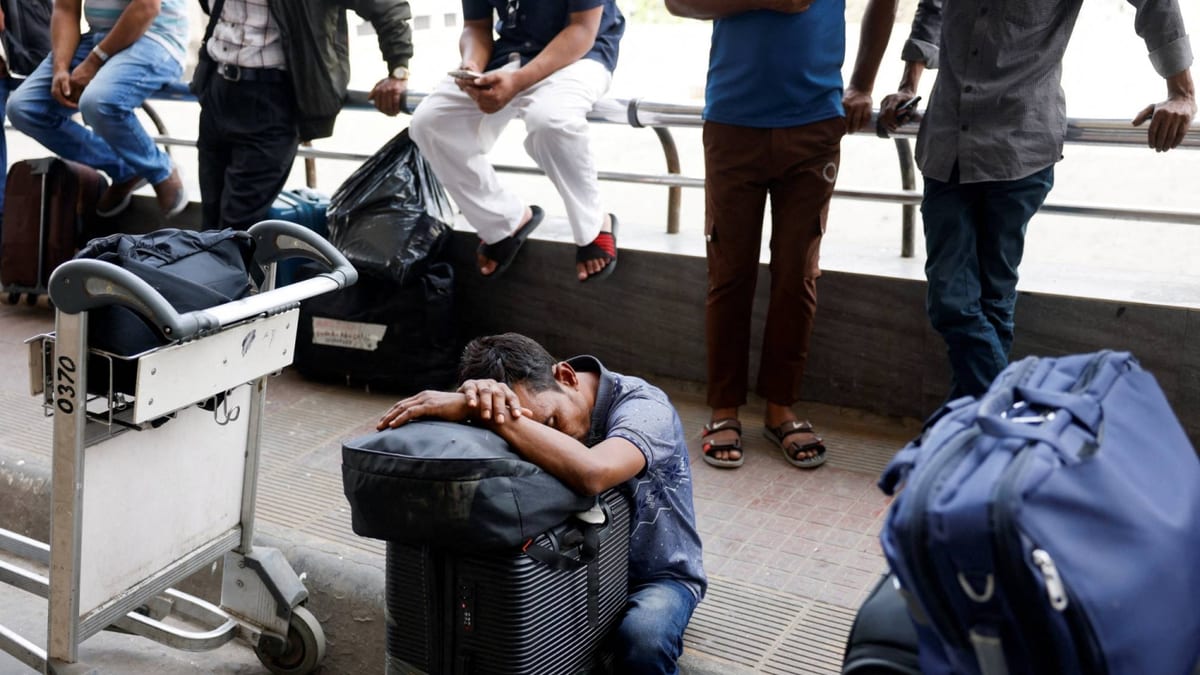
Image by japantimes.co.jp
Asia–Europe corridor choked by sudden Gulf shutdowns
Major conflict-related airspace restrictions across Iran, Iraq, Syria, Israel, and several Gulf states since late February have upended global aviation networks, particularly the dense traffic between Asia and Europe. Publicly available flight tracking data and industry advisories indicate that countries across the region either fully closed or severely restricted civilian airspace in the days following coordinated strikes involving Iran, the United States, and Israel. The closures effectively removed key overflight corridors long used by airlines connecting hubs in South and Southeast Asia with cities in Europe.
Reports from regional media and aviation risk consultancies describe a patchwork of fast-changing rules, with some airports intermittently reopening for limited departures and emergency “exception flights,” while surrounding airspace remains constrained or subject to sudden shutdowns. At the height of the turmoil, advisory notes referenced thousands of daily cancellations, diversions, and mid-route turnbacks as airlines scrambled to comply with new security directives and avoid active conflict zones.
The result for travelers has been acute disruption on marquee routes such as Bangkok to London, Delhi to Frankfurt, and Singapore to Paris, which traditionally rely on efficient routings over the Gulf and Iran. With those paths compromised, airlines are stitching together detours via Central Asia, the Caucasus, or longer swings over the Arabian Sea and Africa, adding hours to flight times and undermining already thin margins.
In some cases, Asia–Europe journeys have become effectively impossible for days at a time, as long-haul aircraft and crews are left out of position, congested alternative hubs reach capacity, and national authorities issue rolling operational bans affecting both takeoffs and overflights.
Passengers stranded and paying more for every extra mile
For travelers caught mid-journey, the confusion has translated into nights spent in transit lounges, uncertain rebooking prospects, and mounting out-of-pocket costs. Coverage from airports in Europe, the Gulf, and South Asia shows passengers sleeping on terminal floors beside rows of cancelled flights to Dubai, Doha, Abu Dhabi, Kuwait City, and other key connectors that normally funnel Asia–Europe traffic.
According to published briefings from global consultancies, severe congestion has been reported at alternative hubs such as Cairo, Istanbul, Athens, Muscat, and some Central Asian gateways as airlines attempt to rebuild itineraries around closed or restricted Gulf airspace. Travelers have described being rerouted through multiple extra stops and facing lengthy queues for hotel vouchers and meal assistance, often exceeding the limited protections mandated under different national or regional regulations.
At the same time, the sharp rise in jet fuel prices triggered by the Iran war and the near-standstill of shipping and aviation flows around the Strait of Hormuz is feeding directly into ticket prices. Recent coverage notes that some European and Middle Eastern carriers are increasing fares, particularly in premium cabins and on long-haul routes that now require significant extra fuel burn due to detours. Industry analysts cited in business press estimate that higher fuel and operational costs, combined with lost capacity, are pushing average fares higher even as schedules remain unreliable.
For stranded travelers trying to secure last-minute alternatives, this dynamic can be brutal. Limited remaining seats on viable routings are commanding steep prices, and some governments that had temporarily capped fares in response to earlier disruptions have begun rolling back those controls, citing mounting financial pressure on their airlines.
Airlines bleed cash as detours, fuel spikes and idle jets bite
Aviation industry experts quoted in regional outlets estimate that the broader Middle East travel and tourism sector is losing hundreds of millions of dollars per day in foregone visitor spending as the crisis drags on. A recent assessment by a global travel and tourism body suggested that conflict-driven disruptions could erase billions of dollars from 2026 projections if airspace restrictions and traveler uncertainty persist through the busy summer season.
For airlines, the financial picture is particularly stark on the Asia–Europe axis. Carriers that built their business models around ultra-efficient Gulf megahubs have been forced to park widebody aircraft, suspend high-yield routes, and absorb the costs of crew repositioning and passenger care. Investing-focused news outlets report that some Middle Eastern airlines are grounding portions of their fleets and warning of weaker earnings as they juggle volatile fuel bills and reduced network connectivity.
Even carriers far from the conflict zone are feeling the strain. Coverage of North American and European airlines shows some groups trimming unprofitable long-haul services, explicitly citing expectations of oil prices staying elevated through at least 2027. Others are reshaping schedules and deploying capacity toward less fuel-intensive regional markets, effectively conceding that certain Asia–Europe routings are no longer viable under current conditions.
Meanwhile, operational risk remains high. Travel security advisories point to ongoing missile and drone activity aimed at critical infrastructure around the Gulf, warning that even brief escalations can prompt renewed airspace closures with minimal notice. That level of uncertainty makes it difficult for airlines to plan rotations, hedge fuel effectively, or guarantee reliable connections for passengers crossing continents.
New winners and temporary workarounds in a fractured sky
While Gulf hubs are bearing the brunt of the disruption, other countries are emerging as temporary beneficiaries. Egyptian media, for example, highlight how Cairo has become a critical bridge between Europe and Asia as airlines reroute flights to avoid conflict-affected skies. Increased overflights and transit traffic are boosting demand for local services and straining airport infrastructure that was not designed to replace the combined capacity of Dubai, Doha, Abu Dhabi, and other Gulf giants.
Similarly, airlines in Turkey, Greece, and parts of Central Asia are reporting heavier reliance on their hubs as waypoints in complex new routings. Some carriers are adjusting schedules and adding capacity on select trunk routes linking Europe to cities such as Mumbai, Bangkok, and Singapore via alternative corridors over the Mediterranean, the Black Sea region, or the western Indian Ocean.
Yet these workarounds come with trade-offs. Longer great-circle paths increase fuel burn and carbon emissions at a time when many airlines face regulatory and shareholder pressure to curb their environmental footprint. Extended duty times also push crew scheduling to the limit, forcing more layovers and standby staffing, which further inflates costs.
For Asia–Europe travelers, the practical implications are straightforward: more stops, longer journeys, less predictability, and fewer low-fare options. Travel risk specialists advise passengers to build in additional buffer time for connections, monitor airline advisories closely, and expect that routings might change repeatedly, even after check-in.
Economic stakes rise as summer peak season approaches
The timing of the Gulf airspace closures is particularly sensitive for the global travel industry. Late spring and summer traditionally bring a surge in long-haul leisure and family travel between Europe and Asia, from European holidaymakers heading to Indian Ocean beaches and Southeast Asian cities to expatriate workers and diaspora communities making annual trips home.
With many of those journeys now dependent on fragile detours and stretched alternative hubs, sector analysts warn of a broader economic drag that could ripple from airlines to hotels, tour operators, and retail businesses across multiple regions. Forecasts suggest that if significant Gulf airspace restrictions remain in place into the summer, some travelers may simply cancel or postpone trips, while corporate buyers tighten travel budgets in response to both price and reliability concerns.
Energy markets add another layer of risk. International agencies have drawn a direct line between the Iran war, disruptions in and around the Strait of Hormuz, and the surge in global energy prices. Elevated jet fuel costs are likely to remain a defining feature for airlines for months to come, even if some airspace gradually reopens, limiting the scope for quick fare relief on long-haul Asia–Europe routes.
For now, publicly available information suggests that airlines and regulators are focused on incremental, short-notice adjustments rather than sweeping, long-term redesigns of global flight paths. That leaves Asia–Europe travelers facing an extended period in which a once-straightforward overnight hop via the Gulf has become one of the most unpredictable, and expensive, journeys in the sky.