

More news on this day
Thousands of passengers travelling through Germany’s biggest airports faced escalating disruption on Sunday as the shutdown of key Gulf air hubs and surrounding airspace triggered at least 263 flight delays and 72 cancellations in Frankfurt, Munich and Berlin alone.
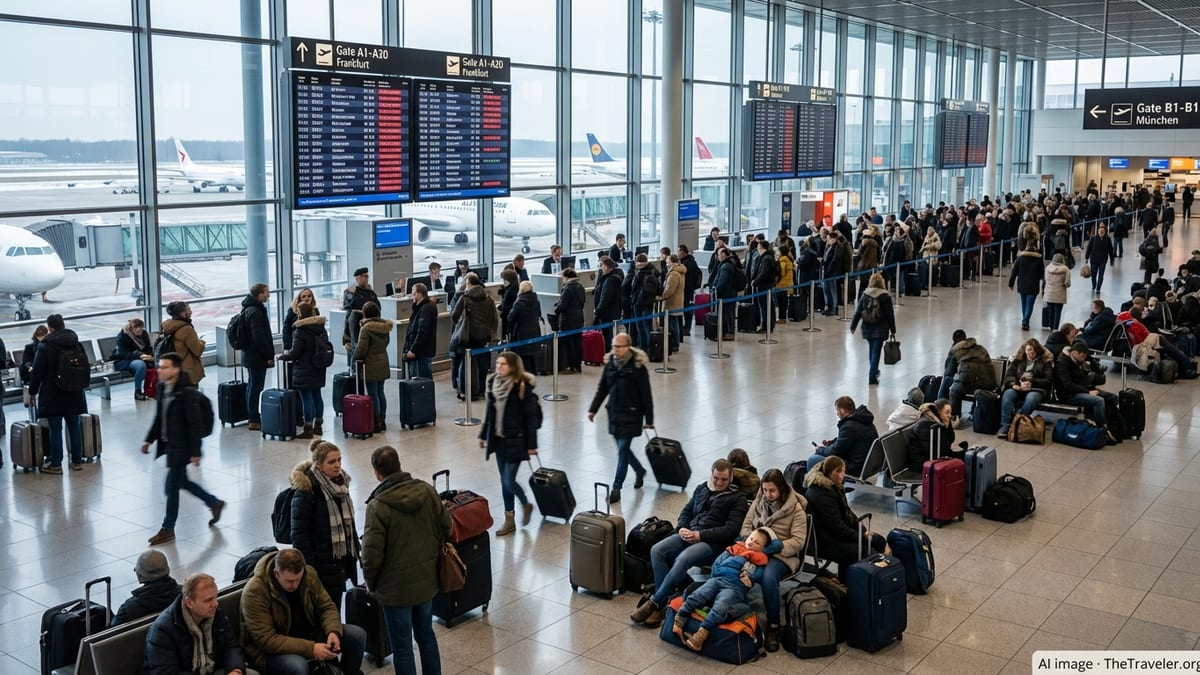
Middle East Airspace Crisis Ripples Into German Hubs
The latest wave of disruption follows the closure of large swathes of Middle Eastern airspace after U.S. and Israeli strikes on Iran and subsequent retaliatory attacks, which prompted Iran, Israel, Iraq, Qatar, Kuwait, Bahrain and the United Arab Emirates to shut or severely restrict their skies. With Dubai, Abu Dhabi and Doha effectively offline as global transfer points, airlines are struggling to maintain long haul schedules between Europe, Asia and Africa.
Germany’s role as a key European gateway has amplified the impact. Long haul services between Germany and Asia that normally route via the Gulf have been grounded or forced into lengthy detours, while crews and aircraft already out of position in the network are compounding knock on delays. Flight tracking data shows thousands of services delayed or cancelled worldwide as carriers attempt to replan routes around the closed corridors.
Aviation analytics firm Cirium has reported that Gulf based airlines such as Emirates, Qatar Airways and Etihad have cancelled a significant share of their daily schedules as operations from their hubs remain suspended or sharply curtailed. El Al and several regional carriers have also halted or slimmed down services as airports in Israel and across the Gulf remain subject to tight security restrictions and operational uncertainty.
Frankfurt, Munich and Berlin See Schedules Unravel
Frankfurt Airport, Germany’s primary intercontinental hub, has borne the brunt of Sunday’s disruption. Airlines operating services linking Frankfurt with Dubai, Abu Dhabi, Doha and Tel Aviv have cancelled numerous departures and arrivals, while further flights have been delayed for hours as carriers wait for updated routing permissions or replacement aircraft and crews.
Munich and Berlin Brandenburg have also recorded mounting irregularities, with combined delays across the three airports surpassing 260 flights and cancellations rising above 70 by early evening. Ground handlers described crowded terminals, long queues at rebooking desks and passengers camped out around power outlets as they waited for updates on onward travel options.
While German based carriers have been able in some cases to reroute select long haul services around the most sensitive airspace, airport officials warned that limited alternative corridors, extended flying times and crew duty limits mean that many flights cannot be operated as planned. Reduced access to the Gulf region has also cut vital connecting traffic, weakening the commercial case for some services that would otherwise link via Middle Eastern hubs.
Emirates, Qatar Airways, El Al and Others Forced to Halt or Reroute
Gulf mega carriers Emirates and Qatar Airways, which normally channel tens of thousands of passengers a day through Dubai and Doha, remain among the hardest hit. With both of their hub airports sitting inside the restricted airspace, they have been forced to suspend most operations and issue rolling advisories warning of extended disruption. Etihad in Abu Dhabi, flydubai, Air Arabia, Gulf Air and Kuwait Airways have also paused or sharply reduced flying while authorities keep airspace closures in place.
El Al, operating from Tel Aviv, has likewise seen its network curtailed amid airspace restrictions around Israel and the wider region. Although some point to point services have intermittently operated when conditions allow, the carrier has warned that further suspensions are possible at short notice. For travellers in Germany, this has translated into cancelled or heavily delayed flights not only to the Middle East but also to onward destinations across Asia, Africa and Australasia that would normally be reached via Gulf and Israeli connections.
Industry analysts note that the disruption comes on top of existing constraints from the long running closure or restriction of Russian airspace, which has already forced many Europe Asia routes onto southerly tracks through the Middle East. With those corridors now also severely constrained, airlines have fewer viable options for safe and economical routing, increasing flight times, fuel burn and schedule fragility.
Airlines Warn Recovery Will Take Days, Not Hours
Aviation experts caution that even if parts of the affected airspace reopen in the coming days, the shock to global airline networks will take much longer to absorb. Long haul carriers typically plan aircraft and crew rotations days in advance, and today’s cancellations in the Gulf region have left planes and staff scattered across multiple continents and far from their intended positions.
To rebuild timetables, airlines will need to operate recovery flights, reposition crews and slowly stitch together connection banks at their hubs. Analysts say that for intercontinental operators such as Emirates, Qatar Airways, Etihad and their European partners, this process will likely stretch well into the week, extending uncertainty for travellers with onward itineraries through Germany’s main airports.
Passengers whose flights are operating face the prospect of indirect impacts, including missed connections, shorter minimum transfer times, and last minute aircraft swaps. Travel advisors in Germany are urging customers with imminent departures to monitor flight status closely, allow extra time at the airport and remain flexible about routing, as some carriers may only be able to offer detours via secondary hubs in Europe or Asia.
What Travellers Through Germany Should Expect Next
Airports in Frankfurt, Munich and Berlin have stepped up staffing at information counters and are coordinating with airlines to provide meal and hotel vouchers where required, though local consumer groups report mixed experiences as carriers grapple with the sheer volume of disrupted passengers. Authorities are also advising travellers to make use of digital channels for rebooking to relieve pressure on in person service desks.
For now, industry observers expect German airports to remain under strain as long as major Gulf hubs stay at least partially offline and regional airspace advisories remain in force. The evolving security situation in the Middle East, together with regulatory safety notices issued by European and international aviation agencies, will determine how quickly airlines can restore more predictable schedules.
Travellers with upcoming itineraries involving the Gulf or broader Middle East are being advised to check whether their tickets allow free changes, as many airlines have introduced temporary flexibility policies. Those flying long haul from Germany to Asia and Australasia, even without a planned stop in the region, may still see changes as carriers redraw routes and timetables in response to the unprecedented airspace shutdown.