

More news on this day
Thailand’s key tourist gateways are facing a new wave of flight cancellations as Gulf Air, Qatar Airways, Jetstar and other carriers adjust schedules, with eight more services reportedly pulled from routes linking Bangkok, Phuket and Koh Samui to hubs including Bahrain, Doha, Melbourne and Busan.
Get the latest news straight to your inbox!
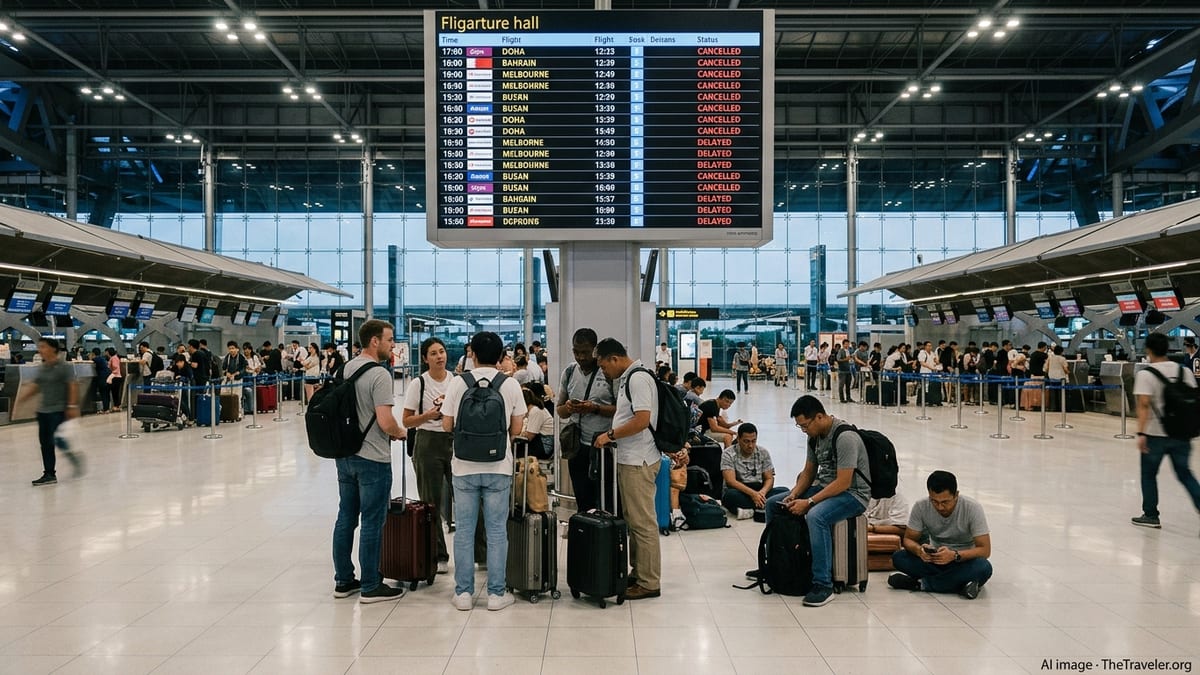
New Cancellations Add Pressure to Thailand’s Busy Tourism Corridors
According to recent schedule updates and regional news coverage, at least eight additional flights touching Thailand have been dropped or suspended, amplifying weeks of turbulence for passengers who rely on Gulf and Asia-Pacific hubs to reach and depart the kingdom. The latest changes affect long-haul and regional routes that connect Bangkok’s Suvarnabhumi Airport, Phuket International Airport and Koh Samui Airport with major cities in the Middle East and Asia-Pacific.
Publicly available timetables and passenger reports indicate that Qatar Airways has continued to pare back services involving Doha, including selected Bangkok and Phuket rotations, as it operates a reduced interim network. Gulf Air services linking Bahrain with Southeast Asia have also been subject to cancellations and flexible rebooking policies through late March, adding uncertainty for travelers planning to transit the Gulf region.
Low-cost and leisure-focused carriers are contributing to the disruption as they adjust capacity on key Thailand routes. Jetstar and other regional operators have been revising or consolidating flights between Thailand and Australia and Northeast Asia, including services that typically carry holidaymakers between Bangkok or Phuket and cities such as Melbourne and Busan. While many routes remain in operation, the cumulative effect of multiple small schedule cuts is now being felt across Thailand’s peak tourist corridors.
The latest round of cancellations arrives during a period of sustained high demand for Thailand travel, particularly from long-haul markets using Gulf and East Asian hubs. With aircraft and crews already tightly scheduled for the current season, even modest reductions in daily frequencies can quickly translate into full flights, longer waits for alternative seats and higher fares on remaining services.
Impact on Routes to Bahrain, Doha, Melbourne and Busan
The most immediate fallout from the new cancellations is on itineraries that use Bahrain and Doha as transfer points. Travel forums and aviation tracking data show that passengers booked on Gulf Air flights between Bahrain and Thai gateways have been offered fee-free changes or refunds as the airline continues to trim departures during March. For some travelers, that has meant rerouting via other Gulf or Asian hubs, or postponing trips altogether.
Qatar Airways, traditionally a major connector for Thailand-bound traffic, has been operating under a constrained schedule since regional tensions disrupted standard operations at Doha’s Hamad International Airport. Interim timetables have removed or reduced certain frequencies, including services tying Doha to Melbourne and parts of Southeast Asia. Travelers attempting to fly from Bangkok or Phuket to Melbourne via Doha have reported late-notice cancellations, a shrinking inventory of available connections and the need to secure alternative routings through East Asia or Europe.
On the Asia-Pacific side, Jetstar’s network adjustments have implications for leisure flows between Thailand, Australia and Northeast Asia. While core routes remain, reductions and occasional cancellations on services involving Bangkok and Phuket are limiting options for budget-conscious travelers heading to or from Melbourne and Busan. With other low-cost carriers also fine-tuning capacity, some days now see fewer nonstop or one-stop combinations than travelers would normally expect at this time of year.
For passengers already ticketed on affected routes, the practical impact ranges from relatively straightforward rebookings on alternate days to multi-stop rerouting across different airline alliances. Those on tightly timed itineraries, including cruise departures or tour starts, face particular challenges when a Gulf or Asia-Pacific connection is removed from the schedule with only a few days’ notice.
Bangkok, Phuket and Koh Samui Face Knock-on Effects
Bangkok’s Suvarnabhumi Airport, the country’s main international gateway, has experienced the broadest impact because it serves as the primary Thai endpoint for many Gulf, European and long-haul Asia-Pacific flights. As airlines like Qatar Airways and Gulf Air adjust their operations, even a small reduction in daily arrivals and departures can disrupt carefully layered bank structures that consolidate connecting traffic to and from Thailand.
Phuket International Airport, heavily reliant on leisure traffic, has seen disruption ripple into its busy schedule of seasonal and charter-style services. Flight statistics published by Thai airport authorities already show a complex mix of full-service and low-cost carriers at Phuket, including Jetstar-branded operations and other regional airlines. When one or two widebody flights are withdrawn on a given day, hotels, transfer companies and local tour operators can quickly feel the absence in guest arrivals.
Koh Samui, which relies primarily on short-haul links and has more limited runway and terminal capacity, is feeling the cascade effect through connecting itineraries. Travelers who would typically route from Europe or Australia via a Gulf or Asian hub into Bangkok, then continue by domestic or regional flight to Koh Samui, are now facing longer transits or forced overnights. Reports from travelers show that when upstream long-haul segments are cancelled, the knock-on effect can strand passengers in Bangkok or Phuket while they wait for available space on the next sector to the islands.
Local tourism businesses in all three destinations are monitoring these developments closely. Although domestic demand and regional visitors continue to support Thailand’s recovery, disruptions in long-haul connectivity can influence high-spending segments such as extended-stay European travelers and Australian holidaymakers who often rely on Gulf and low-cost long-haul carriers to reach the country’s beaches and islands.
Passengers Confront Full Flights, Limited Alternatives and Higher Costs
For travelers already in Thailand or scheduled to arrive in the coming days, the immediate challenge is finding workable alternatives when a flight is cancelled or significantly retimed. Public accounts from passengers highlight long wait times to reach airline customer service, limited availability on near-term departures and situations where multiple rebooked flights have subsequently been cancelled, stretching journeys over several extra days.
With many carriers operating close to capacity on surviving routes, re-accommodation options can be constrained. Travelers attempting to switch from disrupted Gulf itineraries to East Asian or European connectors frequently encounter high last-minute fares and limited seat availability, particularly in economy. Some passengers have described having to purchase entirely new tickets on different airlines at substantial additional cost in order to keep work or family commitments.
The complexity is heightened for those with multi-stop itineraries involving separate tickets, low-cost carriers or tight self-connections. When one segment is cancelled, there is often no automatic protection for onward legs, leaving travelers to negotiate with multiple airlines and booking platforms simultaneously. In such cases, travel insurance coverage and credit card protections can become critical tools for recouping at least part of the unexpected expenditure.
Families and group travelers are especially exposed, as rebooking several passengers together on limited remaining services is more difficult than accommodating solo travelers. For some, this has meant splitting groups across different flights or even different routings, adding stress and logistical complexity to already disrupted journeys.
What Travelers Using Thailand Gateways Should Watch Now
Given the evolving situation, airline statements and schedule filings indicate that further adjustments remain possible through the end of March. Industry observers note that Gulf carriers in particular are likely to continue fine-tuning operations day by day, depending on regional airspace constraints and demand patterns. That makes it important for passengers to treat any booking touching Bahrain or Doha, especially via Bangkok or Phuket, as subject to change on relatively short notice.
Experts in airline scheduling point out that capacity can also return quickly once conditions stabilize. Qatar Airways, for example, has already outlined phased resumptions on selected routes and aircraft types, including the gradual reintroduction of widebody services on some Asian trunk routes. Similar recalibration may occur at other airlines serving Thailand as operational clarity improves.
For now, publicly available guidance from travel industry groups suggests that passengers check their booking status directly with airlines or travel agents in the 24 to 48 hours before departure, build extra time into connections and remain open to alternative routings through East Asia or Europe instead of the Gulf where necessary. Those planning new trips to or from Thailand may wish to favor itineraries with flexible change terms and to avoid tight self-connections between separate tickets.
While Thailand’s airports remain open and many flights are operating as scheduled, the combination of Gulf and Asia-Pacific schedule cuts is creating a patchwork of service levels that can shift rapidly. Travelers relying on Bangkok, Phuket and Koh Samui as gateways to Bahrain, Doha, Melbourne, Busan and other long-haul destinations should be prepared for continued disruption, even as airlines work to restore more stable operations in the weeks ahead.