

More news on this day
Cruise passengers bound for the Arabian Gulf and Eastern Mediterranean are finding their itineraries suddenly rewritten, as escalating conflict involving Iran, disruptions in the Strait of Hormuz and renewed security concerns from the Red Sea to the Aegean force cruise lines and local authorities in the United Arab Emirates, Qatar, Saudi Arabia, Greece and Iran to redraw the cruise map in real time.
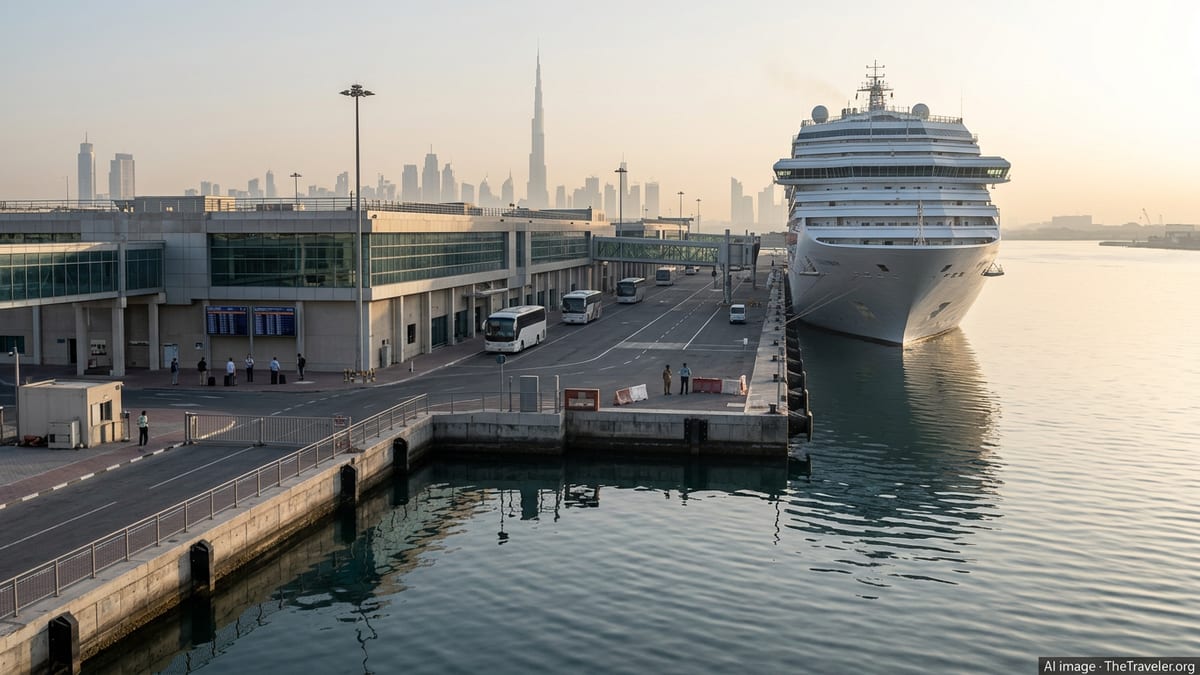
Gulf Cruises Stalled As Strait of Hormuz Closes
The most dramatic shock is unfolding in the Gulf itself. After joint United States and Israeli strikes on Iran on February 28, 2026, maritime traffic through the Strait of Hormuz all but froze, with Iran announcing it had taken control of the strategic chokepoint in early March. That move has effectively shut the main gateway for ships serving ports in the United Arab Emirates, Qatar and Saudi Arabia, halting much commercial traffic and casting immediate uncertainty over the cruise season.
Regional media and sector representatives say the current cruise season in the Gulf is, for all practical purposes, over. Ships that had been operating popular winter itineraries out of Dubai, Abu Dhabi and Doha are now idling in port or repositioning, as operators hold emergency talks with local authorities and insurers about how long the disruption might last and whether voyages can safely resume later in the year.
The impact is already visible to passengers. Travel industry reports describe vessels such as Celestyal Discovery and other international ships stuck in Dubai and Qatari ports with guests still on board, while authorities restrict disembarkation amid concerns about possible further strikes on transport hubs. Flight suspensions into major airports, including Dubai and Abu Dhabi, have limited options for passengers seeking to cut trips short or return home early.
Cruise lines are reluctant to provide long-term guidance, but privately acknowledge that as long as Hormuz remains blocked and nearby airspace and ports are within range of Iranian missiles and drones, large-scale cruise operations in the Gulf cannot be considered viable. That uncertainty is rippling through bookings for late 2026 and into 2027, particularly for first-time visitors to the region.
UAE, Qatar and Saudi Arabia Grapple With Sudden Tourism Shock
For Gulf tourism officials, the shutdown comes at a sensitive moment. The UAE and Qatar have spent years positioning Dubai and Doha as marquee winter cruise homeports, with modern terminals and easy air links. Saudi Arabia, meanwhile, has been trying to fast-track its entry into the global cruise market as part of its Vision 2030 strategy, introducing its first dedicated cruise regulations in 2025 to support new Red Sea and Gulf routes and the launch of its own brand, Aroya Cruises.
Those ambitions are now colliding with a new security reality. Industry sources say Saudi Arabia’s flagship vessel Aroya Manara, which had been using Dubai as a base for regional voyages, is currently alongside and not operating its planned round-trip cruises through the Strait of Hormuz. Other ships that had been marketed as offering multi-country Gulf itineraries tying together the UAE, Qatar, Oman and Bahrain are being redeployed or left temporarily without published schedules.
Beyond the ships themselves, the fallout is spreading across the broader visitor economy. Port agents, excursion operators, guides, transport providers and shopping districts that had built business models around thousands of cruise guests disembarking daily now face an abrupt revenue cliff. Analysts warn that if military tensions remain elevated through the next high season, the Gulf could forfeit hundreds of millions of dollars in visitor spending and undermine years of work to brand the region as a safe, upscale cruise destination.
At the same time, tourism boards in the UAE, Qatar and Saudi Arabia are trying to reassure would-be visitors that the disruption is limited to sea routes. Hotel and resort bookings on land remain possible via alternative flight routings, and officials stress that once security conditions improve, cruise infrastructure will be ready to resume operations quickly. For now, however, travelers holding bookings for Gulf cruises later in 2026 are being urged to stay in close contact with their cruise line or travel advisor and to be prepared for changes at short notice.
Red Sea Tensions and Iran’s Role Reshape Regional Routes
The crisis in the Gulf sits atop a longer-running pattern of maritime instability linked to the conflict in Yemen and wider regional rivalries. Since late 2023, attacks by Yemen’s Houthi movement on commercial vessels in the Red Sea and Gulf of Aden have pushed many shipping and cruise operators to reroute or suspend sailings through the Suez–Bab el-Mandeb corridor, lengthening Asia–Europe voyages and complicating repositioning cruises between seasons.
Although most recent attacks have targeted cargo vessels, the proximity of major cruise routes has weighed heavily on risk assessments. Some lines began avoiding Red Sea ports altogether in 2024, cancelling calls in countries such as Egypt and Jordan and relying more heavily on western Mediterranean or northern European deployments. The resumption of Houthi attacks in 2025 and renewed threats against ships perceived to be linked to Israel or its allies have kept war-risk insurance premiums high and made it more expensive to operate in adjacent waters.
Iran’s backing of the Houthis, along with its own missile and drone capabilities, ties the Red Sea and Hormuz crises together for cruise lines planning multi-region itineraries. Operators must now factor in the possibility that tensions in one waterway could quickly spill into another, forcing last-minute diversions and leaving ships far from alternative ports that can handle large passenger volumes. That has knock-on effects for voyages marketed as grand repositioning cruises between the Gulf, the Indian Ocean and the Mediterranean, some of which are being shortened, re-routed around southern Africa, or quietly pulled from sale.
For tourists, the practical message is that any cruise relying on passage through either the Red Sea or the Strait of Hormuz faces an elevated chance of significant change, even if departure is months away. Travel agents are advising clients to read contract terms carefully, favor flexible air and hotel bookings, and understand that itineraries advertised today may bear little resemblance to the voyage that eventually sails.
Greece Balances Cruise Boom With Security and Overtourism Pressures
While Greece is far from the Strait of Hormuz, it sits at the heart of the Eastern Mediterranean, a region experiencing its own complex mix of booming demand and rising tensions. Greek ports handled nearly eight million cruise passengers in 2024 and saw further growth in 2025, cementing Piraeus and popular islands such as Santorini and Mykonos as marquee stops on many itineraries.
At the same time, Greek authorities are grappling with security and social pressures that increasingly shape how and where cruise passengers move. In 2025, officials raised security alerts and deployed additional police at ports such as Patras and Katakolo when an Israeli cruise ship arrived amid protests connected to the Gaza conflict. The demonstrations did not lead to violence, but they underscored how Middle East tensions can surface on European quaysides and create a tenser atmosphere for some passengers.
Parallel debates over overtourism are driving their own form of disruption. The government has been tightening controls on cruise calls to the most heavily visited islands, exploring caps and higher fees, while port authorities promote alternative destinations on the mainland and lesser-known islands. That means itineraries may swap headline names for smaller ports, particularly in peak summer, in an effort to spread economic benefits and reduce local backlash.
For travelers, the result is that Greek cruises remain broadly safe and operational, but the exact mix of ports is more fluid and occasionally shaped by political demonstration schedules as much as by weather. Passengers booking Eastern Mediterranean itineraries that advertise Israel or other politically sensitive stops should be especially prepared for substitutions, with Greek ports often serving as the fallback alternatives.
What Tourists Should Do Now When Booking Middle East and East Med Cruises
For anyone considering a cruise touching the Gulf, Iran’s neighborhood or the Eastern Mediterranean in the coming months, the uncertainty can be daunting. Industry veterans say the most important step is to distinguish between regions that are currently closed to cruise traffic, such as the Strait of Hormuz, and those where operations continue under heightened monitoring, such as most Greek ports and western parts of the Mediterranean.
Travel agents recommend prioritizing sailings that do not depend on transiting active flashpoints. That currently favors itineraries confined to the central and western Mediterranean, or to entirely different regions such as northern Europe or the Caribbean, for travelers uncomfortable with rapidly changing security dynamics. Where Gulf or Red Sea routes are still being sold, experts suggest choosing lines with strong records of transparent communications and passenger support during disruptions.
Insurance and flexibility are becoming as critical as cabin category. Policies that explicitly cover itinerary disruptions due to geopolitical events, additional accommodation costs if flights are cancelled, or emergency evacuation can make a significant difference if a voyage is altered mid-cruise. Passengers are also advised to book flights and pre- or post-cruise stays with flexible change conditions and to keep personal logistics as simple as possible in case ports or airports close suddenly.
Above all, specialists emphasize that passengers should treat published itineraries in the region as provisional. Checking official travel advisories from home governments, monitoring updates from cruise lines in the weeks before departure, and being mentally prepared for last-minute substitutions are now part of the reality of cruising in and around the Gulf, the Red Sea and the Eastern Mediterranean.