

Major Gulf carriers are mapping a fresh wave of routes for 2026, with the United States joining Canada, the UK, Germany, Spain, Romania, Tanzania and other markets in line for new nonstop links that promise faster connections and wider choice for international travelers.
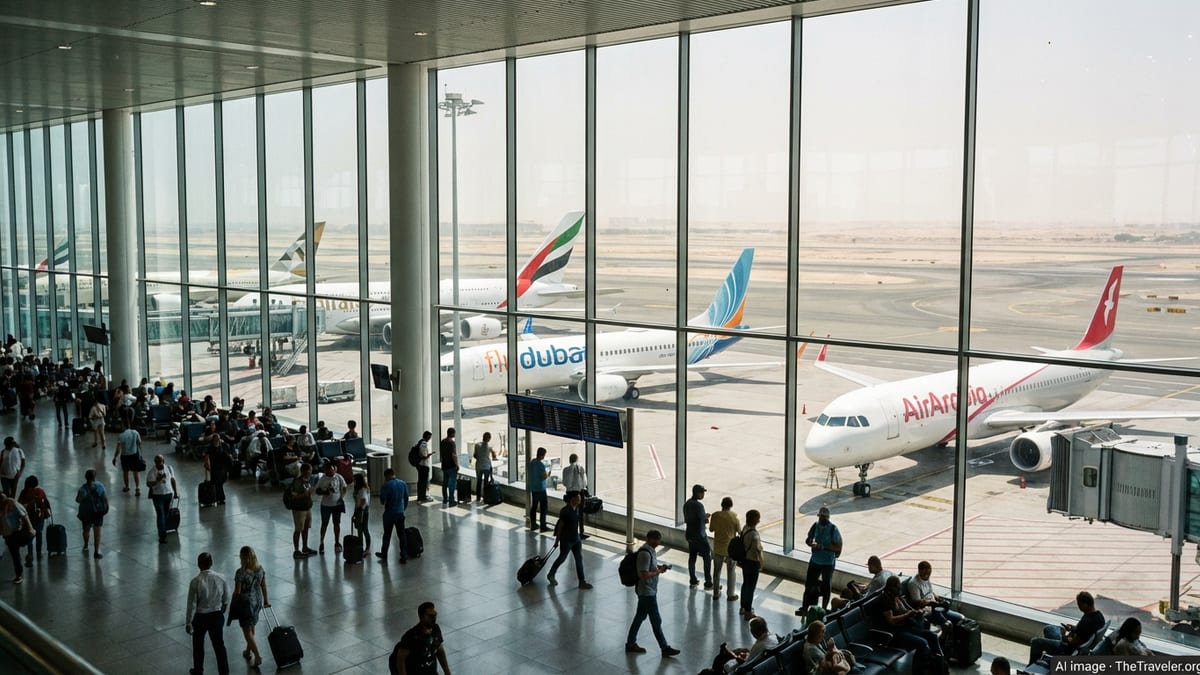
Gulf Airlines Plot a Bigger Global Footprint
After several years of steady recovery and record demand, leading Gulf carriers are preparing another step-change in their networks for 2026. Emirates, Flydubai, Etihad Airways and Air Arabia are all adding destinations or boosting frequencies across North America, Europe, Africa and Asia, with a clear focus on improving one-stop connectivity between the United States and emerging tourism and business markets such as Romania and Tanzania.
The strategy builds on the hub-and-spoke model that has long underpinned aviation in the Gulf. By adding more spokes to their hubs in Dubai, Abu Dhabi and Sharjah, these airlines can draw traffic from secondary cities in the United States and Canada, funnel it through the United Arab Emirates, and redistribute passengers to destinations that still lack extensive nonstop service from North America.
Industry analysts say 2026 is shaping up as a pivotal year because fleet deliveries and airport investments in the Gulf are converging with strong demand from both leisure and corporate travelers. That is creating room for airlines to test new long-haul markets, deepen partnerships with European and North American carriers, and respond to governments that see air links as a lever for trade and tourism growth.
For travelers, the result is a patchwork of new options: more departure points in the United States, additional choices in Canada, and fresh connections into countries such as Germany, Spain, Romania and Tanzania that can now be reached with a single connection through the UAE.
United States Emerges as a Key Growth Market
The United States has been central to Gulf carrier strategies for more than a decade, but 2026 will see those ambitions broaden beyond the most obvious gateways. Etihad Airways, for example, is scheduled to launch nonstop service between Abu Dhabi and Charlotte in March 2026, using Boeing 787-9 aircraft and making the North Carolina hub its sixth destination in the country. The long-haul route will be Charlotte’s farthest direct flight, demonstrating how Gulf airlines are tapping into large but previously underserved metropolitan regions.
Expanding into airports such as Charlotte allows Gulf carriers to diversify beyond traditional strongholds like New York, Chicago and Los Angeles. It also gives US passengers in fast-growing Sun Belt regions shorter overall journey times to South Asia, the Middle East and parts of Africa when compared with routings via congested northeastern hubs.
Emirates and Flydubai are also expected to keep the United States in focus, supported by fleet renewals and partnerships that increase feeder traffic on both sides of the Atlantic. New or upgauged services to existing US cities, as well as the potential addition of more secondary airports, fit with the carriers’ broader objective of deepening their presence in high-yield corporate markets while catering to diaspora travel and tourism flows.
With US long-haul demand remaining resilient despite economic headwinds, airline planners see scope for more one-stop itineraries that link American cities to Southern and Eastern Europe, East Africa and the Indian Ocean region, all via the Gulf. The incremental services planned for 2026 are designed to capture that traffic before competing hubs in Europe and Asia can do the same.
Canada, UK and Europe Gain Fresh One-Stop Links
North of the border, Canada continues to attract interest from Gulf carriers as both a point-to-point and connecting market. Additional frequencies and potential new Canadian gateways under discussion for 2026 would give residents more choice for reaching the Middle East, India and Africa without transiting the busy hubs of Western Europe.
Across the Atlantic, the UK and wider Europe remain pillars of the Gulf carriers’ global networks, but the emphasis is shifting toward greater depth rather than just volume. Etihad’s recent partnership with Germany’s Condor, which will see daily flights from both Frankfurt and Berlin to Abu Dhabi from summer 2026, is a case in point. Those services will sit alongside Etihad’s own operations and create a denser web of connections into the Gulf hub from Germany’s largest aviation markets.
In Spain, Emirates and Flydubai are expected to keep building on strong leisure demand to cities such as Barcelona and Madrid, while considering seasonal and secondary destinations that appeal to travelers from the Middle East and Asia. For European carriers, these partnerships with Gulf airlines offer additional feed into their own networks, while for European passengers the main benefit is the ability to reach long-haul destinations with a single, well-timed connection.
As more European airports secure links to Abu Dhabi, Dubai or Sharjah, travelers in cities ranging from major capitals to mid-sized regional centers gain access to a far broader range of destinations. The expansion underway for 2026 extends that logic to new markets in Central and Eastern Europe, where demand has been rising but nonstop intercontinental options remain limited.
Etihad’s 2026 Push: Romania, Tanzania and Beyond
Etihad Airways has laid out one of the most detailed expansion plans among Gulf carriers for the 2025 to 2026 period, and many of the new routes highlight the airline’s strategy of connecting Abu Dhabi to what it describes as “high-potential” markets. In Europe, the carrier is scheduled to add Bucharest to its network in March 2026, providing direct service between the UAE capital and Romania’s largest city. The route is expected to serve both growing tourism interest in Romania and business links in sectors such as energy, technology and construction.
The Bucharest launch follows a broader wave of Etihad additions in Eastern Europe and Central Asia, with new flights to cities including Baku, Yerevan, Tbilisi, Almaty and Tashkent. Together, these routes give travelers from the United States and Canada more one-stop choices into historically underserved regions, with Abu Dhabi serving as the central transfer point.
On the leisure side, Etihad is also reinforcing its presence in the Indian Ocean and East Africa. Seasonal service to Zanzibar in Tanzania is set to return in summer 2026, with multiple weekly flights giving visitors from North America, Europe and the Middle East easier access to the archipelago’s beaches, cultural heritage and growing range of resort developments. The Zanzibar link sits alongside other seasonal additions such as Krakow and Salalah, underlining the airline’s broader effort to balance business-oriented routes with pure holiday destinations.
For US travelers, the combination of a new Abu Dhabi service from Charlotte and expanded regional links from the Emirati hub means that cities like Bucharest and Zanzibar will be far more accessible via a single, coherent itinerary. The same is true for travelers originating in Canada or Western Europe, who will see shorter total travel times and greater schedule flexibility on these emerging routes.
Flydubai and Air Arabia Target Underserved Cities
While full-service giants such as Emirates and Etihad focus on long-haul routes and major hubs, Flydubai and Air Arabia continue to carve out niches by serving secondary and underserved cities across Europe, the Middle East, Africa and Central Asia. Their planned additions for 2025 and 2026 illustrate how low-cost and hybrid carriers based in the Gulf are complementing, rather than competing directly with, their larger counterparts.
Flydubai has been particularly active in Eastern Europe. The airline announced new flights to cities including Chișinău and Iași in Romania, as well as Riga and Vilnius in the Baltic region, strengthening its presence in markets that have historically seen limited direct service to the Gulf. These routes increase options for travelers heading in both directions, including migrant workers, students, and leisure visitors seeking affordable fares and straightforward connections.
For Romania specifically, Flydubai’s expansion builds on its earlier operations to Bucharest and positions the country as an increasingly important source and destination market for Gulf tourism and trade. As Etihad readies its own entry into Bucharest and Emirates continues to deploy widebodies into Europe, the combined effect is a dense mesh of services linking Romanian cities to hubs in Dubai and Abu Dhabi.
Air Arabia, based in Sharjah, is following a similar playbook by focusing on short and medium-haul routes where point-to-point demand can sustain low-cost operations. Its network growth for 2026 is expected to open up additional links between smaller cities in North Africa, the Levant and the Indian subcontinent and the UAE, giving travelers more granular choices when planning multi-stop itineraries that might include a long-haul segment on a partner carrier.
Implications for Global Connectivity and Competition
The emerging route map for 2026 underscores how Gulf carriers are reshaping global connectivity, particularly for travelers moving between the Americas, Europe, Africa and South Asia. By stitching together new pairings such as Charlotte to Abu Dhabi, Bucharest to Abu Dhabi, and reinforced links to destinations like Zanzibar, they are offering alternatives to traditional transatlantic and trans-European routings.
Airports in the United States and Europe see tangible benefits in the form of increased passenger volumes, expanded cargo capacity and more diverse airline portfolios. For some secondary US cities, securing a nonstop service to a Gulf hub can be a milestone that raises their profile with international investors and tourists, similar to the impact seen when they first gained nonstop links to major European capitals.
The competitive response from legacy airlines based in Europe and North America is likely to focus on joint ventures, enhanced frequent-flyer partnerships and a renewed emphasis on premium cabins. As Gulf carriers add modern aircraft and upgraded onboard products, they are setting a high bar for service quality on routes that have historically commanded some of the highest fares in the industry.
Regulators, meanwhile, will be watching closely to ensure that traffic rights and competition rules keep pace with rapidly expanding networks. Bilateral air service agreements between the United States, Canada, the European Union and the United Arab Emirates will play a critical role in determining how far and how fast this next phase of growth can proceed.
What Travelers Can Expect in 2026
For individual travelers, the most immediate impact of the 2026 expansion plans will be felt in the booking process. As more routes come online and schedules are finalized, search results will display a greater number of one-stop options for journeys that previously required two or more connections, particularly between the United States and secondary cities in Europe, Africa and Central Asia.
In practical terms, that means shorter overall travel times, the possibility of avoiding the busiest hubs during peak seasons and, in many cases, more competitive fares. Gulf carriers have historically used network growth to stimulate demand with introductory promotions, and airlines are expected to take a similar approach as they roll out new services next year.
Onboard, passengers can expect a mix of new and recently refurbished aircraft, with widebody jets such as the Boeing 787 and Airbus A350 deployed on many long-haul routes to and from North America and Europe. Narrowbody aircraft, including Airbus A320-family jets and Boeing 737s, will continue to serve shorter sectors, particularly those operated by Flydubai and Air Arabia into regional airports.
Perhaps most importantly, the growing web of partnerships between Gulf airlines and carriers in Europe and North America should translate into smoother connections, integrated ticketing and expanded frequent-flyer benefits. For United States travelers heading to destinations as diverse as Canada, the UK, Germany, Spain, Romania or Tanzania, 2026 is shaping up as a year when the map of viable routes expands significantly, with the UAE’s aviation heavyweights at the center of that change.