

More news on this day
Dozens of Qatar Airways, Gulf Air and Malaysia Airlines flights serving Bahrain, Paris, Munich, Kuala Lumpur, Lagos, Amsterdam and other major cities have been cancelled or rerouted in recent days, leaving passengers stranded at Doha’s Hamad International Airport as Middle East airspace restrictions continue to upend travel plans.
Get the latest news straight to your inbox!
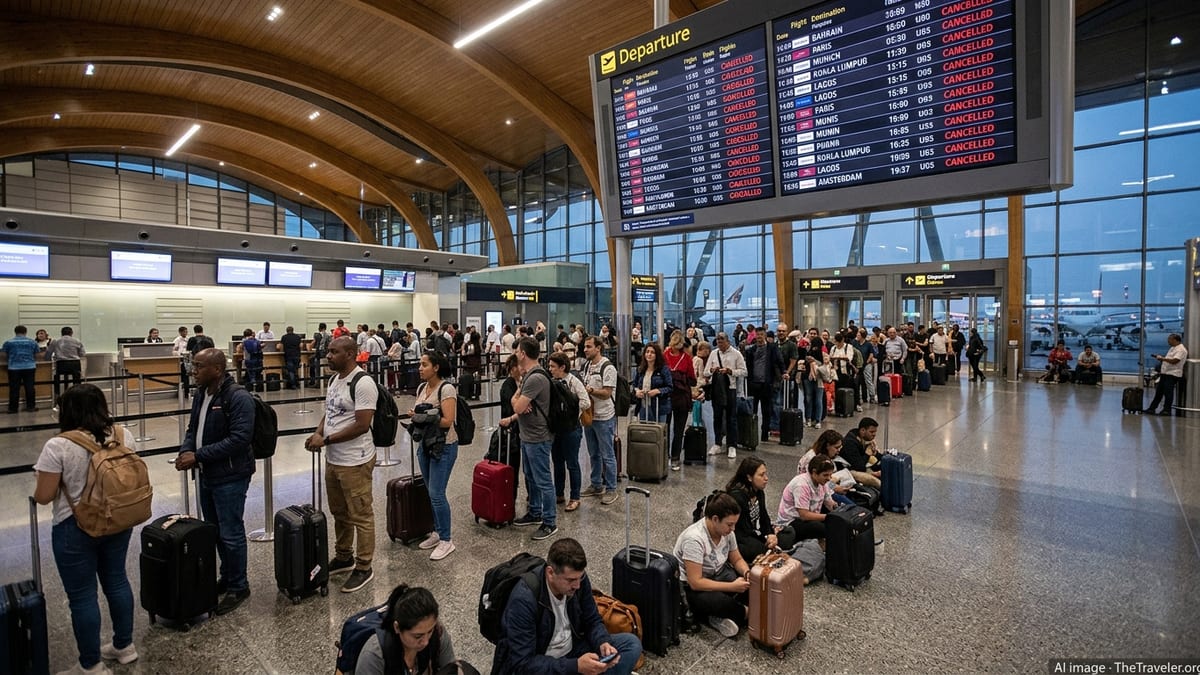
Conflict-Linked Airspace Limits Keep Hamad International Under Strain
Hamad International Airport has been operating under restricted conditions since Qatari airspace was partially closed in late February following Iranian missile and drone attacks across several Gulf states. Publicly available information shows that while limited evacuation and cargo operations were gradually reintroduced in early March, standard commercial flights remain heavily curtailed, forcing airlines to slash schedules and consolidate routes through alternative hubs.
Reports indicate that Qatar’s constrained airspace has triggered a cascading effect across its long-haul network. Services linking Doha to European hubs such as Paris and Amsterdam, key business destinations like Munich, and major African and Asian markets, including Lagos and Kuala Lumpur, have all seen rolling cancellations or last-minute schedule changes. For many travelers already in transit, Hamad International has effectively become a holding point rather than a seamless global connector.
Reductions in available flight corridors and ongoing security assessments mean airlines are frequently revising timetables with little notice. Aviation security briefings suggest that carriers operating in the wider region are likely to face intermittent disruption for weeks, as governments and regulators reassess risks and limit traffic flows through sensitive airspace.
For passengers, the outcome is a patchwork of partial resumptions and abrupt suspensions. Flights that appear briefly on departure boards can later be pulled as airspace permissions shift, leaving travelers uncertain whether they will depart the same day, later in the week, or need entirely new itineraries via other hubs.
Qatar Airways Cuts and Interim Schedule Leave Transit Travelers Stranded
Qatar Airways, the dominant carrier at Hamad International, has implemented multiple rounds of cancellations since the initial airspace closure. According to airline statements and widely shared schedule updates, commercial services across dozens of destinations have been suspended through at least late March, replaced by a slimmed-down interim timetable prioritizing a handful of long-haul corridors.
The carrier has gradually added limited “safe corridor” flights to select European cities, but numerous departures to Paris, Amsterdam and Munich continue to be removed from sale or cancelled close to departure. Connections onward to destinations such as Lagos are particularly vulnerable, as multi-leg journeys depend on both regional permissions and the availability of long-haul aircraft and crews in the right place at the right time.
Travel forums and social media posts from recent days describe passengers sleeping in terminal seating areas, queueing repeatedly at transfer desks and struggling to obtain clear guidance on new departure dates. Some travelers report that flights initially marked as operating were later withdrawn, while others say they were advised to arrange their own alternative routings on different airlines if they could afford to do so.
Rebooking and refund policies have been evolving alongside the crisis. Publicly available updates suggest that Qatar Airways has expanded options for free date changes and cancellations on affected tickets, but travelers report delays in processing refunds and inconsistent information depending on whether they booked directly or via third-party agencies.
Gulf Air Impacted by Bahrain Airspace and Hub Disruption
Gulf Air, Bahrain’s national carrier, has been hit from two directions: regional airspace restrictions and physical disruption at its home hub. Reports on Bahrain’s situation indicate that missile and drone strikes earlier in the conflict damaged civilian infrastructure and forced authorities to impose tight operating constraints around Bahrain International Airport, reducing capacity and complicating flight planning for the airline.
As a result, Gulf Air has relocated a portion of its fleet to nearby airports in Saudi Arabia and has been operating temporary services from Dammam to move passengers who would normally transit through Manama. This workaround has helped maintain some connectivity between Bahrain and other cities, but has also introduced additional complexity for travelers trying to move between Qatar and Bahrain or connect onward to Europe and Asia.
Connections between Doha and Bahrain have been particularly sensitive, given the overlapping security considerations in both countries’ airspace. Schedules that once saw multiple daily flights have been cut back sharply, and public timetable data shows instances of short-notice cancellations that disrupt carefully planned itineraries involving Gulf Air codeshares or combined tickets with other carriers.
Passengers caught between hubs are reporting long surface transfers, unexpected hotel stays and difficulties in coordinating separate tickets. With Bahrain’s airspace and Qatar’s operating corridors both under heightened scrutiny, regional point-to-point travel that once took a short hop can now take a day or more.
Malaysia Airlines Adjusts Regional Network Amid Wider Gulf Disruptions
Malaysia Airlines, which relies on access to Gulf hubs for part of its Europe and Middle East connectivity, has also adjusted its operations in response to the evolving situation. Operational updates published by the airline confirm that flagship routes such as London and Paris continue to run, but note that passengers may be affected by broader regional cancellations even when their own long-haul flights remain scheduled.
Publicly available booking and tracking data show that some Malaysia Airlines services touching Doha, either directly or via codeshare arrangements, have been cancelled or rerouted as airspace permissions change. Travelers connecting between Kuala Lumpur and European or African destinations via Qatar report being notified of cancellations affecting the Doha segment of their journey, forcing last-minute rebookings via alternative hubs such as Istanbul or Singapore.
In practice, this means that a ticketed itinerary from Kuala Lumpur to Lagos or Amsterdam, for example, may remain valid on paper while individual segments are repeatedly rescheduled or withdrawn. Published guidance from the airline emphasizes flexibility, encouraging affected passengers to consider alternative transit points where capacity is available and security conditions are more predictable.
The knock-on effect is increased pressure on already busy non-Gulf hubs, as displaced travelers from Doha seek seats via other routes. Industry analysts note that this can lead to higher fares on certain corridors, limited award availability and longer total journey times for passengers trying to avoid the Gulf altogether.
What Travelers Need to Know Right Now
For passengers currently in Doha or scheduled to transit Hamad International in the coming days, the main message from aviation advisories and airline communications is to expect ongoing volatility. Schedules for Qatar Airways, Gulf Air and Malaysia Airlines are being revised frequently, with additional cancellations possible as security assessments evolve and airspace restrictions are extended or modified.
Travelers are being urged, through publicly available notices, to monitor their booking status repeatedly rather than relying on older confirmations, and to use airline apps or official communication channels where possible. Given the volume of affected journeys, call centers and airport ticket desks remain under strain, and some travelers report long waits before securing alternative arrangements.
Those with essential travel may wish to explore routings that avoid the most heavily affected airspace, even if that involves extra stops or longer flying times. Industry commentary suggests that some carriers are adding capacity on alternative corridors to absorb demand from passengers who would previously have chosen to connect through Doha or Manama.
With regional security conditions still fluid and airspace permissions subject to rapid change, there is no clear timeline for a full restoration of pre-crisis schedules. For now, travelers heading to or from Bahrain, Paris, Munich, Kuala Lumpur, Lagos, Amsterdam and other affected destinations via Doha should prepare for potential last-minute changes, keep documentation and contact details easily accessible, and allow extra time and flexibility in their plans.