

More news on this day
Travel across Iraq has been thrown into fresh turmoil this week as Qatar Airways, Royal Jordanian, Gulf Air and other regional and international carriers cancel more than 30 flights, severing key links from Baghdad, Najaf and Erbil to hubs including Doha, Amman, Cairo and Athens amid a rapidly evolving Middle East airspace crisis.
Get the latest news straight to your inbox!
Airspace Closures Ripple Across Key Iraqi Routes
The latest wave of cancellations comes in the wake of sweeping airspace restrictions introduced across Iran, Iraq, Qatar and several neighboring states after a sharp escalation in regional tensions at the end of February. While Iraqi airports technically remain open, carriers have been forced to pull services as transit corridors over multiple countries close or become heavily restricted for civilian traffic.
According to airline advisories and updated operational bulletins, more than 30 flights serving Iraqi gateways have been scrubbed or suspended over the past several days, including departures to Doha, Amman, Cairo, Athens and other European and Gulf cities. Many of these flights would normally rely on now-constrained routings across Iranian and Iraqi airspace, making safe and commercially viable operations difficult or impossible.
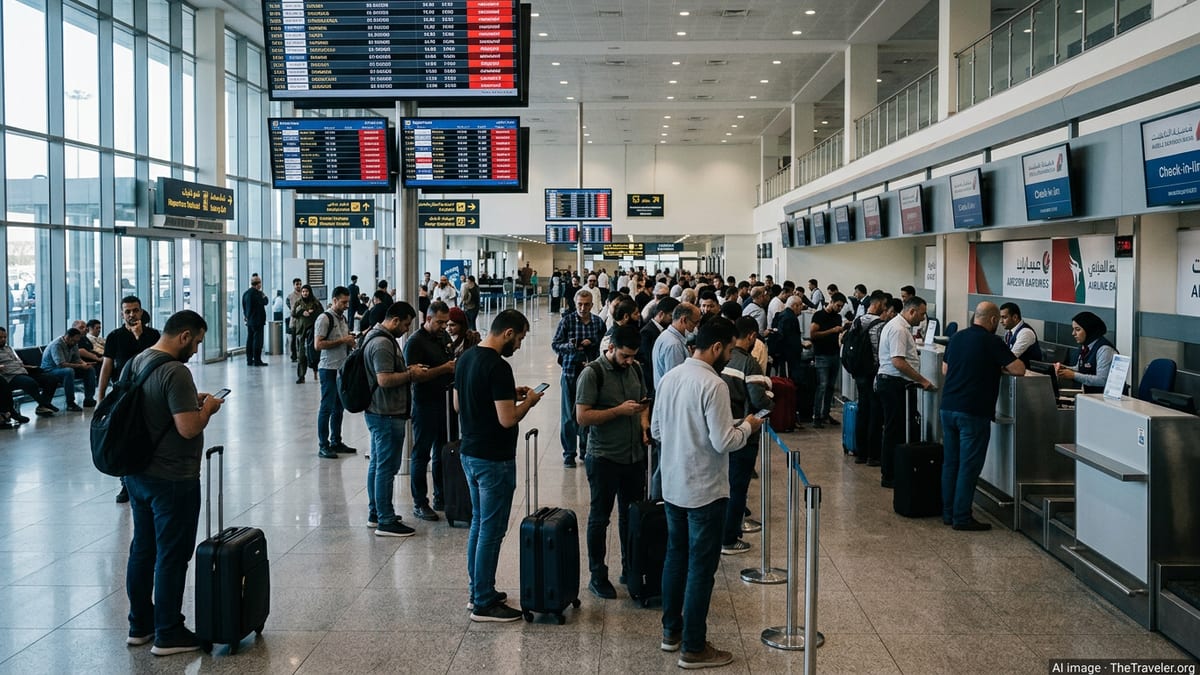
For passengers, the impact is immediate and highly visible. Departure boards at Baghdad and Najaf have filled with “cancelled” notices for services that once formed part of vital north–south and east–west connections linking Iraq to the wider Middle East, Europe, Africa and Asia. With airlines adjusting timetables day by day, travelers are being urged to treat all schedules as provisional and to verify their flight status repeatedly before setting out for the airport.
Authorities and industry analysts warn that the disruption could persist as long as regional skies remain fragmented by overlapping security zones. Even when limited corridors open, airlines must weigh extended flying times, fuel burn, crew rostering and insurance costs before restoring regular service.
Qatar Airways, Royal Jordanian and Gulf Air Lead Cancellations
Among the hardest hit are services operated by Qatar Airways, Royal Jordanian and Gulf Air, three carriers that typically rely on dense regional networks and high-frequency connections through their home hubs in Doha, Amman and Bahrain. Qatar Airways has already suspended the bulk of its normal schedule following the closure of Qatari airspace, triggering knock-on cancellations for flights linking Doha with Iraqi cities and beyond.
Royal Jordanian, which normally positions Amman as a key transfer point for passengers traveling between Iraq, the Levant, Europe and North America, has also pared back operations. While some flights have resumed on a limited basis following earlier regional closures, the airline continues to cancel or consolidate selected services from Iraqi airports as routings and overflight permissions shift hour by hour.
Gulf Air’s operations are similarly constrained, with Bahrain’s airspace restrictions and the closure of certain transit corridors forcing the suspension of passenger services on multiple routes. Flights that would typically shuttle travelers between Bahrain and Iraqi destinations, as well as onward links to hubs such as Athens and Cairo, have been heavily reduced, leaving many itineraries broken or requiring complex re-routing on alternative airlines.
Other regional and international carriers are taking comparable steps, trimming or cancelling flights that touch Iraq or rely on Iraqi or Iranian overflights to reach their destinations. The result is a patchwork of partial schedules, emergency corridors and ad hoc operations that can change with little warning.
Passengers Face Missed Connections and Stranded Itineraries
For travelers with tickets in the first half of March, the operational reality on the ground bears little resemblance to the schedules printed on booking confirmations. A single cancellation from Baghdad or Najaf can unravel a complex itinerary involving a connection in Doha, Amman, Cairo or Athens, leaving passengers stranded at intermediate hubs or unable to depart at all.
Reports from regional airports describe long lines at transfer desks as customers try to secure alternative routings, refunds or hotel accommodation. With more than 30 Iraq-related flights already scrapped and further cancellations likely, inventory on remaining services is tightening, driving up fares and limiting rebooking options, particularly for those traveling on peak dates.
Travel agents say that some passengers are choosing to abandon or postpone trips altogether rather than accept lengthy detours that can add several hours of flying time via still-open hubs such as Riyadh, Jeddah or Muscat. Others are locked into urgent journeys for work, family or medical reasons and are pressing airlines to find any available seat, even on multi-stop routings that would normally be considered highly inconvenient.
The disruption is also hitting inbound traffic to Iraq. Business travelers, humanitarian workers and members of the diaspora are encountering last-minute changes or outright cancellations of flights into Baghdad and other cities, complicating plans that were often made months in advance. For now, flexibility and contingency planning have become essential for anyone whose travel touches the region.
What Airlines Are Offering Affected Travelers
In response to the fast-moving situation, Qatar Airways, Royal Jordanian, Gulf Air and several other carriers have introduced temporary policies designed to provide greater flexibility. These typically include options to rebook travel dates without change fees, reroute via alternative gateways where space permits, or cancel itineraries for vouchers or refunds in cases where flights have been formally cancelled.
Qatar Airways has broadened its guidelines for customers booked on affected dates, allowing many passengers to shift their trips deeper into March or later in the year, subject to seat availability in the original cabin. Royal Jordanian has advised customers to monitor their bookings closely and has been waiving some penalties for changes on itineraries involving Iraq and other impacted destinations, particularly where airspace restrictions make original routings unworkable.
Gulf Air, faced with a near-total suspension of operations from Bahrain on certain days, is focusing on processing refunds and facilitating rebookings onto later dates or codeshare partners where agreements allow. However, the sheer volume of affected trips, combined with capacity constraints on remaining flights, means that not every traveler will find a convenient same-week alternative.
Travel insurers and consumer advocates emphasize the importance of documenting all airline communications and keeping receipts for any out-of-pocket expenses incurred during disruptions, such as additional hotel nights, meals or ground transport. Depending on policy terms and local regulations, some of these costs may be recoverable later.
Essential Advice for Anyone Flying Via Iraq or the Gulf
With the regional airline map in flux, specialists recommend that travelers adopt a highly proactive approach to any journey touching Iraq, Doha, Amman, Cairo, Athens or other key Middle Eastern hubs over the coming days. That begins with checking flight status directly with the operating airline before leaving home, and continuing to monitor for changes right up until boarding time.
Passengers are also being urged to allow extra connection time, avoid ultra-tight layovers and, where possible, choose routings that rely on hubs with fewer current airspace constraints. In some cases this may mean accepting a longer itinerary via Europe or different Gulf gateways in exchange for higher odds of actually reaching the final destination.
For new bookings, industry experts advise building in flexibility by favoring fares that allow date and route changes, even if they cost slightly more. Travelers with non-essential trips are being encouraged to consider postponement until airlines and civil aviation authorities signal a clearer timeline for reopening key air corridors.
For now, the situation remains fluid, and schedules are expected to continue shifting as security assessments evolve. Anyone planning to travel to or from Iraq, or to connect through Doha, Amman, Cairo, Athens and neighboring hubs, should prepare for potential last-minute disruption and keep contingency options in mind.