

More news on this day
An escalating airspace crisis across the Gulf has triggered a fresh wave of cancellations from Thailand, with Qatar Airways, Gulf Air, Etihad Airways and other major carriers scrapping more than 30 flights and disrupting links from Bangkok and Phuket to Doha, Dubai, Abu Dhabi, Bahrain, Tel Aviv and other global hubs.
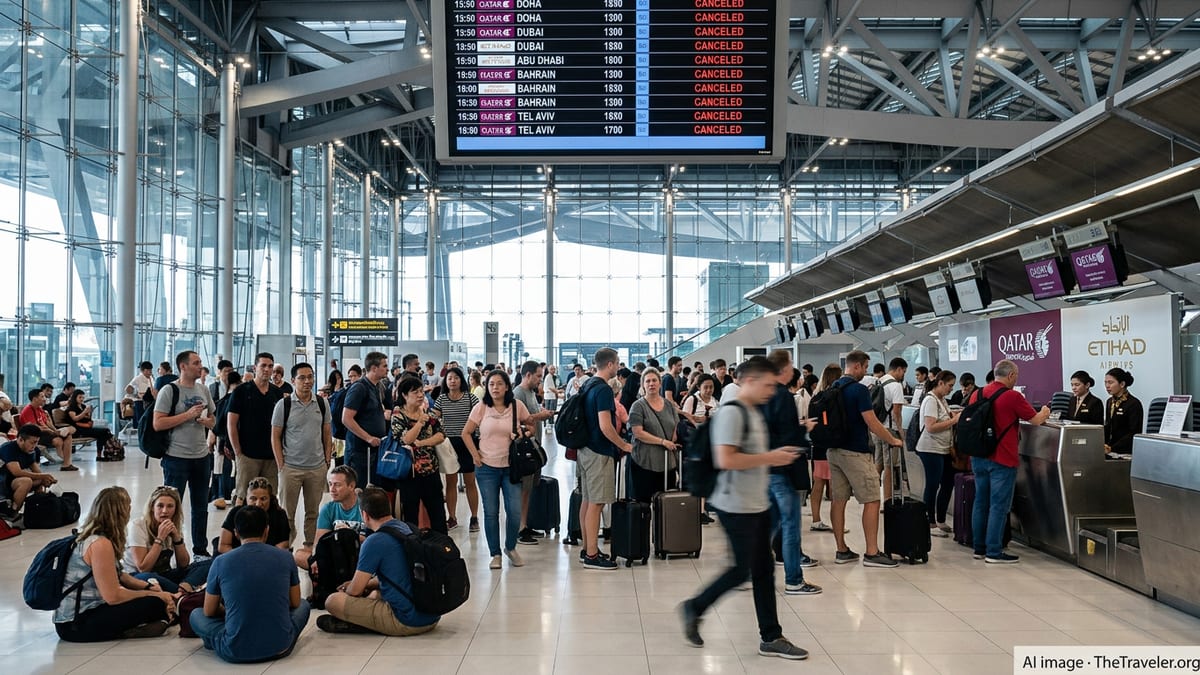
Thailand–Gulf Links Hit by New Wave of Cancellations
Thai aviation officials and airline statements on Monday and Tuesday indicated that more than 30 departures and arrivals between Thailand and key Gulf hubs have been pulled from schedules over the past several days, as carriers continue to navigate rolling airspace closures linked to the Iran conflict. Flights from Bangkok and Phuket to Doha, Dubai, Abu Dhabi, Bahrain and Tel Aviv are among the most heavily affected, with many services showing as canceled or waitlisted at short notice.
Qatar Airways, which has traditionally been one of the largest foreign operators in Thailand, is running what it calls a limited schedule to and from Doha, prioritizing repatriation and essential travel. Etihad Airways has issued updated timetables through March 12 outlining a reduced program from Abu Dhabi, while Gulf Air remains effectively grounded as Bahrain’s airspace restrictions persist. Other international airlines using Gulf hubs for onward connections have trimmed or rerouted their Thailand services in response.
Although some flights have resumed after a near total shutdown in early March, the operational picture remains volatile. Timetables are being adjusted day by day as military and civil aviation authorities update risk assessments, and airlines warn that further cancellations from Thailand to Gulf destinations are likely in the coming week.
Conflict-Driven Airspace Closures Ripple Into Southeast Asia
The latest disruptions stem from a widening conflict that has led to temporary airspace closures or severe restrictions across parts of Iran, Iraq, Israel, Qatar, Bahrain and the United Arab Emirates. These corridors form the backbone of many long-haul routes linking Southeast Asia with Europe, Africa and the Americas, forcing airlines either to cancel services outright or divert around the region on longer, costlier trajectories.
For Thailand, whose airports in Bangkok and Phuket depend heavily on Gulf superconnectors, the knock-on effect has been immediate. Flights that would normally carry Thai holidaymakers, European tourists and migrant workers via Doha, Dubai or Abu Dhabi are now frequently grounded, leaving aircraft out of position and crews scattered around the network. Carriers are focusing on consolidating passengers onto the few remaining services rather than operating lightly loaded flights through restricted skies.
Airlines say safety remains the overriding concern. Several carriers have emphasized that they will not operate through or near active conflict zones until regulators and internal risk teams deem it acceptable. This cautious stance has translated into repeated schedule changes on Thailand routes, even for flights that appeared to be reinstated only days earlier.
Limited Schedules, Repatriation Flights and Flexible Policies
As the crisis drags into a second week, some Gulf carriers have shifted from blanket suspensions to tightly controlled limited schedules. Qatar Airways has outlined a reduced roster from Doha designed to reconnect stranded travelers in major markets, while maintaining the ability to scale up or down depending on the security picture. Etihad and Emirates have also gradually reopened select routes, including a handful of long-haul links serving Bangkok, but many short-haul connections within the region remain on hold.
From Thailand’s perspective, that has created a patchwork of options. On certain days, a small number of flights to Doha, Dubai or Abu Dhabi may operate, often retimed or routed differently from their usual patterns. On others, services are canceled en masse with only limited repatriation flights available. Gulf Air services to and from Bahrain remain largely suspended, cutting a key alternative hub for travelers heading between Thailand, the Middle East and Europe.
To manage mounting passenger frustration, airlines have broadly relaxed rebooking rules for tickets purchased before the conflict escalated. Qatar Airways and Etihad are among carriers offering free date changes or credit vouchers on affected itineraries, while many have suspended no-show penalties for customers whose flights are canceled at short notice. However, availability on alternative services is tight as airlines juggle crew duty limits, aircraft rotations and shifting regulatory approvals.
Travelers From Thailand Face Uncertainty and Long Reroutes
For travelers departing from or transiting through Thailand, the most immediate impact is uncertainty. Departure boards at Bangkok’s Suvarnabhumi airport have shown clusters of cancellations to Gulf hubs over several days, with last-minute gate changes for the few flights that do go ahead. Passengers report spending hours in queues at airline desks as staff work through rebookings and explain evolving options.
Many Thailand-based travelers bound for Europe or North America via the Gulf are being shifted onto alternative routings through East Asia or on the limited direct services still operating. That can mean significantly longer travel times, additional layovers and, in some cases, overnight stays while waiting for available seats. Those with nonflexible or promotional fares are sometimes being asked to pay fare differences if they choose completely different routings, despite waived change fees.
Travel agents in Bangkok say demand for non-Gulf options to Europe and the Middle East has spiked, pushing up prices on carriers that continue to operate normally. Some Thailand travellers have opted to postpone trips altogether, particularly for discretionary leisure journeys, amid concerns that further escalations could prompt another round of sudden closures.
Authorities Urge Passengers to Monitor Flights Closely
Thai aviation authorities and major Gulf airlines are urging passengers to treat schedules as provisional and to stay closely informed via official channels. Travelers are being advised not to go to the airport unless they hold a confirmed seat on a flight that is showing as operating on the day of travel, and to expect changes even within a few hours of departure as new airspace notices are issued.
Airlines recommend that passengers whose flights between Thailand and Gulf hubs are canceled consider accepting credit vouchers or rebooking on the next available departure rather than seeking immediate refunds, warning that capacity will remain constrained in the short term. Those planning upcoming trips in late March and April are urged to book flexible tickets where possible and to check the latest guidance from both airlines and embassies.
With the conflict showing few signs of rapid resolution, industry analysts say Thailand’s connectivity to Doha, Dubai, Abu Dhabi, Bahrain, Tel Aviv and other key points is likely to remain patchy. While the resumption of limited services signals a tentative step toward normality, the pattern of rolling cancellations underscores how quickly the situation can change for travelers across the region.