

More news on this day
Fresh waves of flight cancellations by Gulf Air, Turkish Airlines, Kuwait Airways and other regional carriers are disrupting travel between Türkiye and key Gulf hubs including Bahrain, Kuwait and Dubai, as airspace closures and conflict-related restrictions continue to reshape Middle East aviation.
Get the latest news straight to your inbox!
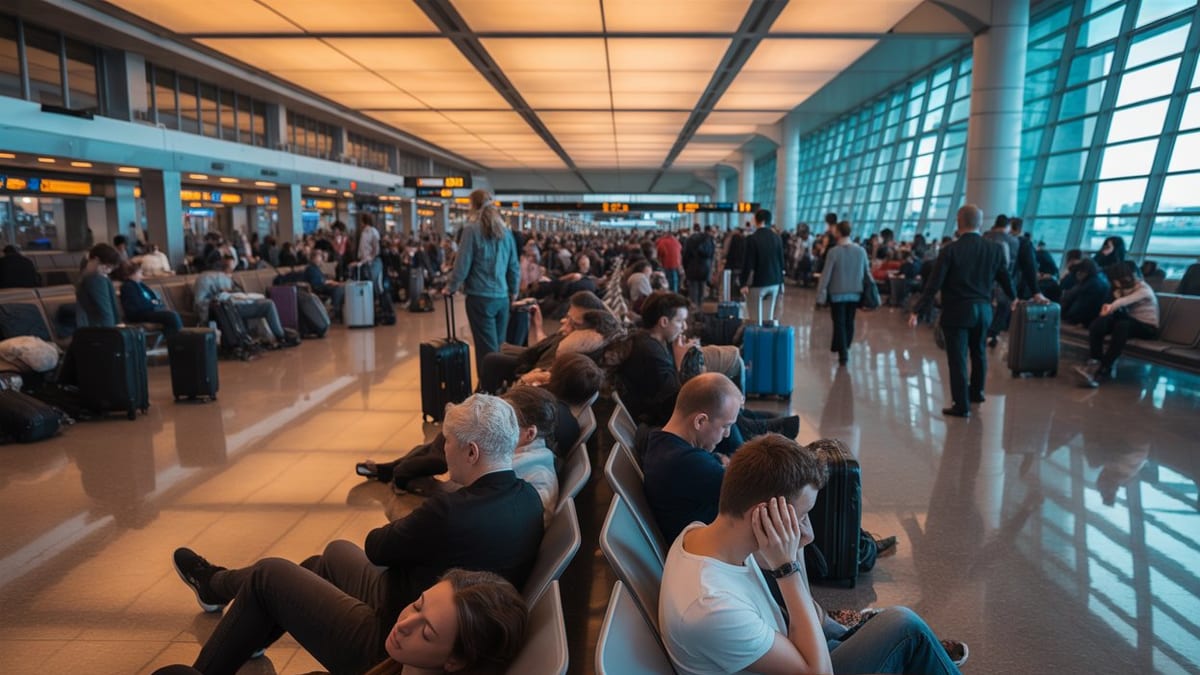
Image by Global Travel Alerts, Advisories, International Travel Alerts
Eight Flights Scrapped on Key Türkiye–Gulf Routes
According to published coverage and airline advisories updated in recent days, at least eight services linking Türkiye with Gulf destinations have been cancelled on short notice, affecting routes to Bahrain, Kuwait, Dubai and other major transit points. The affected operations include flights marketed or operated by Gulf Air, Turkish Airlines and Kuwait Airways, among others, and form part of a broader pattern of rolling schedule cuts across the region.
Reporting on the wider conflict-related aviation disruption indicates that Bahrain and Kuwait remain under severe airspace restrictions, while the United Arab Emirates is operating with only a partially open sky. Publicly available operational bulletins describe Bahrain and Kuwait as effectively closed to regular traffic, with airlines either suspending flights outright or attempting limited workarounds through alternative gateways in Saudi Arabia and elsewhere.
Industry tracking of Middle East schedules shows that regional and international carriers have been cancelling thousands of flights since late February in response to escalating tensions and missile activity around key Gulf states. While the eight newly cancelled services touching Türkiye represent a small fraction of the total, they are hitting heavily used corridors that connect Istanbul with Gulf hubs commonly used as stopovers for Asia, Europe and Africa.
For travelers, this cluster of cancellations is particularly disruptive because several of the affected flights were part of multi-leg itineraries, meaning passengers face missed onward connections and complex rebooking scenarios. Travel forums and passenger reports highlight a surge in last minute schedule changes, with some Türkiye–Gulf routes repeatedly appearing and disappearing from airline timetables as conditions shift.
Conflict and Airspace Closures Continue to Drive Uncertainty
The latest disruption is rooted in the ongoing regional conflict involving Iran and several Arab states, which has triggered intermittent missile and drone strikes, as well as precautionary airspace shutdowns. Aviation analysis published this week notes that large portions of Gulf airspace, including over Bahrain and Kuwait, remain closed or heavily restricted, forcing carriers to halt services or adopt lengthy diversions that are not always commercially viable.
Coverage from international travel and business media explains that the central Gulf corridor, a core highway for east–west traffic, has been largely unusable at times, pushing airlines to route flights either north via the Caucasus or south via Egypt, Saudi Arabia and Oman. This reconfiguration adds flying time, raises fuel burn and complicates crew and aircraft rotations, which in turn feeds into more frequent cancellations on marginal routes.
Analysts cited in recent aviation features point out that while headline attention has focused on the largest Gulf carriers, smaller and mid-sized airlines such as Gulf Air and Kuwait Airways are particularly exposed to sustained airspace closures close to their home hubs. Turkish Airlines, which relies heavily on its Istanbul hub as a global transfer point, has also had to redraw parts of its regional network to avoid tense airspace while still maintaining viable connections to Europe, Asia and Africa.
Publicly available scheduling data suggests that these operational constraints have reduced flexibility for carriers when disruptions occur, making it harder to absorb last minute route suspensions or to quickly deploy spare capacity to cover cancelled Gulf legs from Türkiye. The result is a fragile timetable in which relatively small changes on one segment can cascade into widespread delays and cancellations for passengers.
How Gulf Air, Turkish Airlines and Kuwait Airways Are Adjusting
Gulf Air, the flag carrier of Bahrain, has been among the airlines most directly affected by the closure of Bahraini airspace. Operational updates summarized in industry briefs describe the carrier suspending regular flights to and from Bahrain and, in some cases, using nearby Saudi Arabian airports as temporary alternatives. For travelers starting or ending journeys in Türkiye, this has translated into cancellations of Istanbul–Bahrain sectors and complex rerouting through Dammam or other regional gateways.
Turkish Airlines continues to operate a portion of its Middle East network but has modified flight paths and schedules to avoid the most heavily restricted areas. Travel advisories and customer communications reviewed by aviation outlets show that the carrier has introduced more flexible change and refund policies on tickets involving high risk destinations, including several Gulf states. Some Istanbul departures to Gulf hubs have been cancelled or consolidated, contributing to the count of eight recently scrapped flights affecting connections to Bahrain, Kuwait and Dubai.
Kuwait Airways, operating from a country whose airspace has faced repeated interruptions, has focused on suspending selected routes and offering waivers on affected tickets. Passenger accounts and publicly posted airline notices highlight a war related waiver that allows certain customers traveling to or from Kuwait and nearby hotspots to request free changes or refunds within defined travel windows. Nonetheless, uneven communication and the rolling nature of the cancellations have left some Türkiye bound passengers uncertain about whether their flights will operate until very close to departure.
Other regional carriers, including big Gulf brands and smaller operators, are implementing similar measures by trimming frequencies, rerouting flights, or temporarily halting operations on risk exposed corridors. For itineraries that involve both Türkiye and Gulf hubs, this means that even if one leg remains scheduled, a partner airline segment may be cancelled, forcing complete itinerary overhauls.
Impact on Travelers Between Türkiye and the Gulf
The immediate effect for travelers is a spike in uncertainty around trips linking Istanbul and other Turkish cities with Gulf destinations such as Bahrain, Kuwait and Dubai. Travel industry reports note that passengers are encountering last minute cancellations, extended layovers, and involuntary rerouting via secondary hubs in the eastern Mediterranean or southern Arabian Peninsula. In some cases, journeys that once took four to six hours of flying now require complex multi stop itineraries.
Consumer advocates and travel media recommend that passengers with upcoming trips on Gulf Air, Turkish Airlines, Kuwait Airways or other regional carriers closely monitor their bookings and avoid heading to the airport without a reconfirmed flight status. Many airlines have urged customers to use mobile apps and official channels for real time updates, as timetable changes are being loaded with limited advance notice while conflict dynamics evolve.
Reports from major tourism destinations also point to a wider drop in demand for travel via Gulf hubs, with some leisure travelers postponing or rerouting holidays to avoid transiting through the region. Data shared in recent coverage indicates that alternative hubs in Egypt and Türkiye itself are absorbing some of this displaced traffic, as airlines and passengers seek more stable routings between Europe, Asia and Africa.
For business travelers and diaspora communities that rely on direct links between Türkiye and Gulf cities, the eight cancelled flights are part of a more worrying pattern. Should airspace restrictions persist or widen, observers suggest that more structural schedule changes could follow, potentially affecting capacity into the summer and complicating advance planning for both corporate and personal travel.
What Passengers Should Watch for in the Coming Days
In the near term, aviation specialists expect airlines to continue publishing rolling updates rather than long term schedules, given the fluid security situation. Publicly available forecasts from industry groups stress that as long as airspace around Bahrain, Kuwait and segments of the UAE remains constrained, carriers will need to maintain contingency plans that may include further cancellations on Türkiye–Gulf routes.
Travel reporting indicates that many airlines have already relaxed change fees for tickets involving affected countries, particularly for journeys booked before the latest escalation. Passengers are being encouraged in these reports to take advantage of flexible rebooking options when offered, especially if their itineraries rely on narrow connection windows or multiple Gulf transfers.
At the same time, air safety experts quoted in recent coverage underline that cancellations reflect a cautious approach to risk management rather than an inherent danger in every flight that continues to operate. Flights that do go ahead are typically using vetted alternative routings designed to avoid conflict zones, even if this means longer travel times and higher operating costs.
For now, travelers between Türkiye and the Gulf are advised by publicly available guidance to plan for possible disruption, maintain flexible itineraries where possible, and stay informed through airline channels and reputable travel news outlets. As the situation evolves, further adjustments to Gulf Air, Turkish Airlines, Kuwait Airways and other carriers’ schedules are likely, and the eight cancellations already recorded may prove to be only an early sign of deeper timetable changes ahead.