

More news on this day
Travelers passing through Kuwait International Airport are facing renewed disruption as Gulf Air, Kuwait Airways and Qatar Airways cancel more services, cutting links to Bahrain, Cairo, Amsterdam, Barcelona and other major cities in response to ongoing regional security concerns and airspace restrictions.
Get the latest news straight to your inbox!
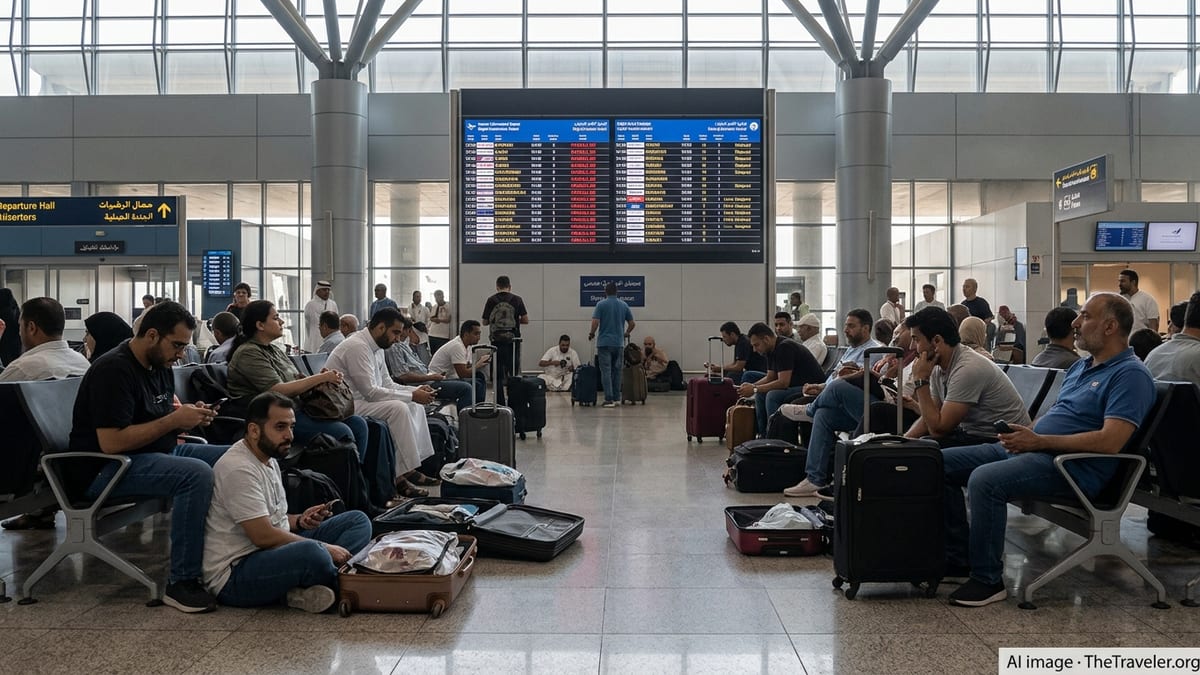
Fresh Wave of Cancellations Hits Key Regional and European Routes
Publicly available flight information on 25 March shows another round of flight cancellations involving Kuwait International Airport, with services operated by Gulf Air, Kuwait Airways and Qatar Airways among those removed from schedules. The latest disruptions affect short-haul routes to neighboring Bahrain and Cairo as well as long-haul links to European hubs including Amsterdam and Barcelona, tightening the bottleneck for travelers already coping with weeks of uncertainty.
Departure and arrival boards for Kuwait indicate that multiple frequencies which typically connect Kuwait City to Bahrain via Gulf Air and to Doha via Qatar Airways have been marked as cancelled or not operating, reducing options for passengers trying to connect onward to Europe, North Africa and Asia. Kuwait Airways has also trimmed services on selected regional sectors, compounding the impact for travelers who rely on the national carrier for access to major Arab capitals.
The cumulative effect is a thinning of connections through what is normally a busy regional crossroads, especially for passengers using Kuwait as a transfer point between South Asia, the Gulf and Europe. For many travelers, itineraries that once required a straightforward transit now involve detours, layovers in secondary hubs or, in some cases, postponement of travel plans altogether.
In Amsterdam and Barcelona, schedule data and aviation tracking platforms indicate that some Qatar Airways and Kuwait Airways flights linked to Kuwait through Doha or direct routings have been withdrawn for the current operating window. This has left passengers with fewer one-stop options from Kuwait to Western Europe and limited same-day alternatives, particularly on peak days when remaining flights are heavily booked.
Regional Security Situation and Airspace Limits Continue to Shape Operations
The cancellations come against the backdrop of an unsettled regional security environment that has repeatedly affected aviation in recent weeks. Government statements and international news coverage describe strikes and drone activity targeting parts of Kuwait and neighboring Gulf states since late February, prompting authorities to periodically limit or close airspace and reassess risk levels for civil aviation.
Reports on the Iranian strikes across the Gulf region detail how Kuwait International Airport and other strategic facilities have been within the broader zone of concern, triggering enhanced security postures and temporary suspensions of commercial movements. As air navigation authorities adjust restrictions, airlines have been forced to recalibrate their schedules with limited advance notice, particularly on routes passing close to sensitive airspace corridors.
Flight databases show that Gulf Air’s shuttle flights between Kuwait and Bahrain, which normally serve as a key bridge to the Bahraini carrier’s wider network, have been especially vulnerable to these shifts. Similar patterns are evident for Qatar Airways flights between Kuwait and Doha, which link passengers to a large global network via Hamad International Airport. While some services continue to operate under revised timings or reduced frequency, a growing list of flights has been scrubbed during the current review period.
Aviation analysts note that even when airports remain technically open, carriers sometimes choose to thin schedules to manage operational risk, consolidate passenger loads and limit exposure to sudden closure orders. For Kuwait, which sits close to several military and energy installations, these calculations have translated into repeated last minute changes that are difficult for travelers to anticipate.
Passengers Confront Refunds, Rerouting and Unclear Timelines
For affected travelers, the immediate concern is what happens to existing bookings and onward connections. Publicly shared airline notices and customer reports indicate that Kuwait Airways has extended war-related waivers on certain tickets, allowing refunds or rebooking on later flights when services are formally cancelled. However, travelers have described confusion about exact eligibility windows and the timing of refunds, especially for journeys scheduled beyond the currently published suspension periods.
Similar uncertainty surrounds Qatar Airways itineraries touching Kuwait. Online updates circulated by passengers reference limited “revised schedules” in place through late March, with the airline operating a smaller number of flights and applying flexible policies for customers whose services do not operate. In practice, some travelers have opted to proactively reroute via other Gulf hubs such as Dubai, Abu Dhabi or Riyadh when inventory is available, even at additional cost, rather than wait for last minute cancellation notices.
Contact center backlogs and slow email responses have also emerged as a source of frustration. With airlines adjusting schedules in stages, passengers often receive confirmation of a cancellation only a few days, or in some cases hours, before departure. This leaves minimal time to secure alternative flights at reasonable fares, particularly for those with fixed commitments such as connecting long-haul segments, work obligations or visa deadlines.
Travel forums and social media posts show some passengers weighing whether to cancel Kuwait-bound trips altogether, given the risk that a return segment could be affected by a sudden tightening of airspace restrictions. Others report purchasing backup tickets with different carriers or on alternative routings, accepting the possibility of partial financial loss as a hedge against being stranded.
Knock-On Effects for Hubs in Bahrain, Cairo, Amsterdam and Barcelona
The cancellations in and out of Kuwait have ripple effects across the wider network of Gulf and European hubs. Bahrain’s role as a regional connector for Gulf Air means any reduction in Kuwait services can quickly spill over into load imbalances and connection challenges for flights onward to Saudi Arabia, Dubai, Muscat and points in South Asia. Reduced feed from Kuwait may also lead to capacity adjustments on certain Bahrain departures as the airline re-optimizes its schedule.
Cairo, a key North African gateway, faces similar dynamics. Disruptions to Kuwait Airways and other carriers on Kuwait–Cairo sectors can affect passenger flows to destinations across Egypt and onward to Africa, as well as labor traffic between the Gulf and the Egyptian capital. With limited alternative nonstop options on some days, even a handful of cancellations can significantly increase pressure on remaining flights and raise last minute fares.
In Europe, Amsterdam and Barcelona are among the cities where Kuwait-linked services feed into broader alliance and codeshare networks. When Kuwait-originating passengers cannot reliably reach Doha or other connecting hubs, long-haul flights to these European cities may see shifts in booking patterns, with more travelers funneled through competing hubs or choosing to delay travel. Airlines may respond with tactical capacity changes, such as upgauging aircraft on routes with strong demand from other origins while keeping Kuwait capacity constrained.
Airport operators in these cities are also monitoring the situation, as fluctuations in Gulf traffic can influence retail spending, lounge utilization and demand for premium services. While the overall volume of Kuwait-originating travelers is modest compared with larger markets, the segment often includes business travelers and expatriates with higher-than-average ancillary spending, making the disruption material for some airport stakeholders.
What Travelers Through Kuwait Should Do Now
With conditions still evolving, travel industry guidance consistently stresses the importance of close monitoring and flexible planning for anyone booked to travel via Kuwait in the coming days. Publicly available advisories from airlines and airports emphasize checking flight status frequently, opting in to email and SMS alerts, and using official airline apps or websites rather than relying solely on third party booking engines for the latest schedule information.
Travel agents and online intermediaries are encouraging customers to review fare rules and waiver policies in detail, particularly around nonrefundable tickets and change penalties. In many cases, passengers whose flights are cancelled are entitled to a full refund or free rebooking to the next available flight, but options can vary depending on the airline, route and point of purchase.
Travelers with critical time-sensitive trips, such as business meetings, medical appointments or fixed tour departures, may want to explore alternative routings that avoid Kuwait entirely, at least until there is greater clarity on airspace stability. This can mean connecting through other Gulf hubs or, for some European and Asian journeys, bypassing the region with longer but more predictable routings via Istanbul or major European gateways.
For those who choose to proceed with itineraries involving Kuwait, experts advise building in additional buffer time for connections, securing comprehensive travel insurance that covers security-related disruptions, and keeping digital copies of all receipts and communications to support potential claims. While airlines and aviation authorities continue to adjust operations in response to the regional situation, travelers are likely to face a fluid environment in and around Kuwait for at least the short term.