

More news on this day
Travelers flying between Türkiye and the Gulf are facing fresh disruption as Gulf Air, Turkish Airlines, Kuwait Airways and other carriers cancel a series of flights linking Istanbul and other Turkish cities with Bahrain, Kuwait, Dubai and additional Middle Eastern hubs, according to newly published schedules and operational updates.
Get the latest news straight to your inbox!
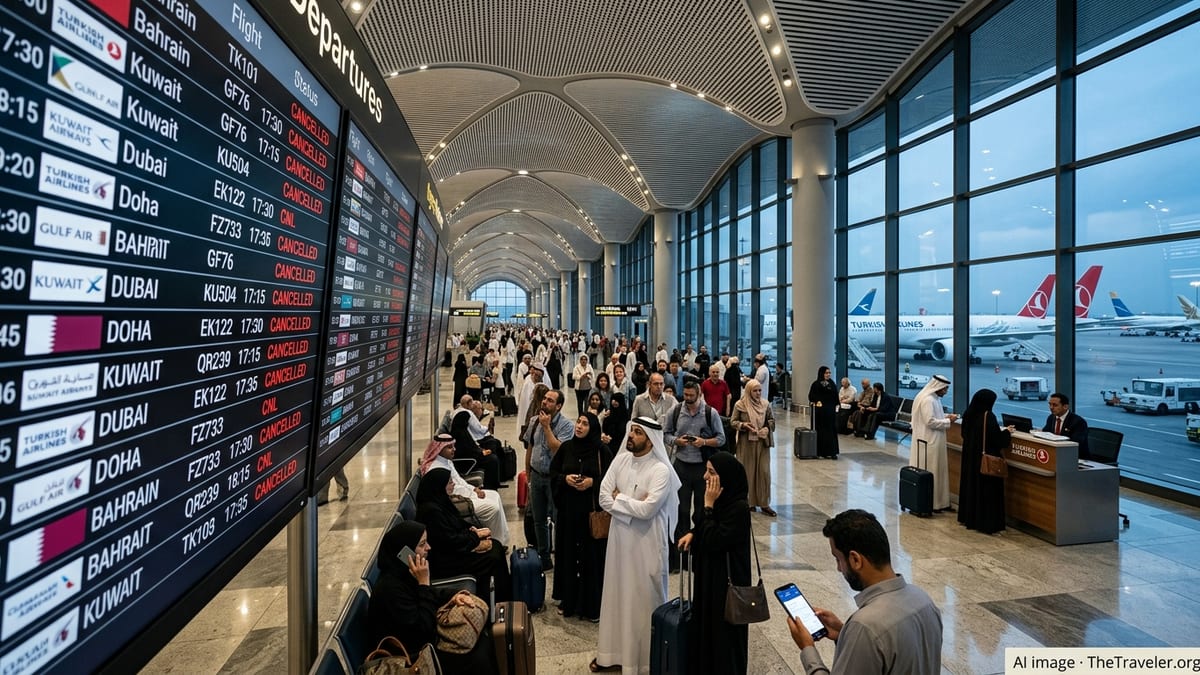
Eight Cancellations Highlight Growing Strain On Key Routes
Newly updated timetables for late March 2026 show at least eight flights involving Türkiye and Gulf hubs such as Bahrain, Kuwait and Dubai removed from schedules or listed as canceled, reflecting the ripple effects of a wider Middle East airspace crisis. Publicly available data and media coverage indicate that the affected services include Gulf Air links between Istanbul and Bahrain, Kuwait Airways operations touching Turkish airports, and select Turkish Airlines flights serving Gulf destinations that are currently difficult to reach on standard routings.
The cancellations come on top of thousands of disrupted flights across the broader region since late February, when hostilities involving Iran, Israel and the United States triggered a patchwork of airspace closures in the Gulf and surrounding corridors. Aviation analyses cited in recent coverage estimate that several thousand services per day have been scrapped or rerouted at the height of the crisis, placing further pressure on already busy hubs in Türkiye.
For travelers in Türkiye, the loss of even a handful of daily departures to regional centers such as Bahrain, Kuwait City and Dubai translates into reduced connectivity, tighter capacity on remaining flights and rising fares on many short and medium haul routes. Istanbul’s role as a bridge between Europe and Asia has also made disruptions on Gulf sectors particularly visible, with missed connections cascading through long haul networks.
While airlines are adjusting schedules on an ongoing basis, the pattern of at least eight cancellations on Türkiye linked routes underscores how quickly operational decisions in the Gulf can reshape travel options for passengers across Europe, the Middle East and South Asia.
Airspace Closures In The Gulf Drive Flight Cuts
The latest cancellations affecting Türkiye are closely tied to partial or full airspace closures in several Gulf states since late February, particularly around Bahrain, Kuwait and the United Arab Emirates. Public advisories from airports and civil aviation authorities in Europe and the Middle East describe a dynamic situation in which carriers are forced to either reroute around restricted zones or suspend services outright when safe alternatives are limited.
Bahrain’s airspace restrictions have been especially disruptive for Gulf Air, which relies on its Manama hub to connect passengers between Europe, Asia and the Indian subcontinent. Travel forums and airline communications reviewed in recent days point to an extended suspension of many Bahrain centered operations, with only limited evacuation style or specially authorized flights operating under tight controls.
Similar pressures are visible in Kuwait, where heightened security concerns and intermittent constraints on regional air corridors have led Kuwait Airways and other operators to pare back schedules. Reporting from regional outlets indicates that flights touching conflict sensitive skies are subject to last minute operational reviews, raising the risk of day of departure cancellations for services linking Kuwait with Turkish airports.
In the United Arab Emirates, Dubai’s position as a major long haul hub has made any airspace restriction particularly consequential. Earlier waves of disruption saw services into and out of Dubai delayed or scrapped as airlines evaluated safe routing options, and some of those adjustments continue to reverberate in the form of thinner frequencies on certain Istanbul Dubai and broader Türkiye Gulf city pairs.
How Gulf Air, Turkish Airlines And Kuwait Airways Are Responding
Gulf Air appears among the most directly affected carriers on Türkiye related routes, given its reliance on Bahrain’s constrained airspace. Information compiled from passenger advisories and travel industry bulletins indicates that the airline has canceled multiple flights that would normally link Turkish cities with Bahrain or use the kingdom as a through hub to destinations such as Muscat, Doha or South Asian gateways. In response, Gulf Air has expanded options for voluntary changes and, in some cases, refunds for tickets issued before the escalation period.
Turkish Airlines, which operates one of the world’s largest route networks from its Istanbul hub, is also adapting. While the airline continues to serve many Gulf destinations, industry summaries and traveler reports suggest that selected frequencies have been trimmed and certain flight numbers temporarily removed from sale when routings would require transiting heavily restricted airspace. In some cases, Turkish Airlines is understood to be lengthening flight paths, increasing block times and consolidating passengers onto fewer daily departures.
Kuwait Airways, meanwhile, is navigating both operational constraints and customer service challenges. Travelers posting on public forums in mid March have described short notice cancellations on Kuwait centric routes and questions around refund processing timelines. At the same time, published guidance from travel agents and aviation regulators emphasizes that passengers whose flights are canceled retain entitlement to rebooking or reimbursement under applicable fare rules and consumer protection frameworks.
Other regional carriers, including Qatar Airways, Emirates, flydubai and Oman Air, are also adjusting flight plans touching Türkiye, further complicating the picture for travelers using Istanbul, Antalya or Ankara as transit points to the Gulf and beyond.
What The Disruptions Mean For Travelers In Türkiye
For passengers in Türkiye booked on flights to Bahrain, Kuwait, Dubai or other Gulf destinations, the latest batch of cancellations serves as a reminder that regional air travel remains volatile. With multiple carriers trimming frequencies or suspending individual services, remaining seats on alternative flights can sell out quickly, especially on peak travel days and key business routes.
Travel industry advisories recommend that passengers monitor booking management tools and airline notifications closely in the days leading up to departure. Where possible, choosing itineraries that avoid the most heavily restricted airspace, even if that means a longer routing through alternative hubs such as Cairo, Athens or European capitals, may reduce the risk of last minute disruption.
Publicly available guidance from airports and aviation agencies also stresses the importance of leaving additional time for connections and being prepared for schedule changes on short notice. With some airlines consolidating multiple departures into a single service, departure times and even operating carriers can shift within hours of travel.
Travelers whose flights have already been canceled are generally being offered a mix of options, including rebooking at a later date, rerouting via different hubs, or refunds in line with fare rules. Consumer advocates note that passengers are typically better protected when they wait for the airline to cancel a flight rather than proactively changing nonrefundable tickets, as this can preserve eligibility for reimbursement.
Outlook: Continued Volatility As Airlines Rebuild Schedules
The near term outlook for Türkiye Gulf air travel suggests ongoing volatility rather than a rapid return to normal operations. Analysts quoted in recent aviation and business coverage highlight that airlines are juggling several overlapping pressures, including elevated fuel prices, extended flight times around restricted airspace and uncertainty about the duration of regional tensions.
For carriers such as Gulf Air, Turkish Airlines and Kuwait Airways, rebuilding reliable schedules will depend on both security assessments and the reopening of key corridors that currently require lengthy detours. Until those conditions improve, industry observers expect airlines to continue making incremental adjustments, adding or canceling individual flights on short notice in response to daily risk evaluations.
For travelers planning trips between Türkiye and the Gulf, the most practical approach in the weeks ahead may be to build flexibility into itineraries, consider alternative routings where available and stay alert to schedule updates from airlines and airports. While only eight flights may be highlighted in the latest wave of cancellations, the broader pattern suggests that the region’s aviation map will remain in flux for some time.