

More news on this day
Passengers across Saudi Arabia, India, the United Arab Emirates, Bahrain, and Kuwait are facing fresh travel turmoil as Saudia, FlyDubai, Gulf Air, and Air Arabia cancel 35 flights and delay 83 more, disrupting key routes through Riyadh, Dubai, Mumbai, Chennai, and other major hubs.
Get the latest news straight to your inbox!
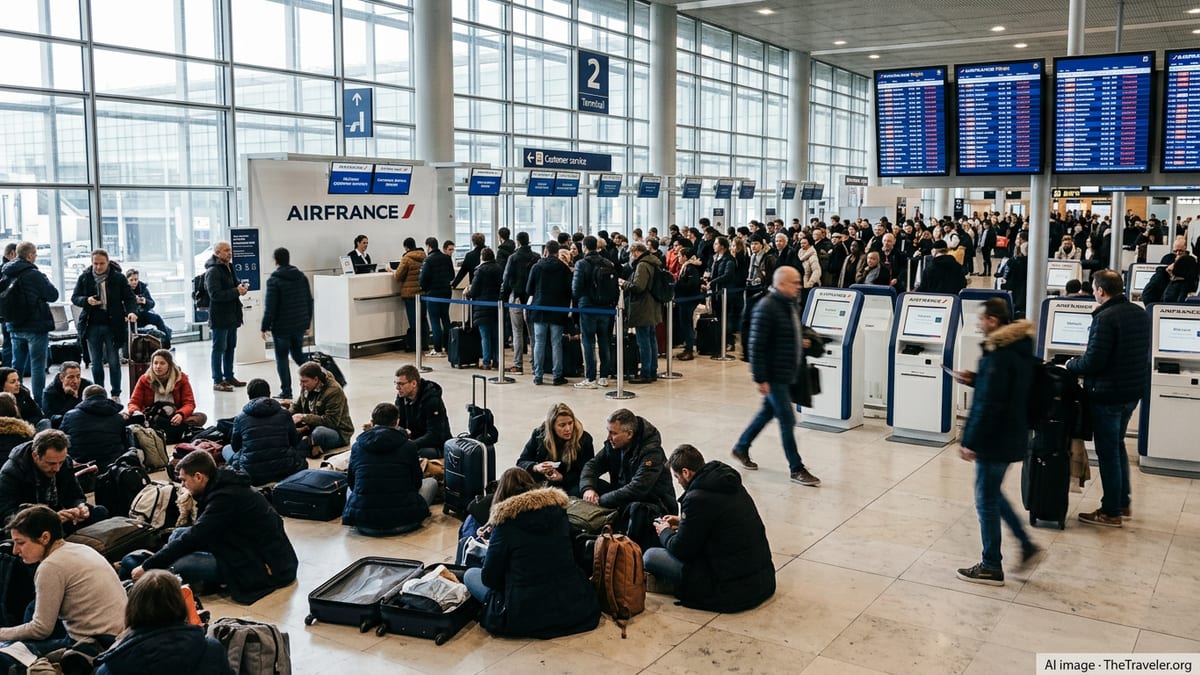
Regional Networks Under Strain After Weeks of Volatility
The latest round of cancellations and delays comes on the heels of weeks of instability in Middle East airspace, which has already led to rolling suspensions, emergency timetables, and “exceptional” flights run on short notice. Publicly available information shows that Saudia, FlyDubai, Gulf Air, and Air Arabia are still operating highly constrained schedules as they adjust to shifting overflight permissions and congestion on remaining corridors.
Recent airline and airport updates indicate that carriers have been forced to trim services from traditional hubs such as Riyadh, Jeddah, Dubai, Sharjah, Manama, and Kuwait City, focusing instead on a narrower set of trunk routes and repatriation-style flights. In practice, this has left many point-to-point links across the Gulf, India, and wider Asia operating at short notice or not at all, amplifying the disruption when a cluster of flights is cancelled or significantly delayed in a single day.
Travel industry commentary suggests that the 35 cancellations and 83 delays affecting Saudia, FlyDubai, Gulf Air, and Air Arabia reflect a mix of airspace restrictions, aircraft and crew positioning issues, and a backlog of stranded passengers. Limited capacity on alternative routes means there is little slack in the system, so knock-on effects are quickly felt across the region.
Analysts note that the cumulative effect is particularly severe in gateway cities that rely heavily on Gulf carriers for onward connections. Even when airports remain open, schedule volatility and last-minute changes are forcing travellers to navigate a patchwork of partial resumptions, temporary hubs, and rolling waivers on change fees.
Hubs in Riyadh and Dubai Face Surging Backlogs
Riyadh and Dubai, two of the region’s most important connecting hubs, are bearing a significant share of the disruption. Reports indicate that Saudia has been gradually rebuilding its network from Riyadh and Jeddah through a limited restart of flights to key markets, yet cancellations and long delays continue to impact passengers trying to move through the Saudi capital on regional and long-haul itineraries.
In Dubai, flight-tracking data and airport bulletins show that FlyDubai and Air Arabia, in particular, have oscillated between extended suspensions on some routes and limited services on others. Even as some international airlines announce phased resumptions from Dubai International Airport, low-cost carriers continue to juggle constrained fleets and high demand for seats out of the city.
The clustering of cancellations and delays in these hubs has produced crowded terminals and complex rebooking scenarios, especially for travellers with onward connections to India, Europe, and Southeast Asia. Given the volume of transit traffic handled by Riyadh and Dubai in normal times, any reduction in scheduled operations quickly creates a backlog that can take days to unwind.
Travel specialists point out that, unlike short-lived weather disruptions, current network instability is unfolding in an environment where alternative routings are limited and many nearby airports are experiencing similar pressures. That leaves affected passengers with fewer practical options when their flight is cancelled at short notice.
India Connections Hit, With Disruptions in Mumbai and Chennai
India has emerged as one of the hardest-hit outbound markets, with disruptions reported across major cities including Mumbai and Chennai. Published flight information shows that connections from Gulf hubs into India have been repeatedly thinned out or retimed in recent weeks, as airlines prioritize a reduced number of frequencies and larger aircraft on key routes.
Travel advisories and airline updates highlight that passengers bound for or departing from Mumbai and Chennai are facing a higher risk of cancellations or multi-hour delays, particularly on services operated by Gulf carriers that link India to Saudi Arabia and the UAE. When a cluster of 35 cancellations is concentrated on routes feeding these gateways, even a single day of disruption can cascade into a prolonged shortage of available seats.
With Gulf hubs acting as critical bridges between India and the wider world, the impact is being felt across a range of itineraries. Travellers attempting to reach Europe, North America, or Africa via Riyadh, Dubai, Bahrain, or Kuwait are often encountering last-minute schedule changes, forcing them to accept long layovers, reroutes through secondary hubs, or travel on different days altogether.
Indian travel agencies and online booking platforms are reporting a surge in rebooking activity, with many customers choosing to hold flexible tickets or delay non-essential trips. In parallel, carriers that maintain more stable long-haul operations are seeing stronger demand from India-origin passengers seeking to bypass the most volatile parts of the regional network.
Bahrain and Kuwait See Knock-On Effects From Network Realignments
The disruption is not confined to the largest hubs. Bahrain and Kuwait, both important nodes in Gulf aviation, are experiencing their own share of cancellations and delays as Gulf Air and other regional airlines adapt to changing conditions. Publicly available schedules and media coverage show that Gulf Air has at times shifted operations or relied on temporary arrangements through nearby airports in Saudi Arabia to keep some routes open.
Such network realignments mean that passengers booked to travel directly from Manama or Kuwait City can find their flights cancelled or significantly delayed when aircraft and crews are redeployed to serve higher-priority corridors. Although some travellers are being offered rebooking via alternative Gulf hubs, capacity constraints and timing mismatches limit the number of seats available.
These challenges contribute to a patchwork of service levels across the region. While a few high-demand routes are seeing gradual restoration, secondary markets linked through Bahrain and Kuwait remain vulnerable to last-minute schedule changes. For passengers traveling between India and smaller Gulf cities, this can translate into overnight stays, backtracking through distant hubs, or waiting days for the next available departure.
Travel observers note that the experience for passengers often depends on the specific mix of carriers and airports involved. Where multiple Gulf airlines serve the same route, travellers have slightly more flexibility to switch, but where a single airline dominates, cancellation of even one frequency can leave them temporarily stranded.
Passengers Navigate Waivers, Rebookings, and Uncertain Timelines
Across the affected markets, passengers are contending with shifting policies on waivers, refunds, and rebookings. Airline statements and published advisories indicate that Saudia, FlyDubai, Gulf Air, and Air Arabia have each deployed various forms of flexibility for eligible tickets, including options to rebook at a later date, receive travel vouchers, or request refunds, depending on fare rules and route.
However, the concentration of 35 cancellations and 83 delays in a short period highlights the practical challenges of turning policy into timely assistance. Contact centers and airport ticket desks are often stretched, and travellers report long waits to secure new itineraries, especially when they are already abroad and need to coordinate hotel stays, visas, and connecting flights.
Consumer advocates suggest that travelers in the current environment should build in additional time, avoid tight connections through Gulf hubs, and monitor flight status closely up until departure. Many airlines are directing passengers to use mobile apps and online self-service tools as the first line of response when disruptions occur, with airport staff stepping in when same-day travel is still possible.
With regional conditions still evolving and only partial resumption of normal schedules, the outlook for a rapid return to pre-disruption reliability remains uncertain. For now, passengers across Saudi Arabia, India, the UAE, Bahrain, and Kuwait face a landscape in which even confirmed bookings on major carriers can be subject to sudden change, and where flexibility and real-time information are becoming essential parts of every trip.