

More news on this day
Major Gulf carriers and tourism hotspots across the United Arab Emirates, Egypt and Saudi Arabia are grappling with a sharp collapse in hotel and airline revenues as sweeping regional airspace closures disrupt one of the world’s busiest aviation corridors.
Get the latest news straight to your inbox!
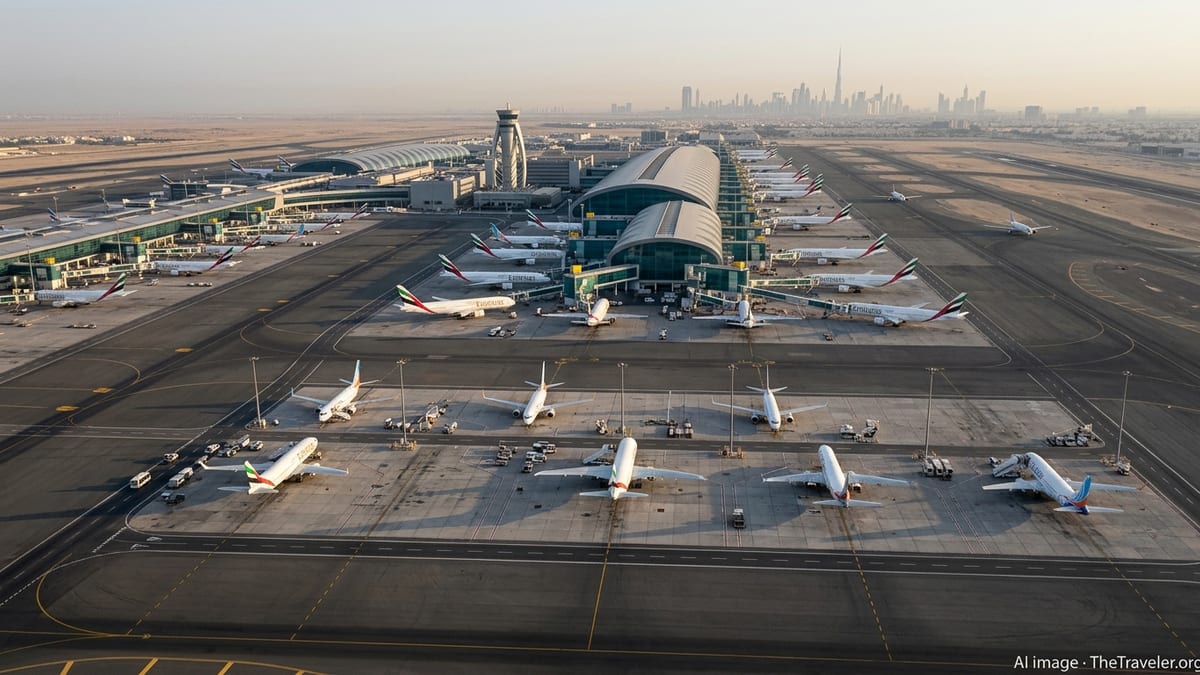
Airspace Shutdown Chokes Gulf Aviation Hub
Regional airspace has been heavily restricted in recent weeks following a sharp escalation in tensions centred on Iran, leading to widespread shutdowns across key Gulf and Levant flight corridors. Publicly available flight-tracking and airport data indicate that thousands of daily movements have been cancelled or rerouted, turning once-busy hubs into largely quiet terminals.
Reports from industry analysts and regional media show that major Middle Eastern carriers including Emirates, Qatar Airways, Etihad Airways, Kuwait Airways, flydubai and Saudia have suspended most regular services or are operating only limited relief flights. Dubai International and Abu Dhabi’s main airport, usually among the world’s top transit hubs, have seen normal operations curtailed as airlines struggle to find safe and commercially viable routings.
Reductions in overflight permissions across multiple neighboring states have severed vital links between Europe, Asia and Africa. Gulf carriers, which built their business models around high-frequency sixth-freedom connections, are being forced into longer detours or outright cancellations, dramatically raising operating costs while eroding the appeal of one-stop itineraries through the region.
Community flight-mapping projects and independent aviation briefings suggest that combined daily movements for leading Gulf carriers fell from around 2,000 flights to only a few dozen at the height of the closures in early March. While some services are now slowly resuming, the overall capacity outlook for the coming weeks remains highly uncertain.
Hotel Revenues Slide in UAE, Egypt and Saudi Arabia
The shock to aviation is rapidly feeding through to tourism economies in the wider region. Market intelligence from hospitality consultancies and bank research units indicates that hotels in the UAE, Egypt and Saudi Arabia are already suffering steep declines in both occupancy and average daily rates compared with the same period last year.
In the UAE, where Dubai and Abu Dhabi rely heavily on transfer passengers extending layovers into city breaks, hoteliers report a sudden drop in last-minute bookings and group arrivals. Many properties that had been running at high occupancy during the peak winter and early spring season are now discounting aggressively to attract residents and regional guests, cutting into revenue per available room.
Egypt’s Red Sea resorts and Cairo city hotels are also feeling the strain as charter operators and tour companies adjust schedules or cancel packages amid uncertainty over flight routes through the eastern Mediterranean and Arabian Peninsula. According to published coverage by regional business outlets, several leading European and Gulf tour operators have temporarily reduced capacity into Sharm el-Sheikh, Hurghada and other resort areas.
Saudi Arabia, which has poured billions into new giga-projects and religious tourism infrastructure, faces a dual challenge. While domestic demand remains relatively resilient, international visitation is slowing as airlines trim frequencies into Jeddah, Riyadh and emerging leisure destinations. Analysts tracking the kingdom’s hotel pipeline warn that prolonged disruption could delay the revenue ramp-up needed to justify heavy investment across the sector.
Strategic Gulf Carriers Confront Revenue Shock
The financial impact on leading Gulf airlines is mounting. Publicly available financial statements show that carriers such as Emirates, Qatar Airways, Etihad and Saudia had been entering 2026 with strong load factors and ambitious expansion plans following a robust recovery from the pandemic. The sudden airspace disruption now threatens to erode yields at the very moment many fleets were being upgraded and expanded.
Emirates and flydubai, which operate closely coordinated networks from Dubai, have been forced to suspend or curtail services to multiple regional destinations, limiting feed into their long-haul operations. Reports shared by passenger advocacy forums describe large-scale rebooking efforts, with travelers shifted onto alternative routings via Europe, Asia or secondary Gulf gateways when possible.
Qatar Airways, Etihad Airways and Kuwait Airways are confronting similar challenges from their hubs in Doha, Abu Dhabi and Kuwait City, respectively. Relief flights and selective resumptions are helping to repatriate stranded travelers, but overall schedules remain a fraction of normal levels. Industry commentary suggests that even when airspace restrictions ease, carriers may face weeks of network instability as crews, aircraft rotations and maintenance plans are rebuilt.
Saudia, together with newer Saudi carriers positioning the kingdom as a global tourism and transit hub, also faces a setback to its growth narrative. Frequent changes in routings and flight times are complicating connections for religious pilgrims, business travelers and tourists alike, raising questions about how quickly confidence can return once restrictions are lifted.
Tourism Megaprojects and Vision Strategies Under Pressure
The timing of the disruption is particularly sensitive given the central role tourism plays in long-term diversification plans across the Gulf. Vision strategies in Saudi Arabia, the UAE and other states hinge on transforming aviation capacity and leisure infrastructure into non-oil growth engines, backed by large orders for new aircraft and high-end hotel developments.
Recent global travel and tourism outlooks highlight the Gulf Cooperation Council as one of the fastest-growing regions for visitor arrivals, driven by mega-events, new entertainment districts and easing visa rules. For destinations such as Dubai, Abu Dhabi, Riyadh, Jeddah and the Red Sea coast, reliable air connectivity is a fundamental pillar of that strategy. Any prolonged interruption risks slowing investment returns and tempering investor appetite for future hospitality and infrastructure projects.
Market research from international property and hospitality firms notes that hotel development pipelines in Saudi Arabia, the UAE, Qatar and Egypt are among the most active in the wider Middle East and Africa. Many of these projects assume continued growth in stopover tourism and regional short-haul travel. If airlines are compelled to maintain longer detours or reduced frequencies for an extended period, projected demand curves may need to be revised.
Nevertheless, longer-term demand drivers remain intact. Demographic growth, outbound travel from within the GCC, and large-scale events such as upcoming tournaments and expos are expected to support a rebound once airspace constraints ease. The key question for policymakers and investors is how deep and prolonged the current revenue dip will be, and whether balance sheets across airlines and hotels can absorb the shock without major restructurings.
Travelers Face Uncertainty as Recovery Path Emerges
For travelers, the immediate effect of the crisis is a patchwork of cancellations, last-minute schedule changes and rapidly shifting advisory notices. Passenger forums and travel communities are filled with accounts of extended layovers, unexpected overnight stays and difficulties securing alternative routings as seats on operating services quickly sell out.
Consumer advocates urge travelers with upcoming itineraries through Gulf hubs to monitor airline announcements and airport departure boards closely, as formal schedule updates can lag real-time operational decisions. Flexible booking policies introduced during earlier phases of regional tension are being reactivated in many cases, allowing date changes or refunds, although processing times are reportedly slow due to the surge in demand.
Looking ahead, aviation analysts expect a phased recovery rather than a rapid snapback. As specific corridors reopen and overflight permissions are restored, Gulf carriers are likely to prioritize core trunk routes linking their hubs to major cities in Europe, South Asia and Southeast Asia, gradually reintroducing secondary destinations. Hotels in the UAE, Egypt and Saudi Arabia are preparing for a potential wave of pent-up demand, but are also bracing for a lean shoulder season if confidence rebuilds more slowly than hoped.
For now, the turbulence facing Kuwait Airways, Emirates, Qatar Airways, Etihad, flydubai and Saudia underscores the vulnerability of hub-and-spoke tourism economies to geopolitical shocks. The coming months will test the resilience of aviation and hospitality models that have turned the Gulf into one of the world’s most important crossroads for global travel.