

More news on this day
Global air travel has been thrown into fresh turmoil as more than 10,000 flight delays and at least 2,228 cancellations across Asia and the Middle East cripple operations at key hubs for Emirates, flyDubai, Etihad, IndiGo and Qatar Airways, leaving passengers stranded from Europe and North America to Australia.
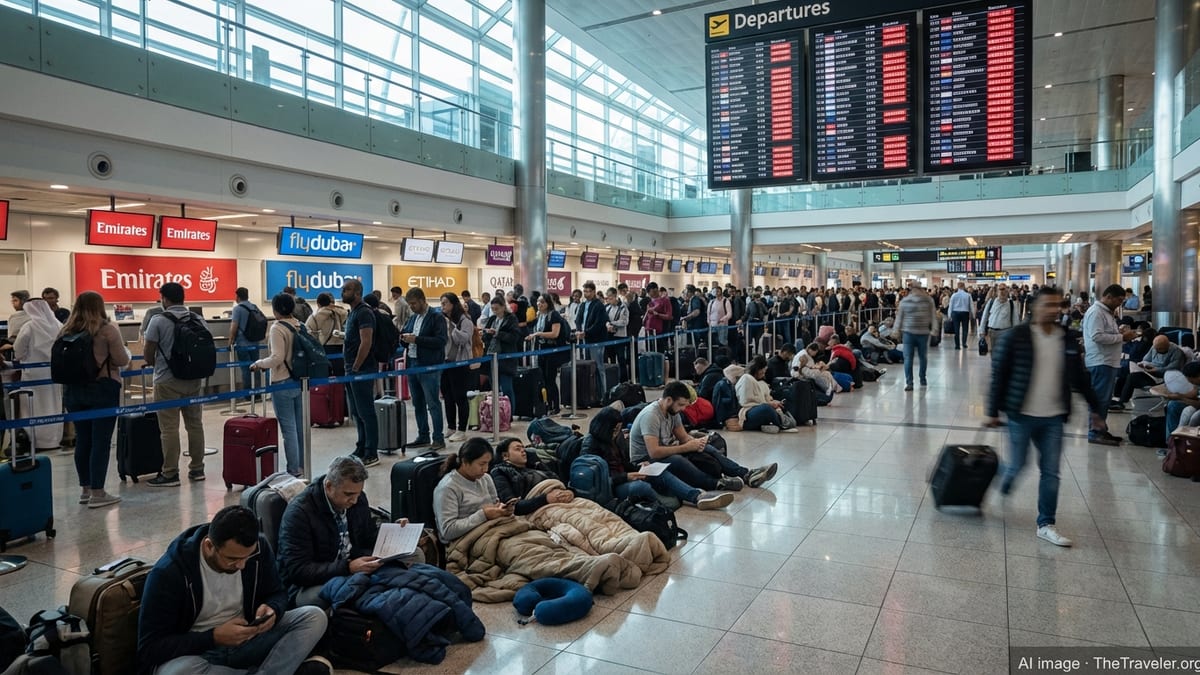
Middle East and Asian Hubs Grind to a Halt
Data compiled from multiple aviation tracking services on March 2 shows cascading disruption centred on the Gulf and wider Asia, with cancellations and long delays radiating out along some of the world’s busiest long haul corridors. Dubai International, Hamad International in Doha, and Abu Dhabi’s Zayed International have all seen large portions of their schedules scrubbed or severely delayed after airspace closures and security concerns choked regional traffic overnight.
At Dubai, more than a thousand flights have been cancelled or delayed over the past 48 hours, with airport departure boards dominated by red status markers as ground handlers struggle to re position aircraft and crews. In Doha, hundreds of flights have also been grounded or rerouted, constricting one of the main transfer points linking Europe, Africa and the Asia Pacific region. Knock on impacts are now rippling through airports as far apart as Singapore, Bangkok, Istanbul, Mumbai and Delhi as airlines divert or cancel services that would normally cross Middle Eastern airspace.
Industry analysts say the concentration of cancellations at these hubs has turned a regional crisis into a global one, given that Emirates, Qatar Airways and Etihad collectively operate thousands of weekly long haul connections. With planes and crews out of position and alternative routings already congested, carriers are warning that disruption will likely persist for days even if airspace restrictions are eased.
Emirates, flyDubai, Etihad and Qatar Airways Slash Schedules
Among Gulf carriers, Emirates and Qatar Airways have been hardest hit, each cancelling hundreds of flights across their networks since the weekend as they respond to airspace closures and security advisories affecting multiple countries. Wide body aircraft that typically shuttle between Dubai or Doha and major Western gateways such as London, New York and Sydney have been cancelled outright or assigned to shorter replacement sectors where air routes remain open.
Etihad has sharply cut operations at its Abu Dhabi base, with many transit passengers forced into extended hotel stays as they await new itineraries. Regional operator flyDubai, which relies heavily on short and medium haul flights into neighbouring states, has seen a large share of its schedule grounded, complicating connections for travellers using Dubai as a low cost transfer point between Europe, the Middle East and South Asia.
Executives at the affected airlines say their priority remains passenger safety, but acknowledge that the number of aircraft and crew now stranded outside their home hubs is making recovery more complex by the hour. With crews reaching duty time limits and spare capacity limited at alternative airports, rerouting options are shrinking, driving the rising tally of delays and cancellations.
IndiGo and Regional Carriers Face Mounting Pressures
India’s largest airline, IndiGo, is again under strain less than three months after a major scheduling crunch forced thousands of cancellations in December. As the latest Middle East shock unfolds, IndiGo has trimmed services on key international routes, including flights to the Gulf and Turkey, and has warned passengers to expect rolling changes in timings as it juggles aircraft utilisation and crew availability.
India’s aviation ministry has reported hundreds of cancellations and delays across domestic and international routes as carriers including IndiGo, Air India and Akasa Air rework flight paths to avoid restricted airspace or react to curtailed slots at Gulf hubs. Major Indian gateways such as Delhi and Mumbai are now experiencing secondary disruption, with early morning cancellations creating knock on delays that extend well into the evening banks of departures.
Elsewhere in Asia, airlines in Thailand, Singapore, Malaysia, Indonesia and the Philippines are reporting significant operational challenges as they adjust their networks to reduced capacity at Gulf and Levantine airports. That shift has pushed more traffic through already busy hubs such as Bangkok, Singapore and Kuala Lumpur, adding to congestion and prolonging turnaround times.
Passengers Stranded as Rebooking Windows Stretch
For travellers, the scale of the disruption is playing out in scenes reminiscent of previous global aviation shocks, with terminal floors turned into makeshift waiting rooms and customer service lines stretching hundreds of metres. At Dubai and Doha, passengers have reported waiting many hours just to speak with airline agents, while hotel rooms near major hubs have become scarce and expensive as stranded flyers scramble for accommodation.
Many long haul passengers face multi day delays after their original direct connections via the Gulf were cancelled and alternative routings filled up. Travellers bound for Europe from Australia and Southeast Asia, for example, are being rerouted through Bangkok, Singapore or Istanbul when possible, often with added stops and overnight layovers. Others have been offered refunds or open dated tickets, but with limited clarity on when normal schedules might resume.
Consumer advocates are urging travellers to keep all receipts for hotels, meals and ground transport, warning that compensation rules and refund policies vary sharply between jurisdictions and carriers. With aviation regulators in multiple countries monitoring the situation, airlines could face scrutiny over how they handle rebooking obligations, care for stranded passengers and communication around evolving schedules.
Recovery Outlook: Days of Disruption Ahead
Operational planners warn that even if airspace restrictions begin to ease, the combination of aircraft displacement, crew duty limitations and congested alternative routings means that airlines may need several days to restore reliable schedules. Airlines are prioritising the reinstatement of long haul trunk routes that carry the highest volumes and connect key corporate and cargo markets, potentially leaving some secondary leisure and regional routes on reduced frequencies for longer.
Travel industry insiders say the episode underlines the vulnerability of the modern hub and spoke model, in which a small number of mega hubs in the Gulf and Asia handle a disproportionate share of global long haul connectivity. When those hubs are constrained, as they are now, the knock on effects can quickly reach airports on every continent, disrupting not just passenger travel but also time sensitive air freight.
With forward bookings for the northern spring travel season already strong, airlines are under pressure to stabilise operations quickly to avoid long lasting confidence damage. Until schedules settle, passengers bound for or transiting through the Middle East and key Asian hubs are being advised to monitor flight status closely, build in extra buffers for connections and consider flexible ticket options where possible.