

More news on this day
More than 30 flights between Thailand and the Middle East have been cancelled in recent days as Qatar Airways, Gulf Air, Etihad Airways and other global carriers slash services amid ongoing airspace closures triggered by the widening conflict involving Iran, severely disrupting key routes to Doha, Dubai, Abu Dhabi, Bahrain, Tel Aviv and onward connections around the world.
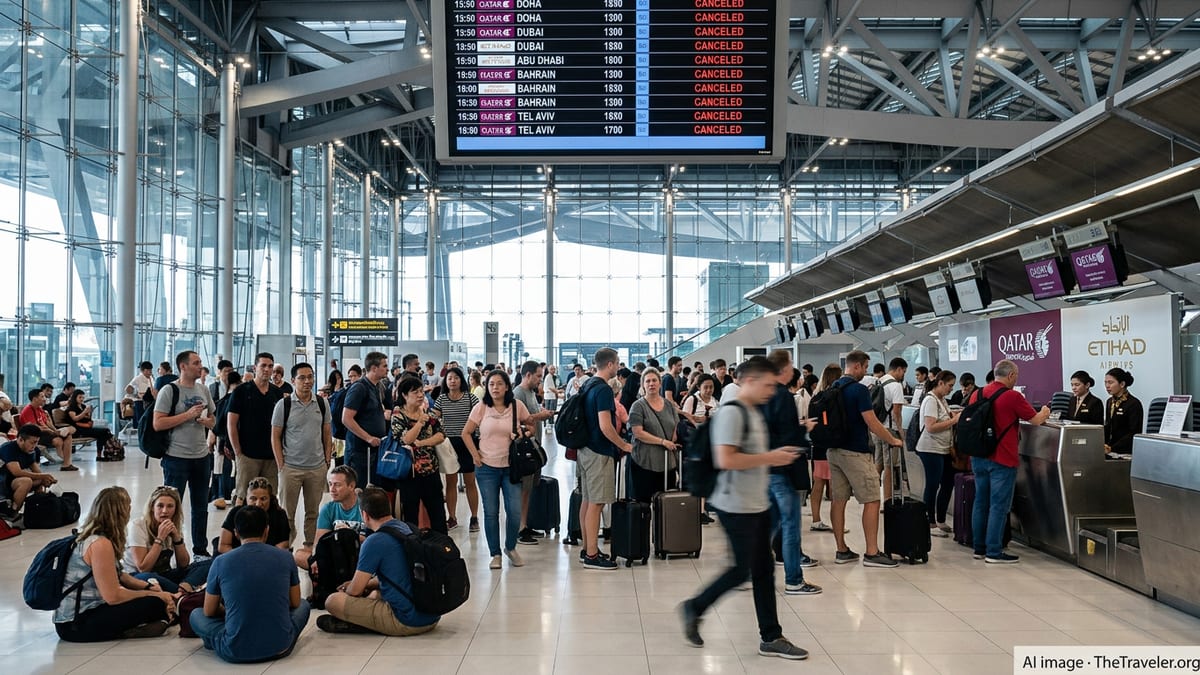
Thailand Links Severed as Gulf Hubs Cut Back
Airlines and airport authorities confirmed that a wave of cancellations has hit Bangkok and Phuket since the start of March, with services to major Middle East hubs either suspended or operating on sharply reduced schedules. Flights to Doha, Dubai, Abu Dhabi, Bahrain and Tel Aviv, which normally function as vital connection points between Asia, Europe and Africa, have been among the hardest hit.
Qatar Airways has moved to a limited schedule to and from Doha, with multiple departures from Thailand scrubbed or rerouted each day as the carrier adjusts to regional airspace restrictions and operational constraints. Travellers report last minute text alerts and app notifications advising them not to proceed to the airport unless their flight shows as confirmed and operating.
Etihad Airways, based in Abu Dhabi, has also shifted to a partial timetable after initially suspending all departures from its hub before gradually reintroducing select services. While the airline has begun restoring long haul routes, regional flights linking Abu Dhabi with Gulf neighbours and Southeast Asia remain significantly curtailed, leaving gaps in the usual network that Thailand passengers rely on for onward journeys.
Gulf Air’s operations have been among the most severely affected, with flights from its Bahrain hub to Asian gateways, including Bangkok, largely grounded. Combined with cancellations by other Middle Eastern and European carriers that normally feed traffic through the Gulf, aviation analysts estimate that well over 30 Thailand departures and arrivals involving Gulf hubs have been removed from schedules over the past week alone.
Knock-On Disruptions for Global Connections
The cancellation of Thailand flights is reverberating far beyond the country’s borders because Bangkok and Phuket serve as crucial origin and transit points for long haul travellers heading to Europe, North America and Africa via Gulf hubs. With Qatar Airways, Etihad and other operators forced to thin their schedules, passengers are facing prolonged layovers, circuitous routings and sudden rebookings through alternative cities such as Singapore, Kuala Lumpur and Istanbul.
Travel data providers tracking the fallout from the regional crisis report that hundreds of Gulf-bound services have been cancelled in recent days, with Qatar Airways and Etihad together scrapping hundreds of flights across their networks. A portion of these cuts involve services to and from Thailand, which ordinarily see high demand from European holidaymakers, Middle East business travellers and migrant workers connecting between Asia and the Gulf.
Long haul carriers outside the region, including several European and North American airlines, have also suspended or rerouted flights that would typically use Middle Eastern airspace, amplifying the disruption. Some Thailand passengers who were due to connect through Doha, Dubai or Abu Dhabi on non-Gulf airlines have found their itineraries cancelled outright as partner carriers adjust to avoid restricted skies.
Industry observers warn that even as limited schedules are reinstated, reduced seat capacity and longer flight times due to detours could keep fares elevated and availability tight on remaining Thailand routes for weeks, especially on popular corridors to London, Paris, Frankfurt and other European capitals that lean heavily on Gulf connections.
Stranded Passengers Face Long Waits and Changing Rules
For travellers on the ground in Thailand, the sudden loss of Middle East flights has translated into packed airline call centres, long queues at ticket desks and hotel lobbies filled with stranded passengers waiting for updates. Tourists and expatriate workers connecting through Doha or Abu Dhabi have reported multiple successive cancellations, with some rebooked several days later only to see those replacement flights also removed from the schedule as the situation evolves.
Airlines are offering varying degrees of flexibility. Qatar Airways has enabled many customers with affected itineraries to request date changes or refunds, while Etihad has issued travel advisories outlining options for passengers with tickets issued before the escalation of the conflict. Gulf Air and other carriers impacted by full or partial groundings are directing customers to manage bookings online where possible, warning that phone wait times and airport lines may be lengthy.
Travel agents in Bangkok say policies remain fluid, with rebooking windows, eligible travel dates and refund conditions updated frequently as airlines reassess their capacity. Some travellers who booked nonrefundable fares or complex multi-carrier itineraries are finding that what they can reclaim depends heavily on whether their segment is formally cancelled by the airline or still technically scheduled but at risk.
Consumer advocates urge passengers to keep meticulous records of all communications, screenshots of cancellation notices and any additional costs such as extra hotel nights or ground transport, which may be needed later when filing refund or insurance claims. They also stress the importance of checking flight status repeatedly in the 24 hours before departure and avoiding trips to the airport until a flight is clearly marked as operating.
Thai Tourism and Aviation Sector Brace for Fallout
The timing of the disruptions is particularly painful for Thailand’s tourism industry, which has been counting on strong demand from Europe and the Middle East during the late high season. Gulf carriers play an outsized role in bringing higher spending visitors from markets such as the United Kingdom, Germany and the Gulf Cooperation Council states, many of whom favour one-stop connections via Doha, Dubai or Abu Dhabi.
Tourism bodies and hotel associations warn that sustained flight cancellations could dent arrivals in March and April, especially for Phuket and other resort destinations popular with European sunseekers. Some travellers have already postponed or rerouted trips, opting for destinations that are more easily served by unaffected airlines or avoiding itineraries reliant on Middle East transits.
Thai-based carriers are monitoring the situation closely for opportunities to adjust capacity. While they cannot fully replace the extensive networks of Qatar Airways, Etihad or Gulf Air, additional non-stop or regional services to Europe and Asia could help partially offset the shortfall if disruptions persist. Airport operators in Bangkok and Phuket are also working with airlines to manage gate allocations and passenger flows as schedules remain in flux.
Economists note that beyond tourism, flight disruptions can also affect air freight, particularly high value goods such as electronics, perishables and automotive components that move via Middle Eastern hubs. Any sustained reduction in cargo capacity on Thailand–Gulf routes may add to supply chain pressures and shipping costs for exporters and importers that rely on quick transit through Dubai, Doha and Abu Dhabi.
What Thailand-Bound Travellers Should Do Now
With regional airspace restrictions still in place and airlines adjusting operations day by day, travel experts advise anyone flying between Thailand and destinations that typically route through the Middle East to adopt a cautious, highly flexible approach. That begins with monitoring airline apps and official communications rather than relying solely on third party booking platforms or static email confirmations.
Passengers with imminent departures are urged to verify that every leg of their journey is confirmed as operating, not just their long haul segments. If one link of a connecting itinerary, such as Bangkok to Doha, has been cancelled while a later leg to Europe still shows active, travellers should contact the airline promptly to discuss rebooking options rather than assuming the remaining flight will operate as planned.
For those planning trips later in March or April, industry analysts recommend building in extra connection time, considering routings that avoid affected airspace where feasible, and favouring tickets that allow free or low cost changes. Comprehensive travel insurance that covers war-related disruptions and airspace closures is becoming a key consideration, though policy fine print varies widely and must be scrutinised carefully before purchase.
Ultimately, while limited services by Qatar Airways, Etihad and other Gulf carriers have begun to return to the skies, the situation around Thailand–Middle East routes remains fragile. Until airspace across the region stabilises and schedules are fully rebuilt, travellers should expect more last minute changes and be prepared to pivot quickly if their plans involve Doha, Dubai, Abu Dhabi, Bahrain, Tel Aviv or other key hubs currently at the centre of the turmoil.