

More news on this day
Major Gulf carriers are cautiously resuming a handful of flights after unprecedented airspace closures across the Middle East, leaving Dubai and Abu Dhabi’s once-booming hotel sectors grappling with cancellations, stranded guests and an uncertain booking horizon just as the region heads into a crucial spring travel period.
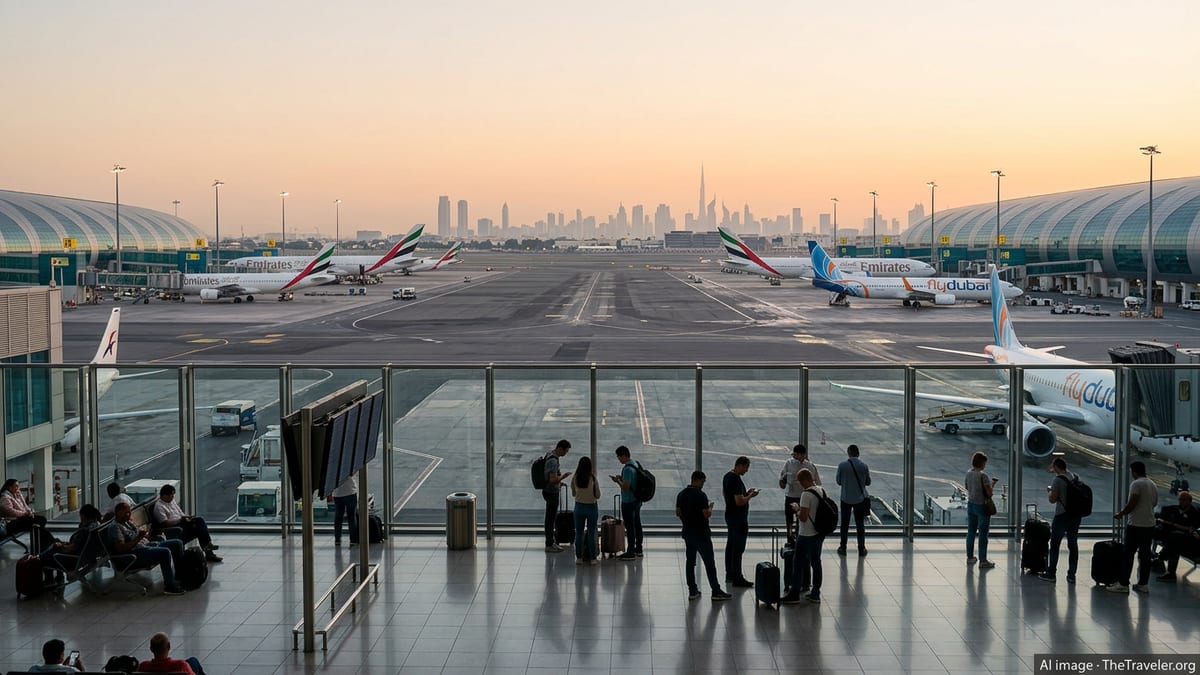
Airspace Closures Choke Off the Gulf’s Key Transit Hubs
The latest round of military escalation involving the United States, Israel and Iran has triggered sweeping airspace closures over parts of the Middle East, abruptly severing key corridors that normally feed millions of passengers through Dubai, Abu Dhabi and Doha each month. Authorities in the UAE shut much of the country’s skies from February 28, 2026, forcing airlines to ground or divert aircraft and leaving aircraft and crews scattered across the region and beyond.
Dubai International and other airports in the country’s northwest, including Dubai World Central and Sharjah, were among the hardest hit, with regular commercial operations halted for several days. At the same time, Qatari airspace was effectively closed, prompting a suspension of most services to and from Doha. The ripple effects have extended far beyond the Gulf, with airports from Europe to South Asia reporting rolling cancellations, diversions and long delays as carriers scramble to reconfigure schedules.
Travel agents and government advisories in key outbound markets are warning holidaymakers to reconsider or delay trips that rely on transiting Dubai, Abu Dhabi or Doha. With tens of thousands of travelers stranded worldwide, and many more wary of booking itineraries dependent on volatile airspace, the very connectivity that underpins the UAE’s tourism and hospitality model has been thrown into doubt, at least in the short term.
Emirates, Etihad, Qatar Airways and FlyDubai Edge Back Into the Skies
Against this backdrop, Gulf carriers have begun a cautious and highly controlled return to the air. Etihad Airways was among the first to resume limited operations from Abu Dhabi on March 2, shortly after Emirati authorities partially reopened southern airspace and allowed tightly routed arrivals and departures from Abu Dhabi and a small number of other airports. Initial flights focused on strategic long-haul and regional destinations such as London, Paris, Amsterdam, Mumbai and key cities in the Indian subcontinent.
Emirates and FlyDubai, whose primary hub at Dubai International remains under tighter restrictions, are operating only a small fraction of their usual schedules. A narrow band of flights has restarted, in particular to certain Russian and South Asian cities, while many services to popular leisure and business destinations remain suspended or heavily reduced. Operational updates emphasize that the situation is fluid and that schedules may change at short notice as authorities adjust air corridors in response to security assessments.
Qatar Airways, meanwhile, has suspended most passenger services to and from Doha while Qatari airspace remains constrained, offering affected travelers options to refund or rebook within a limited window. Across the region, airlines are prioritizing repatriation services, repositioning flights and high-demand long-haul routes, while advising passengers not to travel to airports unless their flight is explicitly confirmed to operate.
Shock to Hotel Occupancy in Dubai and Abu Dhabi
For hotels in Dubai and Abu Dhabi, the sudden evaporation of air connectivity is already visible in occupancy data and on-the-ground reports. Properties that typically rely on a constant churn of transit guests and short-lead leisure bookings are facing same-day cancellations, no-shows and a sharp slowdown in new reservations, particularly from Europe, Australia and key Asian markets that depend on Gulf hub connections.
Stranded passengers are providing a short-lived cushion, with some city hotels reporting an influx of walk-in guests whose flights were canceled or who are awaiting re-routing. However, these stays are often negotiated at distressed or capped rates, and many travelers are being accommodated by airlines under duty-of-care obligations, limiting ancillary spending on high-margin services such as dining, spa and excursions.
The timing is particularly painful. Late winter and early spring are traditionally strong months for inbound tourism, events and exhibitions in the UAE, following the peak festive and New Year travel period. Tour operators report that group bookings for the coming weeks are under review, with some corporate clients pausing or downsizing meetings and incentive trips until airlines provide more clarity on schedules and safety assessments. If airspace restrictions persist beyond the first half of March, analysts warn that revenue per available room and forward occupancy could deteriorate quickly, especially in properties heavily exposed to international transit traffic.
Resilience Strategies: From Regional Markets to Long-Stay Guests
Despite the immediate shock, the UAE’s hospitality sector is not entering this crisis untested. Hotels in Dubai and Abu Dhabi have weathered previous bouts of geopolitical tension, pandemic-era travel bans and oil price swings, prompting many operators to diversify their guest mix and pricing strategies. In the current disruption, properties are again pivoting toward regional and domestic demand, targeting residents of the Gulf Cooperation Council who can reach the UAE via shorter, more flexible routings or, in some cases, by road.
Sales teams are working to lock in longer-stay corporate and leisure guests, including remote workers and families willing to relocate temporarily while monitoring the situation. Some resorts and branded residences are reviving monthly and seasonal stay packages that proved popular during the pandemic, offering bundled rates that include workspace access, kids’ clubs and dining credits to stabilize occupancy.
At the same time, city hotels linked to major events venues are lobbying organizers and local authorities for clearer guidance on whether conferences, trade shows and festivals will proceed as planned. Where events are postponed rather than canceled, hoteliers are trying to hold on to future business by offering flexible rebooking policies and modest rate protections, rather than outright refunds, in the hope that confidence will return once flight schedules normalize.
Outlook: A Narrow Window for Recovery
The next two to three weeks will be critical in determining whether Dubai and Abu Dhabi’s hotel markets experience a short, sharp shock or a more prolonged downturn. Much hinges on how quickly Emirates, Etihad, Qatar Airways and FlyDubai can scale up from skeleton operations to a sustainable level of service, and whether regional tensions ease enough to support a broader reopening of airspace.
If carriers are able to restore a majority of long-haul and regional routes by mid to late March, analysts expect a relatively swift rebound, driven by pent-up demand and the UAE’s strong track record of operational reliability. However, if security concerns force rolling closures or new restrictions, travelers and tour operators may increasingly route around Gulf hubs, at least for the upcoming summer season, diverting high-spend visitors to alternative gateways in Europe and Asia.
For now, hoteliers are operating in a mode best described as cautious improvisation, balancing immediate cost controls with the need to retain staff and service levels that underpin the UAE’s reputation for hospitality. With every incremental flight that returns to the departure boards, the prospect of a manageable disruption grows stronger. Yet until the airspace map stabilizes, Dubai and Abu Dhabi’s hotels will remain on edge, watching the skies as closely as their booking systems.