

More news on this day
Escalating conflict centered on Iran and the wider Middle East is reshaping travel patterns across the Gulf, pressuring tourism-dependent economies even as Qatar, Saudi Arabia, the United Arab Emirates, Oman, Kuwait and Bahrain move in lockstep to protect hard‑won gains and accelerate collective recovery.
Get the latest news straight to your inbox!
Regional Conflict Ripples Through Gulf Travel and Aviation
Recent hostilities involving Iran and strikes on Gulf infrastructure have had an immediate impact on air connectivity and traveler sentiment across the region. Published coverage notes that airlines serving the Middle East have canceled a large share of flights, while evacuation efforts and security concerns have discouraged new bookings. Aviation capacity reductions are particularly acute in smaller hubs, where a sharp drop in operations has translated quickly into empty hotel rooms and shuttered excursions.
Reports on the economic fallout describe tourism as one of the sectors most exposed to the current shock. Before the latest escalation, travel and hospitality had grown into a central pillar of diversification strategies across the Gulf, accounting for around a tenth of regional output in 2024. Those gains are now under pressure as tourists rethink itineraries that once reliably paired city breaks in Dubai or Doha with beach or heritage trips elsewhere in the Gulf.
Imagery from major outlets shows some of the Gulf’s most visited destinations, including parts of Dubai, experiencing noticeably quieter souks, sparsely populated waterfronts and subdued nightlife. Industry observers warn that beyond the near-term loss of visitor spending, images of conflict-affected skylines and disrupted travel could weigh on perceptions of safety and stability, particularly among long-haul travelers planning once‑in‑a‑lifetime trips.
Religious tourism, long considered more resilient to geopolitical events, has also faced disruption. Coverage of recent pilgrimage seasons highlights stranded travelers and rerouted itineraries, underscoring how regional airspace closures and tighter security checks are complicating even well-established flows to and from Saudi Arabia’s holy sites.
Saudi Arabia and UAE Showcase Resilience Despite Headwinds
Against this difficult backdrop, larger Gulf economies such as Saudi Arabia and the United Arab Emirates entered the latest phase of instability from a position of relative strength. International financial institutions and regional analysts point to robust non-oil growth in both countries in 2024 and 2025, driven in part by tourism, construction and financial services. In the UAE, projections released ahead of the current escalation anticipated growth outpacing regional and global averages, underpinned by major infrastructure and hospitality investments.
Saudi Arabia, meanwhile, has reported record tourism performance, with inbound and domestic travel setting new highs as flagship giga‑projects along the Red Sea coast, in AlUla and around Riyadh moved from planning into early operations. Industry barometers cited by regional media show the kingdom ranking among the fastest-growing tourism destinations worldwide in 2024 and 2025, even as earlier stages of the Gaza conflict tempered wider Middle East recovery.
The latest conflict introduces clear downside risks to these trajectories, including potential declines in discretionary leisure travel and higher insurance and operating costs for airlines and cruise lines. Yet both Saudi Arabia and the UAE continue to emphasize their role as safe, high-quality hubs for diversified tourism, leaning on extensive airport capacity, large hotel pipelines and global marketing campaigns to reassure travelers and trade partners.
Observers suggest that the sheer scale of pre-committed investment, coupled with government capacity to support airlines and hospitality operators through temporary downturns, may allow the two largest GCC economies to stabilize more quickly than smaller neighbors, even if visitor numbers weaken in the short term.
Qatar’s Growing Tourism Role Amid Economic Strain
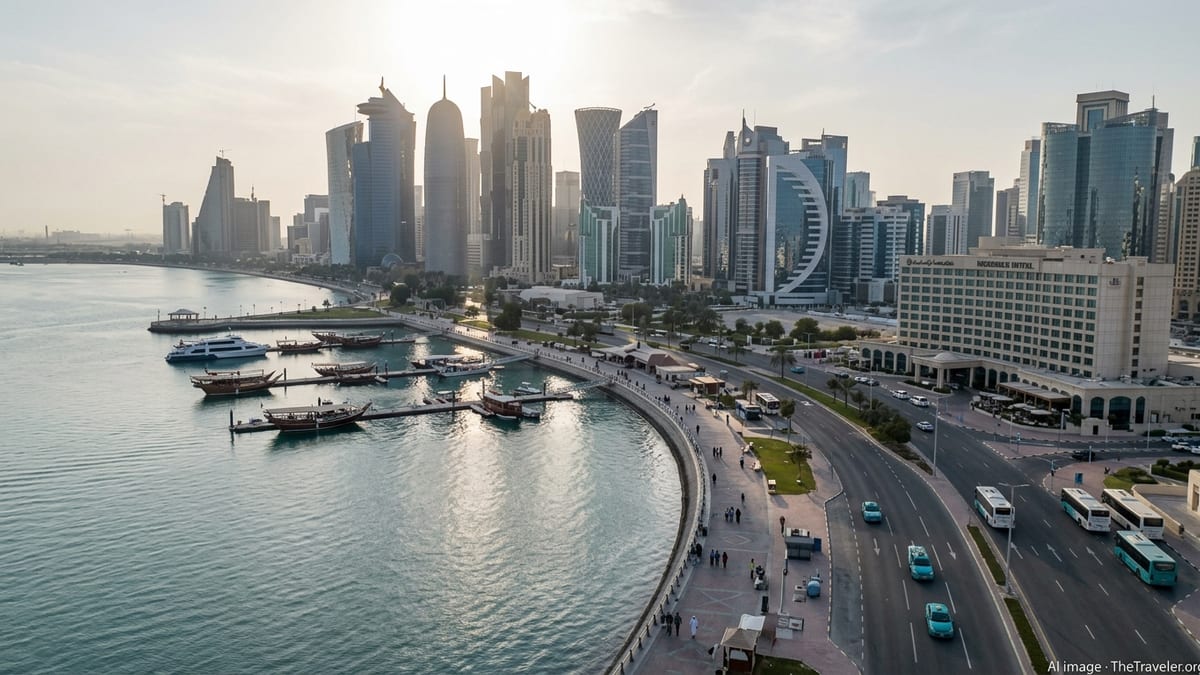
For Qatar, the latest tensions come just as the country has been consolidating its post‑World Cup tourism momentum. Since hosting the FIFA World Cup in 2022, Qatar has invested heavily in positioning itself as a cultural and sports hub, expanding museum offerings, staging high-profile events and promoting Doha as a stopover destination connecting Europe, Asia and Africa.
Economic commentary, however, indicates that smaller hydrocarbon exporters such as Qatar and Kuwait are particularly vulnerable to trade and shipping disruptions stemming from conflict near the Strait of Hormuz. Forecasts referenced by international business media point to potential contractions in gross domestic product if energy exports and associated industrial activity remain constrained, with knock‑on effects for sectors such as aviation, retail and hospitality.
Despite those risks, Qatar is increasingly embedded in the region’s collaborative tourism architecture. It has joined ministerial discussions on joint promotion, integrated visitor experiences and shared digital systems with fellow GCC states. Regional coverage also notes that Qatar is being positioned as a future Gulf tourism capital, reflecting both its upgraded infrastructure and an expanding calendar of cultural, business and sporting events created to smooth demand beyond peak seasons.
Analysts argue that this dual dynamic of vulnerability and opportunity will define Qatar’s tourism trajectory in the near term. While external shocks may dampen arrivals and transit traffic, the country’s role within GCC‑wide initiatives could help ensure that when confidence returns, Qatar captures a larger share of regional flows.
Unified Visas and Seamless Systems Anchor GCC Cooperation
One of the most significant developments supporting long-term recovery is the Gulf Cooperation Council’s push for a unified tourism framework. Over the past year, GCC states have advanced plans for a single tourist visa that would allow international visitors to move freely between Saudi Arabia, the UAE, Qatar, Bahrain, Kuwait and Oman on one permit, mirroring models used in other regional blocs. Travel industry briefings describe this as a cornerstone of plans to transform the Gulf into a multi‑destination tourism zone rather than a set of competing hubs.
Complementing the visa project, reports also highlight progress on a new “one‑stop” digital travel system, with an initial pilot involving select member states before expansion to the full bloc. The platform is designed to unify booking, security and data processes, making it easier for visitors to plan itineraries that combine several Gulf countries in a single trip, while giving authorities better tools for managing flows and responding to emergencies.
These initiatives build on deeper structural links such as cross‑border rail planning, shared cruise and aviation strategies, and coordinated participation in global tourism fairs. Collectively, they signal that despite immediate security pressures, GCC governments view tourism as a shared, strategic industry rather than merely a national revenue line.
Industry analysts note that when regional tensions ease, a traveler who might once have booked a weekend in Dubai could instead be encouraged to add heritage sites in Saudi Arabia, beaches in Oman, cultural districts in Doha and island experiences in Bahrain to the same itinerary, amplifying the sector’s recovery potential for all six states.
Outlook: Short-Term Pain, Medium-Term Ambition
In the near term, Gulf tourism stakeholders face a difficult balancing act. Airlines and hospitality groups are adapting schedules and pricing to reflect reduced demand, while travel advisory changes in key source markets continue to weigh on bookings. Cruise itineraries in the Red Sea and Gulf have been rerouted or canceled, according to United Nations and industry analyses, removing a high‑spending segment that had been central to several countries’ maritime tourism strategies.
At the same time, public information from regional tourism boards and economic agencies emphasizes continuity of long-term plans. Multi‑billion‑dollar resorts, new museums, entertainment districts and conference venues remain under construction from Jeddah to Doha and Muscat. Governments appear determined to stay the course on diversification agendas that depend on tourism to create jobs for young populations and attract foreign investment.
Analysts suggest that the pace of recovery will depend on how quickly security risks can be contained, how effectively the GCC communicates safety measures, and how promptly unified visa and digital travel systems can be implemented. If cooperation efforts stay on track, the region could emerge from the current crisis with a more integrated, resilient tourism ecosystem that spreads visitors and benefits more evenly across Qatar, Saudi Arabia, the UAE, Oman, Kuwait and Bahrain.
For now, the Gulf’s tourism landscape reflects both the fragility and the promise of a sector caught between conflict and collaboration. While runways are quieter and some landmarks see fewer visitors, the foundations for a more connected regional destination are being laid, signaling that once skies clear, the race to welcome travelers back will be a collective one.