

More news on this day
What began as a season of glittering winter sun sailings in the Persian Gulf has turned into an anxious waiting game in Dubai, where thousands of cruise passengers remain stranded as war in Iran and a de facto closure of the Strait of Hormuz bring regional tourism to a sudden halt.
Cruise Season Cut Short as War Reaches the Waterways
The escalation of conflict involving Iran, Israel and the United States since late February has rapidly spilled over into civilian travel, with cruise lines among the first to feel the shock. Industry advisories describe the Strait of Hormuz as effectively impassable for most commercial shipping after Iranian threats and naval activity prompted operators to halt transits, severing the vital link between Gulf ports and the open seas.
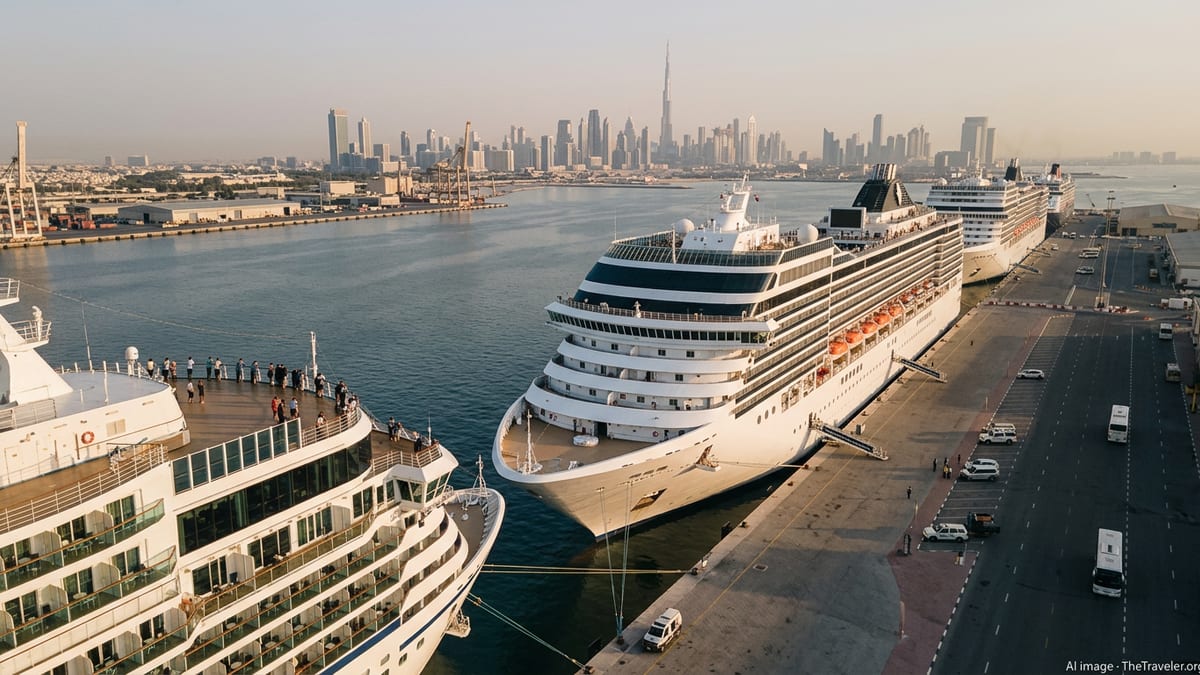
Several major cruise vessels that had been operating short winter itineraries from Dubai, Abu Dhabi and Doha are now laid up alongside city terminals, unable to continue their planned voyages to Europe or reposition to other regions. Ships from European and Saudi-backed brands, including vessels that only recently launched new Gulf programs, have suspended sailings indefinitely while security analysts warn that elevated military risk in the narrow waterway is unlikely to ease in the short term.
Regional tourism officials had banked on another record-breaking Gulf cruise season, buoyed by strong demand from European and Asian markets drawn by Dubai’s skyline, Abu Dhabi’s culture districts and desert shore excursions. Instead, operators are unwinding programs weeks early, cancelling upcoming departures and scrambling to communicate with guests who expected to be in Muscat or Doha and are now looking at departure boards in Dubai’s cruise terminals.
Passengers Stuck Between Closed Skies and Closed Seas
For the thousands of travelers now confined to ships in Dubai and other Gulf ports, the most pressing question is not where they will call next but how and when they will get home. With airspace restrictions and widespread flight suspensions affecting routes to and from the United Arab Emirates, Qatar and neighboring states, cruise lines are competing for limited airline capacity while arranging emergency charter flights.
Travel trade outlets report that some lines have begun flying out priority passengers, including those with urgent medical or work needs, while others are advising guests they may have to remain onboard for several extra nights as repatriation plans are finalized. Port advisories note that terminals such as Jebel Ali and Dubai’s central cruise berths remain operational but under heightened security, with tight controls on movement between ships, hotels and airports.
On social media, stranded guests describe a surreal atmosphere: sun loungers and buffet lines as usual on deck, but with distant booms from intercepted missiles, air raid notifications chiming on phones and rolling news reports playing across lounge televisions. Some passengers say they feel safer staying aboard large, well-protected vessels than venturing far into the city, while others voice frustration at vague timelines and the financial uncertainty of disrupted travel plans.
Lines Declare Voyage Endings and Rewrite Risk Playbooks
Behind the scenes, cruise executives are invoking rarely used clauses in ticket contracts to formally declare voyages ended in Dubai instead of their original turnaround ports. Container carriers have started issuing similar end of voyage notices for cargo trapped in Gulf ports, a legal move that allows companies to close their books on itineraries they can no longer safely complete.
For cruise brands, the immediate priority is logistical: housing passengers in hotels when cabins are needed for crew rotations, securing landing slots for charter flights in congested regional hubs, and rerouting ships once they are allowed to move, possibly via the Red Sea or around Africa. Some vessels may reposition empty to safer waters, absorbing the cost in exchange for preserving future schedules in Europe or Asia.
At a strategic level, the crisis is forcing cruise lines to update their risk models for the Gulf and wider Middle East. The region had been marketed heavily in recent years as a winter alternative to the Caribbean, with modern terminals, stable weather and a growing portfolio of shore experiences. Analysts now expect operators to diversify away from itineraries that rely on single narrow choke points such as the Strait of Hormuz, and to demand clearer military and insurance guarantees before committing tonnage back to the Gulf.
Dubai’s Image Tested as Hub Status Faces New Scrutiny
Dubai has long positioned itself as a safe, cosmopolitan gateway between East and West, with glistening cruise terminals serving as a key pillar of that brand. The current crisis, however, has highlighted how vulnerable even the most polished hubs are to regional geopolitics. Iranian missile and drone barrages targeting the United Arab Emirates since late February have largely been intercepted, but the psychological impact on tourists and investors is significant.
Local authorities have stressed that the city remains open, with malls, hotels and attractions operating under reinforced security protocols. Yet images of cruise ships sitting idle against the skyline and of tourists queueing at airport information desks have quickly circulated worldwide, raising uncomfortable questions about the long-term appeal of Gulf holidays if the perception of safety deteriorates.
Tourism boards are already signaling that they will increase marketing efforts in established core markets once the immediate crisis passes, emphasizing resilience and the rapid deployment of defensive systems that limited casualties. Industry experts say, however, that recovery will depend less on advertising campaigns than on whether regional actors can negotiate a stable de-escalation that allows airlines and cruise operators to restore predictable timetables.
Global Tourism and Energy Markets Feel the Ripple Effect
The disruption in the Gulf is not confined to those currently aboard cruise ships. The de facto shutdown of the Strait of Hormuz has curtailed container traffic and oil shipments, raising freight costs and rattling energy markets. That in turn threatens to push up airfares and operating expenses for airlines and tour operators far beyond the Middle East, complicating recovery plans for a global travel sector that only recently emerged from the pandemic downturn.
Travel agencies in Europe and Asia report a wave of cancellations and rebookings for Middle East itineraries, from desert safaris to city breaks, as travelers seek alternatives in the Mediterranean, Indian Ocean and Southeast Asia. Insurance companies are recalibrating premiums for war risk coverage and may tighten terms for trips involving known hotspots, potentially making some routes uneconomical for mainstream holiday operators.
For cruise lines and destinations alike, the episode underscores how closely intertwined tourism, maritime security and global trade have become. As diplomatic efforts intensify to reopen the Strait of Hormuz and cool hostilities, what happens next in the narrow channel between Iran and Oman will determine not only the fate of a handful of stranded ships in Dubai, but also the confidence of millions of travelers contemplating where to sail, fly or book their next escape.