

More news on this day
Thousands of cruise passengers are stranded across the Gulf as escalating conflict involving Iran, the United Arab Emirates, Qatar and Oman shutters airspace, disrupts shipping lanes and throws one of winter’s fastest-growing cruise regions into sudden uncertainty.
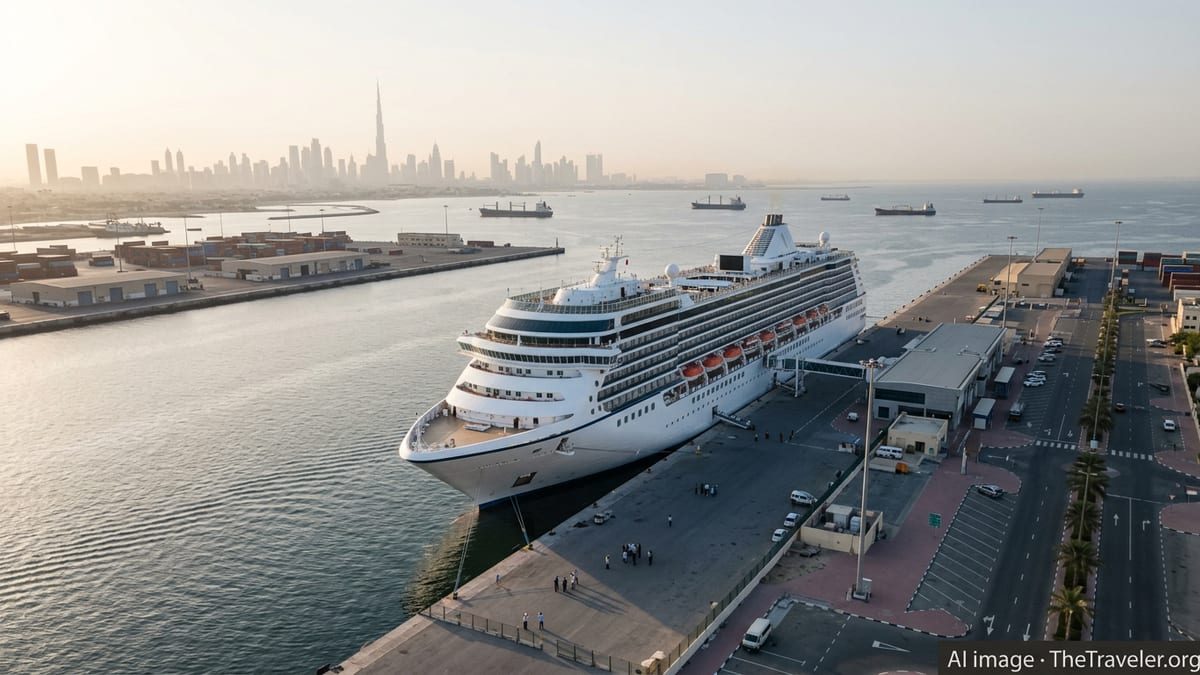
Strait of Hormuz Crisis Ripples Across Gulf Cruise Season
The latest surge in regional tensions, triggered by joint United States and Israeli strikes on Iran in late February, has turned the narrow Strait of Hormuz into a flashpoint for global shipping. Maritime advisories describe a sharp reduction in commercial traffic through the chokepoint, with many vessels sheltering in Gulf waters or avoiding the area altogether as Iranian military warnings intensify.
For the cruise sector, which has relied on the strait to link UAE homeports with Omani destinations such as Muscat and the emerging hub of Duqm, the disruption has been immediate. Industry reports indicate that cruise ships have effectively halted transits through the strait, suspending scheduled calls in Oman and breaking the backbone of popular seven night Arabian Gulf itineraries that combine Dubai, Abu Dhabi, Doha and Omani ports.
Port advisories issued in early March note that while there has been no formal closure of the strait in legal terms, company level risk assessments, Iranian radio messages to passing ships and the heightened presence of naval forces have collectively curtailed routine passenger traffic. Cruise lines, highly sensitive to liability and guest safety, have been among the first to stand down, prioritising static port stays and early disembarkations over any attempt to sail on.
The crisis comes after years of steady investment by Gulf states to position the region as a winter alternative to the Caribbean and Mediterranean, with new cruise terminals in Dubai, Abu Dhabi, Doha and Muscat, and aggressive marketing to European and Asian source markets. Those ambitions are now being tested by the proximity of leisure tourism to active missile and drone exchanges.
Missile Scares in UAE Ports Shake Passenger Confidence
The security stakes became starkly visible at the start of March when a projectile splashed into the waters near the German operated cruise ship Mein Schiff 4 while it was berthed at Abu Dhabi’s Zayed Port. According to cruise industry and regional media reports, the ship, carrying several thousand guests and crew on a Gulf voyage, was held in port as authorities assessed the threat amid ongoing Iranian missile and drone launches toward the UAE.
Although no direct damage to the vessel was reported, passengers watched the episode unfold within sight of the quayside, underscoring how close the conflict has crept to what is marketed as a sun and shopping cruise destination. The incident followed days of sustained intercepts, with Emirati officials reporting that the country’s air defences had destroyed the vast majority of incoming projectiles but warning residents and visitors to avoid sharing images of attacks or debris.
Other cruise ships, including Saudi owned newcomer Aroya Manara and European vessels based in Dubai and Doha, have remained alongside or anchored in sheltered waters rather than sailing their published routes. Industry sources say captains have been instructed to keep ships in port while regional authorities manage airspace closures, assess the risk of further missile strikes and coordinate potential evacuation corridors for foreign nationals.
The visual of large white cruise ships idling in harbours under a defensive umbrella of fighter jets and anti missile batteries has become a powerful symbol of how Gulf tourism is being buffeted by events far beyond the control of passengers or local tour operators.
Passengers Stranded as Airspace Closures Complicate Repatriation
With airspace across much of the Gulf temporarily shut or heavily restricted in the immediate aftermath of the strikes, getting cruise passengers home has become a logistical challenge. Government advisories have urged foreign nationals to depart the wider region while limited commercial flights resume, but capacity remains constrained and schedules volatile.
Several cruise lines have responded by chartering aircraft and coordinating with consular authorities to move guests out of Dubai and other ports. One major European operator based in Dubai reported arranging flights for more than 1,500 passengers after suspending its winter sailings, effectively airlifting an entire ship’s worth of guests once it became clear that normal turnarounds would not be possible.
The United Nations’ maritime agencies and regional port authorities estimate that tens of thousands of seafarers and cruise passengers have been affected by delays and diversions across the Arabian Gulf since the crisis began. Many find themselves in a holding pattern aboard ships or in waterfront hotels, waiting for confirmed flight seats as airlines cautiously restart limited services to and from the UAE and Qatar.
Travel agents say the uncertainty has rattled consumer confidence in Gulf cruising, a segment that had been steadily climbing thanks to convenient fly cruise packages from Europe and favorable winter weather. With some embassies advising citizens to postpone non essential travel, potential guests are now weighing generous rebooking policies against the risk of being stranded if hostilities flare again.
Cruise Lines Cancel Gulf Seasons and Reroute Ships
In the days since the first strikes, cruise companies have moved from temporary pauses to more decisive cancellations. Trade publications report that several operators have called off the remainder of their Middle East and Arabian Gulf programs for the season, opting instead to redeploy ships to Europe, the Canary Islands or other established markets less exposed to open conflict.
German, Italian and Saudi backed brands with ships based in Dubai, Abu Dhabi and Doha have all announced suspended itineraries, including voyages scheduled to run through April and May. TUI Cruises has cancelled departures of Mein Schiff 4 and its sister ship from Gulf ports, while independent Gulf based operators have shelved plans for scenic cruises through the Strait of Hormuz, removing marquee calls at Muscat from their marketing.
Industry analysts note that this is not the first time security tensions have reshaped cruise plans in the wider region. During the Red Sea shipping crisis and earlier rounds of tanker attacks near the Strait of Hormuz, lines quietly adjusted or dropped Middle East calls after consultation with risk advisers. The scale and proximity of the current confrontation, however, has prompted faster and more sweeping action, reflecting both the intensity of missile activity and the complex web of airspace restrictions now in place.
The financial implications are likely to be significant. Gulf ports have invested heavily in dedicated cruise terminals, shore power facilities and tourism infrastructure designed to capture high spending transit passengers. Each cancelled call represents lost revenue for tour providers, guides, retailers and hospitality businesses that had built itineraries around ship days, from desert safaris to visits to mosques and museums.
What Future Gulf Cruisers Need to Know Now
For would be cruise passengers considering Gulf itineraries later this year or in subsequent seasons, travel experts say flexibility and vigilance will be essential. The current crisis has highlighted how quickly conditions can change in a region where vital sea lanes lie within range of ballistic missiles, drones and naval patrols, even as major cities continue to market themselves as safe, high end destinations.
Prospective guests are being advised to monitor official government travel advisories for the UAE, Qatar and Oman, and to pay particular attention to notices referencing the Strait of Hormuz and Gulf of Oman. While cruise lines have strong incentives to avoid any route that could put passengers at risk, travelers should still ensure they have comprehensive travel insurance that explicitly covers war related disruptions, extended delays and emergency repatriation from third countries.
Travel planners also recommend booking air travel directly with airlines or through cruise air programs that can be more easily reprotected if flights are cancelled at short notice. In recent days, some carriers in the region have resumed limited services from Dubai and Abu Dhabi, but only for ticketed passengers with confirmed reservations, leaving little room for last minute changes at the airport.
Despite the present turmoil, regional tourism officials insist that the Gulf’s long term prospects as a cruise destination remain strong once security conditions stabilise, pointing to continued investment in ports, hotels and attractions. For now, however, the experience of thousands of passengers unexpectedly caught up in a fast moving conflict serves as a stark reminder that cruising, even in carefully curated leisure corridors, can never be fully insulated from the geopolitics of the waters it traverses.