

More news on this day
Escalating conflict and sudden airspace closures across the Gulf have triggered a cascading crisis for the cruise industry, leaving thousands of European holidaymakers unexpectedly stuck aboard ships and in terminals at Dubai, Abu Dhabi and Doha just as vessels were due to reposition to Europe for the summer season.
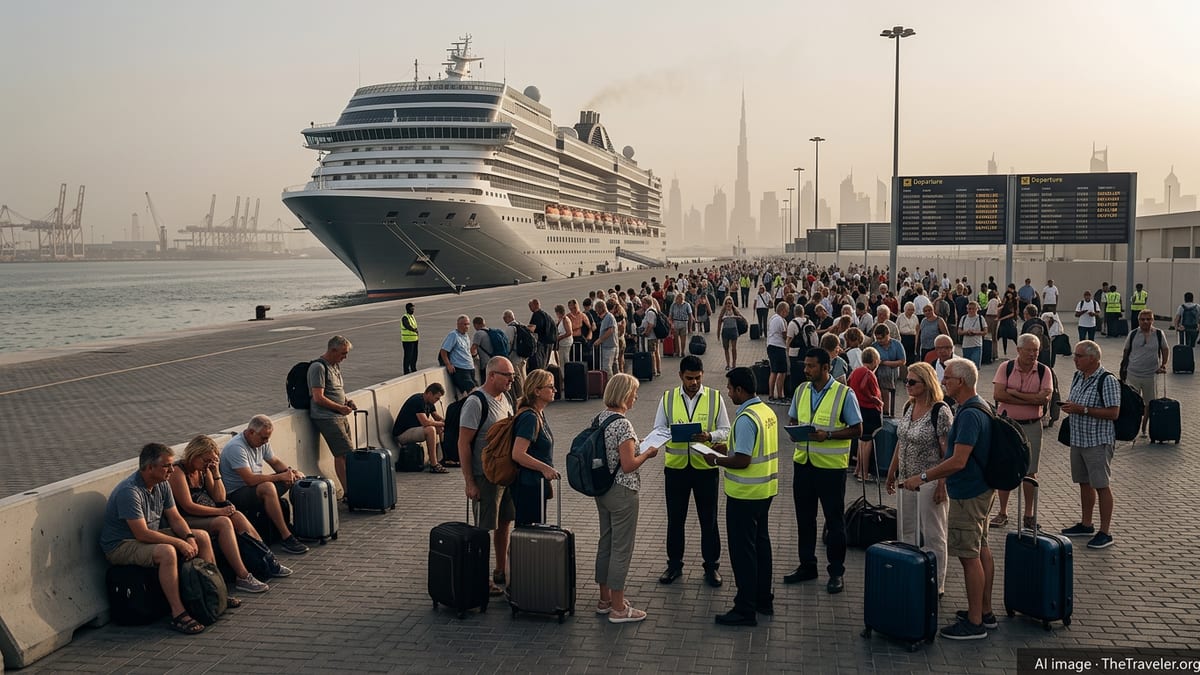
Cruise Seasons Collapse as Conflict Closes Gulf Gateways
What began as a rapidly moving military confrontation involving Iran, the United States and regional powers has, within days, paralysed travel through some of the world’s busiest aviation and cruise hubs. With airspace periodically closed and port operations curtailed around the Strait of Hormuz and the wider Gulf, several major cruise lines have halted sailings and ordered ships to remain alongside in Dubai, Abu Dhabi and Doha.
Industry statements over the past week show a growing list of affected operators. MSC Cruises has suspended remaining March departures from Dubai and has been forced to treat the MSC Euribia more as a floating hotel than a moving ship while it arranges exit routes for guests. Saudi Arabia backed AROYA Cruises has called an early end to its Arabian Gulf winter season, while Celestyal Cruises and TUI Cruises have cancelled March itineraries and warned of knock on effects for their European schedules later in the year.
The timing could scarcely be worse for a sector that relies on seamless seasonal shifts between regions. As the Gulf cruise season was due to wind down and ships prepared to reposition towards the Mediterranean and Northern Europe, closed sea lanes and unpredictable security conditions have left vessels unable to depart, threatening capacity shortfalls in European waters just as peak summer demand builds.
Regional tourism officials had repeatedly pointed to the Gulf’s resilience in the face of Red Sea tensions and earlier shipping attacks, but the new wave of strikes and closures has changed the calculation overnight. Ports that marketed themselves as secure, year round cruise gateways now find their quaysides filled with ships that cannot sail and passengers who cannot fly home.
Thousands of European Holidaymakers Trapped in Transit
For passengers, particularly those from Europe who make up a large share of winter cruise guests in the Gulf, the operational turmoil has translated into long queues at terminal help desks and anxious waits in hotel lobbies. Travel industry estimates suggest thousands of cruise customers and independent travellers are currently stuck in Dubai, Abu Dhabi and Doha, competing with wider tourist traffic for limited outbound seats.
Dubai International Airport, Abu Dhabi International Airport and Doha’s Hamad International Airport have all experienced major disruption in recent days as flight schedules are torn up and aircraft and crews are redeployed. With airspace restrictions changing at short notice, many commercial services have been either cancelled or diverted, leaving cruise lines scrambling to secure blocks of seats on any available departures to Europe.
Accounts from travel agents and stranded tourists describe a patchwork of solutions. Some Europeans have been moved on charter flights arranged by their cruise operator, others have been shifted to government organised repatriation services, while a minority with deeper pockets have turned to private charters out of secondary airports in Oman and elsewhere. For many families and older guests, however, the only option has been to sit tight on board their ship or in city hotels while insurers, tour operators and foreign ministries negotiate exits.
At the same time, a significant number of travellers who were due to embark on cruises from the Gulf in the coming days have found themselves stuck mid journey. With connecting flights through Dubai, Abu Dhabi and Doha curtailed, they are marooned in transit hubs from Bangkok to Istanbul, their original ship and itinerary no longer viable and alternative routes home uncertain.
Cruise Lines Scramble to Repatriate and Compensate Guests
Cruise operators have moved quickly to frame the shutdown as a force majeure event, but are also keenly aware that their response will shape customer loyalty for years to come. MSC Cruises has launched a large scale airlift for guests from the MSC Euribia, chartering multiple flights out of Dubai and working with partner airlines to book additional capacity to European cities. The company has confirmed that more than 1,500 passengers have already been flown out, with several hundred still awaiting onward travel.
Other lines have announced full refunds for cancelled itineraries, along with future cruise credits and coverage of certain hotel and subsistence costs while guests await repatriation. Travel agencies report that most European package holidaymakers are being offered at least several nights’ accommodation and assistance with rebooking, in line with consumer protection rules, though those who cobbled together trips independently are facing a more complex and often more expensive path home.
On the ground, practical challenges abound. With so many stranded visitors sharing the same departure points, hotel prices in key districts of Dubai, Abu Dhabi and Doha have climbed and availability has tightened. Travel advisers warn that passengers who opt to “go it alone” and leave cruise arranged programmes risk losing coordinated transfers and may end up stuck in terminals or nearby cities without guaranteed seats on scarce flights.
Legal experts say that while most cruise contracts limit liability in wartime or security emergencies, companies still have a strong commercial incentive to be seen doing the right thing. Transparency over safety assessments, repatriation plans and compensation policies will be closely watched by regulators and consumer groups across Europe as the situation unfolds.
Shockwaves for Europe’s Summer Cruise Season
Beyond the immediate human drama in Gulf ports, planners across Europe are racing to rework deployment charts for the months ahead. Ships that should already be steaming through the Suez Canal or around southern Africa towards the Mediterranean are sitting idle, creating gaps in capacity for spring and summer itineraries from Greek islands to the Norwegian fjords.
Analysts warn that if vessels cannot reposition within the next several weeks, cruise lines may be forced to consolidate or cancel departures from key European homeports, reroute ships to less affected regions, or offer shortened seasons in popular destinations. Smaller ports that invested heavily to attract Gulf based ships for shoulder season calls could see expected visitor numbers drop sharply, hitting local economies that have come to rely on cruise tourism.
European travellers booking future cruises are already confronting a more cautious marketplace. Some operators have quietly removed or adjusted Middle East segments from longer voyages, while others are delaying the launch of new itineraries that would have used Dubai or Doha as turnaround ports. Travel agencies are advising clients to pay close attention to terms covering itinerary changes, repatriation and war related disruptions, and to consider comprehensive insurance rather than basic cover.
Despite the uncertainty, industry bodies insist that global cruising remains fundamentally resilient, pointing out that most fleets are operating normally in other regions. Yet the Gulf crisis highlights how quickly security shocks can upend even well diversified deployment plans, and how closely Europe’s cruise calendar is now tied to events far beyond its own shores.
Travel Advisories, Insurance Hurdles and Future Confidence
European governments have responded to the escalating conflict and transport shutdown with a flurry of updated travel advisories. Several foreign ministries now caution against non essential travel to parts of the Gulf, while urging citizens already in the region to register with consular authorities and follow local guidance on movement restrictions. Dedicated hotlines and online portals have been set up to coordinate with those stranded as commercial options remain limited.
Insurance providers are also reassessing their exposure. Policies purchased before the latest hostilities often include some cover for trip interruption and emergency repatriation, but new policies may exclude war related claims for certain destinations or apply higher premiums and deductibles. Advisers say travellers should expect far more detailed security clauses in cruise and tour contracts that involve the Middle East in the near future.
For the thousands of Europeans unexpectedly learning the intricacies of air corridors, no fly zones and maritime security from hotel lobbies in Dubai, Abu Dhabi and Doha, the experience is likely to leave a lasting imprint on future holiday choices. While many stranded guests express gratitude for the efforts of crew and ground staff, others report feelings of abandonment as departure dates slip and information remains patchy.
Whether confidence in Gulf cruising can rebound will depend both on how quickly stability returns to regional airspace and ports, and on how effectively cruise lines, airlines and governments collaborate to bring today’s reluctant long stay visitors safely home and reassure tomorrow’s guests that the journey will once again match the brochure.