

More news on this day
Passengers traveling through Doha’s Hamad International Airport and Kuwait International Airport are facing fresh disruption as multiple Gulf and regional airlines curtail or cancel services to key cities across Asia and North Africa amid ongoing airspace restrictions and security tensions.
Get the latest news straight to your inbox!
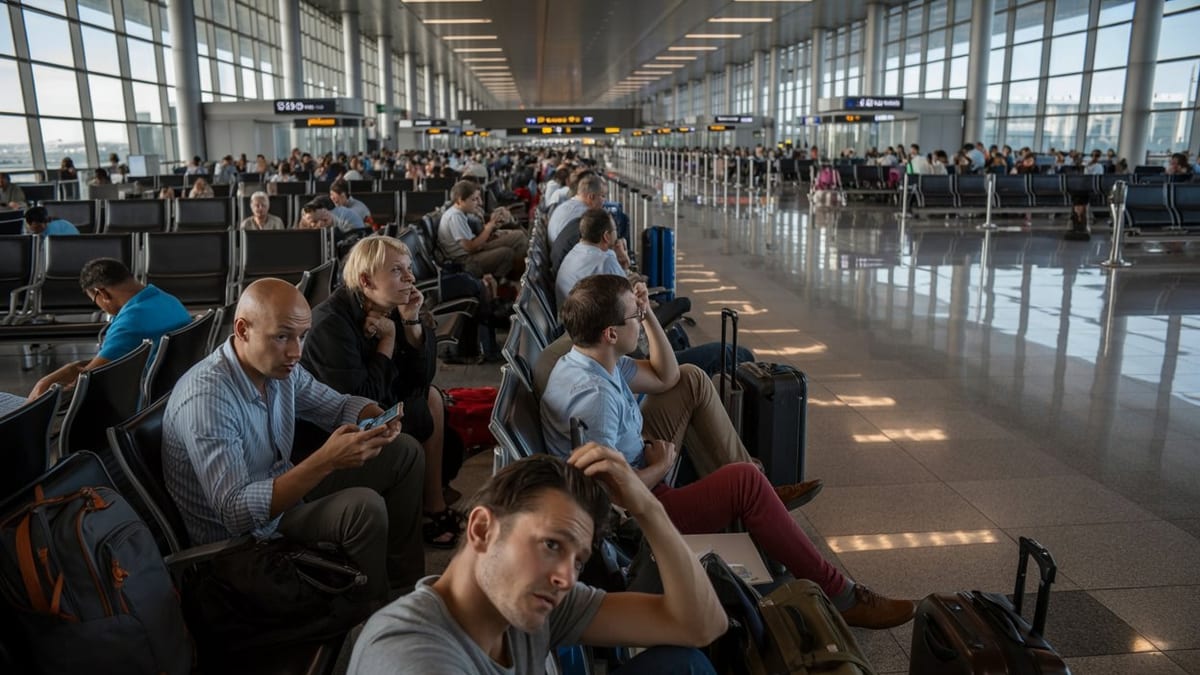
Image by Travel And Tour World
Flight Cancellations Ripple Across Doha and Kuwait
Publicly available flight tracking data and airline advisories indicate that Qatar Airways, Air India, Royal Jordanian and several other carriers have sharply reduced or temporarily suspended services involving Doha and Kuwait City in recent days, resulting in more than a dozen cancellations on overlapping routes serving Kuala Lumpur, Delhi, Mumbai, Hyderabad, Casablanca, Amman and Karachi.
Schedules that previously relied on tightly timed connections through Hamad International Airport and Kuwait International Airport have been particularly affected. Regional network carriers that use Doha and Kuwait as transfer hubs have had to pare back frequencies or withdraw flights at short notice, leaving passengers scrambling to rebook and reroute via alternative gateways such as Jeddah, Dubai and Istanbul.
Data compiled from aviation analytics providers and timetable aggregators suggests that Kuwait has seen a notable thinning of departures on certain South Asian and Southeast Asian routes, with some services consolidated onto fewer weekly flights and others removed entirely from near term schedules. Travelers booked from Kuwait to cities including Delhi, Mumbai and Karachi are being moved to different dates, alternative routings or other airlines where seats are available.
Reports from affected travelers describe late night schedule changes, airport information boards populated with “canceled” indicators and long queues at transfer desks as passengers attempt to salvage complex itineraries built around Doha and Kuwait connections.
Air India Suspends Kuwait and Doha Sectors
Air India and its low cost subsidiary Air India Express have issued multiple operational updates detailing a temporary halt of scheduled services on several West Asia sectors, including Kuwait and Doha. A press note dated March 31, 2026, shows no planned Air India or Air India Express operations to Kuwait or Doha on that date, while flights to other Gulf points such as Jeddah and Muscat are operating at reduced but active levels.
According to the same update, passengers ticketed on suspended Kuwait and Doha routes are being offered fee free rebooking to future dates or full refunds, indicating that the airline expects the disruption to persist beyond a single operational day. This has compounded difficulties for travelers who had onward connections from Doha or Kuwait to long haul destinations, including those linking India with Southeast Asia, Europe and North America.
Air India’s situation intersects with the wider regional disruption as some travelers originally booked on Qatar Airways itineraries have reported being reprotected on Air India and other carriers after their Doha connections were canceled. The suspension of direct Air India links to Kuwait and Doha, even if temporary, narrows the options available for rerouting, especially for passengers originating in secondary Indian cities such as Hyderabad that rely heavily on Gulf hubs.
Timetable changes also affect point to point traffic between Kuwait and Indian metros. Prospective travelers searching for near term fares from Kuwait to Delhi and Mumbai have reported far fewer choices than usual, with some itineraries now involving additional stops or substantial overnight layovers to work around the suspended nonstops.
Qatar Airways Network Under Sustained Strain
Qatar Airways remains at the center of the disruption as Hamad International Airport functions as its primary global hub. Industry coverage drawing on Cirium analytics indicates that between late February and late March 2026, the airline was forced to cancel a very high proportion of its scheduled flights as a result of airspace closures and regional conflict, with Hamad International bearing much of the operational impact.
Travel forums and publicly circulated advisories describe a phased restart strategy in which Qatar Airways resumed only a limited number of services, initially focusing on repatriation style flights to major European airports before gradually reintroducing commercial links to select destinations. Kuala Lumpur and other Asian cities have appeared on revised operating lists, but with restricted capacity and frequent last minute adjustments, meaning some departures still do not operate as originally planned.
The effect has been especially visible on complex itineraries such as Kuala Lumpur to Casablanca via Doha, where passengers report multiple consecutive cancellations and involuntary rerouting. In some cases, travelers bound for Casablanca from Kuala Lumpur have been rebooked via entirely different hubs, such as Beijing, after their Doha segments and partner airline connections were withdrawn.
Guidance shared by Qatar Airways through trade and customer channels emphasizes the importance of checking flight status on the airline’s digital platforms shortly before departure. Only a subset of the pre disruption schedule is currently operating on many routes, including those linking Doha with Indian cities like Delhi, Mumbai and Hyderabad, and onward connections from Doha remain vulnerable to upstream cancellations that originate in Kuwait and other regional gateways.
Royal Jordanian and Other Carriers Adjust Networks
The cancellation wave has not been confined to Gulf based airlines. Royal Jordanian, which uses Amman as its hub linking Europe, the Levant and parts of Asia and North Africa, has been adjusting its own schedules in response to regional instability and shifting demand patterns. Publicly available route information shows ongoing changes to the timing and frequency of services from Amman to key Indian markets such as Delhi and Mumbai, as well as to Casablanca.
Royal Jordanian’s network decisions feed into the broader picture of disruption because Amman often serves as an alternative connection point for passengers displaced from Doha or Kuwait itineraries. When services from Amman to cities like Delhi, Mumbai or Casablanca are reduced or re timed, the capacity available for rerouted passengers shrinks, intensifying competition for remaining seats and pushing some travelers to seek options through more distant hubs.
Other regional airlines, including Kuwait based and Saudi based carriers, have likewise been tweaking their operations. Some have shifted flights to secondary airports, while others have launched temporary surface transport links to bridge disrupted segments, moving passengers overland between Kuwait and nearby Saudi airports before continuing by air. These ad hoc arrangements highlight how interconnected the networks of Qatar Airways, Air India, Royal Jordanian and their regional peers have become.
The cumulative effect is that a disruption centered on Hamad International Airport and Kuwait International Airport quickly reverberates through Amman, Casablanca, Karachi and major Indian cities, especially when multiple airlines adjust schedules simultaneously in response to the same set of geopolitical and security constraints.
Impact on Travelers and Practical Guidance
For passengers, the most immediate consequence of the current wave of cancellations is uncertainty. Travelers heading to or transiting through Doha or Kuwait report receiving itinerary changes with little advance warning, finding that previously confirmed connections to Kuala Lumpur, Delhi, Mumbai, Hyderabad, Casablanca, Amman or Karachi are no longer viable by the time they reach the airport.
Publicly shared airline advisories consistently urge travelers to verify the status of every segment in their booking shortly before departure, using official airline websites or mobile applications, and to maintain up to date contact details so carriers can issue automated notifications when flights are altered or canceled. Many airlines servicing the region are offering flexible rebooking policies, allowing date changes without additional fees or, in some cases, refunds when flights do not operate.
Industry observers also point to the importance of building additional buffer time into itineraries that rely on Gulf and Levant hubs. Same day self connections and tight transfers through Hamad International Airport, Kuwait International Airport or Amman’s Queen Alia International Airport carry elevated risk while airspace restrictions and intermittent security incidents persist.
While airlines such as Qatar Airways, Air India, Royal Jordanian and their regional counterparts are gradually restoring parts of their schedules, published information shows that operations remain far from pre crisis norms. Travelers planning journeys through Doha or Kuwait in the coming weeks are being advised by travel agents and public guidance channels to remain flexible, monitor developments closely and, where possible, consider alternative routings that are less exposed to the current concentration of cancellations.