

More news on this day
Hundreds of thousands of passengers were left stranded or rerouted on Monday as Emirates, Etihad Airways, Qatar Airways and flydubai cancelled hundreds of flights and delayed dozens more across the United Arab Emirates, Saudi Arabia, Qatar and other Gulf states amid sweeping airspace closures linked to the escalating conflict involving Iran, the United States and Israel.
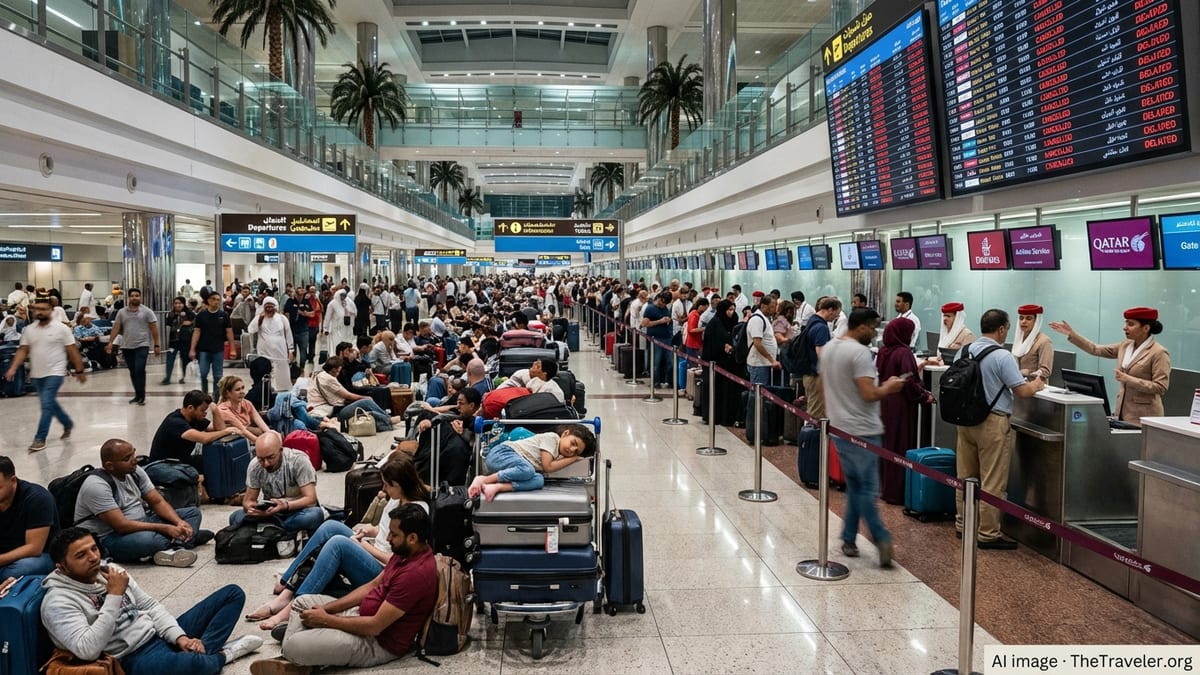
Regional Airspace Closures Paralyse Key Gulf Hubs
Air travel across the Gulf ground to a near halt over the weekend and into Monday after multiple states, including the UAE, Qatar, Bahrain, Kuwait and Oman, restricted or closed swathes of their airspace in response to missile and drone strikes tied to the deepening US‑Israel‑Iran confrontation. The closures froze operations at some of the world’s busiest transit hubs, including Dubai, Abu Dhabi and Doha, sending shockwaves through global airline networks.
Data from aviation analytics providers and regional authorities indicate that, since Saturday, more than 900 flights operated by leading Gulf carriers and partner airlines have been cancelled or heavily delayed in the region, with disruption figures still climbing as schedules are updated. Industry experts describe the cascading knock‑on effects as the worst shock to international air travel since the Covid‑19 pandemic, with aircraft and crews out of position and key east‑west corridors cut off.
With airspace over Iran, parts of Iraq and sections of the wider region effectively closed, airlines that continue to operate long‑haul services have been forced to adopt extended routings that add hours of flying time and strain crew duty limits. For many Gulf‑based carriers, however, the immediate response has been to suspend most operations entirely until regulators deem the skies safe again.
Authorities in several Gulf capitals have stressed that the measures are precautionary and focused on passenger safety as air defence systems remain on high alert. Yet with no clear timeline for a full reopening of regional airspace, travellers and airlines alike are bracing for prolonged disruption.
Emirates, Etihad, Qatar Airways and flydubai Slash Schedules
Dubai‑based Emirates, the largest international airline by international seat capacity, has temporarily suspended all flights to and from Dubai until at least the afternoon of March 2, according to airline and airport advisories. The move extends an earlier shutdown announced on Sunday and affects tens of thousands of passengers who rely on Dubai International Airport as a connecting hub between Europe, Asia, Africa and Australasia.
Etihad Airways has similarly halted all services to and from Abu Dhabi until early Monday local time, with the carrier warning that schedules may change at short notice as it works with aviation regulators. Passengers holding tickets issued before the latest escalation have been offered complimentary rebooking windows into mid‑March or full refunds on cancelled sectors, reflecting the likelihood that normal operations will not resume immediately even after airspace gradually reopens.
In Doha, Qatar Airways has confirmed a temporary suspension of flights following the closure of Qatari airspace, with the airline pledging further updates once the civil aviation authority sets a timeline for reopening. The Qatari flag carrier, one of the world’s largest long‑haul operators, is a crucial link in global traffic flows between Europe and Asia; its grounding has rippled out to airports as far afield as Sydney, Frankfurt and São Paulo.
Low‑cost carrier flydubai has also cancelled large portions of its regional network, particularly services into Saudi Arabia, Iran and the wider Middle East, while other Gulf‑based airlines, including Air Arabia and Saudia, have pulled flights to conflict‑adjacent destinations. Combined, cancellations and extended delays across these carriers account for more than 900 affected flights over the weekend and into Monday, with industry trackers recording dozens more delays as crews and aircraft struggle to reposition.
Passengers Face Crowded Terminals, Confusion and Lengthy Waits
From Dubai to Riyadh and Doha to Sharjah, stranded travellers have faced long queues at service desks, crowded terminal halls and scarce information as airline staff attempt to rebook thousands of disrupted journeys. Many passengers in transit found themselves unable to complete itineraries that routed via Gulf hubs, instead being offered hotel accommodation and meal vouchers while they wait for seats on future services.
At Dubai International Airport and Abu Dhabi International Airport, local authorities say they have arranged emergency accommodation for tens of thousands of travellers affected by large‑scale schedule changes, covering hotel stays, transport and basic needs. However, limited room availability and soaring demand for alternative routes have left some passengers sleeping on terminal floors or remaining airside for extended periods while they await clarity.
Travel agents and airline call centres across the region and in key feeder markets such as India and Europe have reported overwhelming call volumes, with customers seeking refunds, rebookings or entirely new routings that avoid the Middle East. Several carriers have urged passengers not to travel to the airport unless they have received confirmation that their flight is operating, asking instead that travellers manage changes online where possible to ease pressure on ground staff.
Social media has filled with accounts of missed connections, expiring visas and disrupted business and family trips, underscoring the human cost of a crisis driven not by weather or technical faults but by a sudden deterioration in regional security. With many aviation insurance policies excluding acts of war and related events, some travellers are discovering that only airline waivers, not their insurers, will cover the financial impact of their disrupted journeys.
Ripple Effects for Saudi Arabia, Wider Gulf and Global Routes
While the most visible disruption is centred on the UAE and Qatar, Saudi Arabia and other Gulf states have also been heavily affected. Arrivals and departures in cities such as Riyadh, Jeddah and Dammam have been curtailed as air traffic controllers reroute or suspend flights that would normally traverse restricted corridors over neighbouring states. Regional carriers and international airlines alike have pulled or diverted services, with schedules in Kuwait, Bahrain, Oman and Jordan also sharply reduced.
Global airlines that typically use the Gulf as a refuelling and interchange point for Europe–Asia and Europe–Australia routes are scrambling to find alternative pathways, often routing via Central Asia, North Africa or the North Atlantic instead. Aviation observers note that these longer routings increase fuel burn and crew costs at a time when jet fuel prices are already rising on geopolitical concerns, squeezing margins and raising the prospect of higher fares if the situation persists.
Air cargo flows are also under strain. The Gulf acts as a major hub for freight movements between manufacturing centres in Asia and consumer markets in Europe and North America. With passenger wide‑body aircraft grounded and freighter operations constrained by airspace closures, forwarders are warning of delays for high‑value shipments ranging from electronics to pharmaceuticals, as well as for time‑sensitive e‑commerce traffic.
Executives at logistics and travel companies say they are activating contingency plans first developed during the pandemic, including shifting capacity to alternative hubs and encouraging corporate clients to consider videoconferencing and remote work rather than business travel through the region in the coming days.
Uncertain Outlook as Airlines Monitor Security and Airspace
Despite the scale of the current disruption, Gulf governments and airlines have emphasised that safety remains the overriding priority and that operations will only resume in a meaningful way once they receive assurances from defence and aviation authorities. Initial statements suggest a phased reopening of airspace, with limited corridors and altitudes cleared first before more comprehensive flight schedules are restored.
Analysts caution that, even if airspace restrictions begin to ease in the coming days, the process of returning to normal service will be gradual. Aircraft and crews will need to be repositioned around the world, maintenance windows rescheduled and complex banked‑hub schedules rebuilt. Passengers whose flights are not yet cancelled but remain at risk of disruption are being advised to pay close attention to airline alerts and to keep contact information up to date in their bookings.
For now, the advice from industry bodies and consumer advocates is for travellers to wait for airlines to cancel flights rather than cancelling proactively, as this typically preserves eligibility for refunds, rebookings or vouchers offered under carrier waivers. With the situation in flux and further security developments possible, both airlines and passengers are preparing for several more days of uncertainty across one of the world’s most important aviation corridors.