

More news on this day
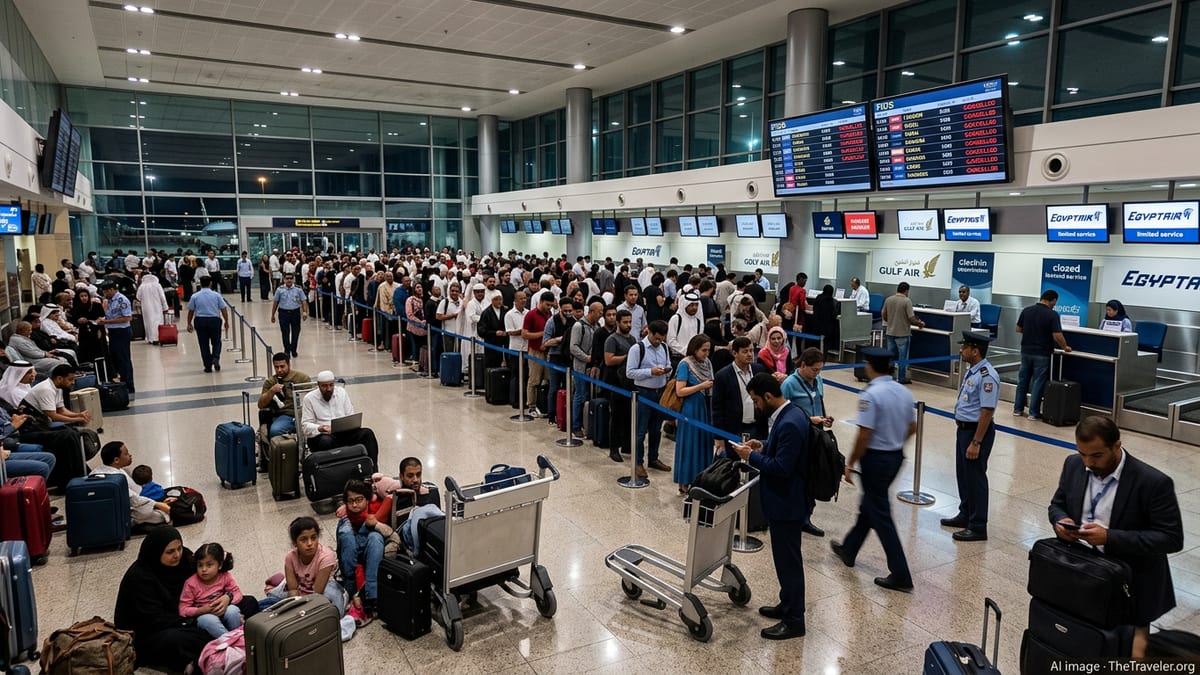
Thousands of travellers across the Middle East faced fresh disruption on April 11 as a wave of cancellations and delays involving Saudia, Kuwait Airways, Gulf Air, flydubai and EgyptAir rippled through major hubs in Saudi Arabia, the United Arab Emirates and Kuwait, with at least 19 flights grounded and well over 100 services delayed amid ongoing airspace restrictions and volatile regional security conditions.
Get the latest news straight to your inbox!
Airspace Restrictions Keep Kuwait Largely Isolated
Publicly available information shows that Kuwait remains one of the most severely affected markets, with Kuwait International Airport still closed to regular passenger traffic on April 11. Coverage from regional and international outlets indicates that all scheduled flights to and from the airport are suspended, forcing airlines to divert or cancel services and leaving large numbers of passengers stranded in transit or unable to begin their journeys.
Reports from recent weeks describe Kuwait Airways operating under a blanket suspension of inbound and outbound flights as authorities keep national airspace closed due to security concerns. Industry advisories reviewed by TheTraveler.org list Kuwait Airways as having canceled all scheduled services until further notice, with passengers urged to rebook via other gateways in Saudi Arabia, Bahrain or the United Arab Emirates where limited corridors remain available.
Low cost and regional carriers have attempted to work around the shutdown. Jazeera Airways, for example, has been routing traffic through Qaisumah Airport in eastern Saudi Arabia as an alternative to Kuwait City, according to local media coverage. Even with such contingency plans, capacity remains a fraction of normal levels, and travellers report lengthy waits, multiple re-routings and uncertainty over when full operations at Kuwait International Airport will resume.
Saudi Arabia Juggles Partial Restarts and New Disruptions
Saudi Arabia’s aviation network has moved into a complex phase of partial restart mixed with continued disruption. Recent travel updates highlight Saudia’s decision to resume selected flights from April 11 to key regional destinations such as Dubai, Abu Dhabi and Amman on a reduced schedule, after several weeks of sharply curtailed operations. These resumptions are framed as tentative and contingent on day to day assessments of airspace safety, with the airline advising passengers to verify departure times before travelling.
At the same time, cargo and passenger advisories point to ongoing cancellations affecting routes linking Saudi cities with Kuwait, Bahrain, Qatar and parts of the wider Middle East. Logistics bulletins show Saudia operated with restrictions on services to Kuwait and several Gulf capitals through April 10, creating a patchwork of available and unavailable routes that has complicated travel planning for residents and transit passengers alike.
The result for travellers transiting Saudi hubs such as Riyadh and Jeddah has been a mix of grounded flights and rolling delays as carriers continually adjust schedules to work around airspace closures and congestion in the remaining safe corridors. Flight tracking data and corporate notices suggest that even where flights operate, detours and holding patterns are adding significant time to journeys, further straining already stretched crew and aircraft resources.
UAE Hubs Grapple with Capacity Cuts and Recovery Efforts
The United Arab Emirates, historically one of the most connected aviation markets in the world, continues to experience uneven recovery after near total shutdowns in late February and March. Dubai and Abu Dhabi have gradually reopened under heavily managed conditions, with major carriers such as Emirates and Etihad running reduced timetables and maintaining flexible rebooking and refund policies for affected passengers.
For secondary UAE carriers like flydubai, the disruption remains acute. Operational updates on the airline’s own channels show ongoing schedule changes, with some routes suspended and others operating with extended flight times due to rerouting around closed or restricted airspace. Guidance to passengers repeatedly stresses the need to check flight status close to departure because services remain vulnerable to last minute changes.
Industry coverage notes that Emirates has trimmed frequencies to more than 100 destinations as part of a broader capacity management effort, shrinking available seats for connecting passengers who traditionally rely on Dubai as a global hub. This reduction has amplified the impact of individual cancellations and delays across the region, since fewer alternative connections are available when flights on carriers such as Saudia, Kuwait Airways or flydubai are grounded.
Gulf Air and EgyptAir Face Network Fragmentation
Beyond Saudi Arabia, Kuwait and the UAE, regional connectivity has been disrupted by operational constraints at Gulf Air and EgyptAir. Bahrain based Gulf Air has faced repeated suspensions of flights to and from Manama as Bahrain’s airspace has been intermittently restricted in recent weeks. Sector specific bulletins viewed by TheTraveler.org classify Gulf Air operations to its main hub as suspended for parts of April, forcing the airline to rely on limited services via alternative airports and to prioritize essential movements.
EgyptAir, which has long played a central role in connecting Cairo with Gulf capitals and expatriate communities, is now in the early stages of rebuilding its Gulf schedule. Coverage from Egyptian and regional outlets in the last 48 hours indicates that the carrier has begun operating a small number of daily flights to key markets such as Dubai, Sharjah, Riyadh, Abu Dhabi and Dammam, using a flexible plan that adjusts routes and frequencies as new permissions are granted.
However, EgyptAir’s own statements show that flights to several crucial destinations, including Kuwait, Doha and Bahrain, remain contingent on further regulatory clearances. Passengers holding tickets for those routes are being advised, through public notices and media reports, to monitor updates and be prepared for further changes. This partial restoration illustrates the fragmented state of Gulf aviation, where individual airlines and routes recover at different speeds depending on local security assessments.
Passengers Confront Uncertainty as Summer Peak Nears
The cumulative effect of 19 grounded flights and more than 100 delays across Saudia, Kuwait Airways, Gulf Air, flydubai and EgyptAir on April 11 underscores a broader pattern of instability that has defined Middle East air travel since late February. Data and reports compiled by travel industry analysts point to tens of thousands of passengers still displaced across the region, many coping with repeated cancellations and overnight airport stays as they attempt to reroute through the few corridors that remain consistently open.
Travel advisories issued by airlines, consular services and risk consultancies consistently emphasize flexibility and preparedness. Passengers are being urged, via publicly available notices, to build in longer connection times, carry essential items in hand luggage and remain open to rerouting via secondary hubs in Saudi Arabia or Egypt, given the persistent uncertainty around Kuwait and certain Gulf points.
With the traditional summer travel peak approaching, aviation experts quoted in regional business coverage warn that the combination of constrained capacity, elevated security risks and continuing airspace restrictions could keep pressure on fares and availability for weeks to come. Until a more durable easing of regional tensions allows for full reopening of Kuwait’s skies and a return to normal operations for carriers such as Saudia, Kuwait Airways, Gulf Air, flydubai and EgyptAir, travellers can expect further disruption across the Middle East’s key air corridors.