

More news on this day
Drone activity around Dubai International Airport and other Gulf hubs has sharpened demands for the United Arab Emirates and neighboring states to put airline passenger and crew safety at the center of their crisis response, as flight disruptions ripple through one of the world’s busiest aviation corridors.
Get the latest news straight to your inbox!
Drone Incident Near Dubai Highlights New Phase of Risk
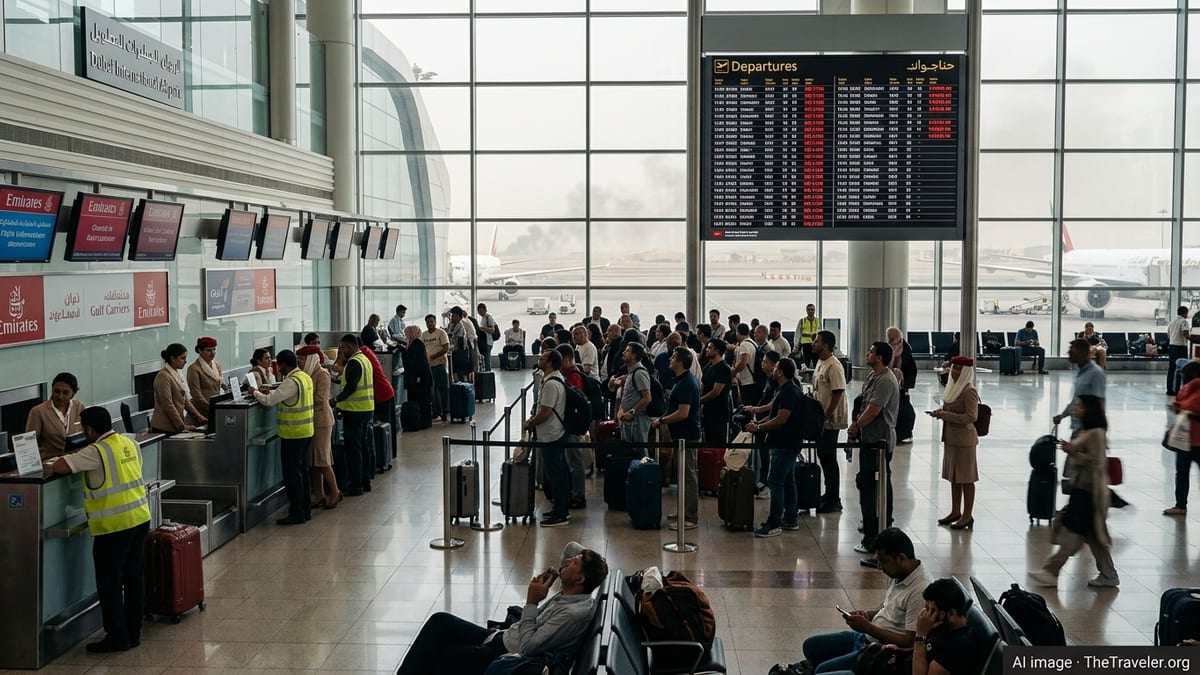
Recent reports of drones falling near Dubai International Airport have intensified scrutiny of aviation safety in the Gulf at a time when the region remains a critical connector between Europe, Asia, Africa and Australasia. Coverage from international newswires and specialist aviation outlets indicates that at least one incident on March 11 involved drones coming down close to runways and terminal facilities, injuring ground staff and triggering fresh concern over vulnerabilities at a major global hub.
Publicly available information describes how smoke and debris were observed in the vicinity of passenger terminals, with temporary suspensions and ground holds affecting operations as authorities assessed potential damage. While some accounts suggest that core runway infrastructure remained intact and many flights were able to continue, the prospect of drones breaching the airport’s defensive perimeter has unsettled both industry analysts and travelers.
The Dubai incident did not occur in isolation. It followed earlier missile and drone activity targeting infrastructure across the United Arab Emirates and other Gulf states, including Abu Dhabi and Kuwait, as part of a wider regional conflict involving Iran. Each new strike, near-miss or interception has added a layer of uncertainty for airlines that have long relied on the Gulf’s open skies and efficient hubs to sustain complex global route networks.
Rolling Disruptions Across Gulf Airports and Airspace
In the weeks surrounding the Dubai drone strike, multiple Gulf airports have faced intermittent closures, reduced schedules or strict operating limitations. Travel industry briefings and regional advisories describe temporary airspace shutdowns, curtailed timetables, and the diversion of passenger and cargo aircraft to alternative hubs in an effort to keep critical routes functioning while avoiding perceived risk zones.
Dubai International Airport, Abu Dhabi International Airport, Kuwait International Airport and Bahrain’s main facilities have all reported varying degrees of disruption as drone and missile incidents have unfolded. In some cases, fuel storage areas and airport perimeters were reportedly targeted, prompting emergency responses and the suspension of nonessential services. Even when direct damage was limited, precautionary shutdowns created extensive knock-on delays across airline networks.
Beyond the UAE, published accounts from Qatar, Oman and Saudi Arabia point to attempted or successful strikes near energy infrastructure and transport hubs. These developments have contributed to repeated conflict-zone advisories from international aviation regulators, with some bulletins recommending that carriers avoid large portions of Middle Eastern airspace or operate only under emergency or evacuation conditions. For passengers, the result has been a patchwork of last-minute cancellations, complex rebookings and prolonged journeys that depend on rapidly shifting routings through secondary transit points.
Escalating Calls to Prioritize Passenger and Crew Safety
The pattern of drone activity and airspace disruption has led to renewed appeals from aviation commentators, risk consultancies and traveler advocacy groups for Gulf governments to place passenger and crew safety ahead of commercial or reputational considerations. Public analyses increasingly argue that transparent risk assessments, conservative operating thresholds and clear communication are essential as the regional security environment remains fluid.
Observers note that hubs such as Dubai and Abu Dhabi play an outsized role in global connectivity, which places additional responsibility on national regulators and airport operators to demonstrate that operations continue only when risk is deemed acceptable under international standards. Some industry voices have urged the temporary reduction of nonessential flight volumes, greater use of night curfews or staggered schedules, and stricter routing around sensitive facilities until the threat from drones and missiles subsides.
There is also growing attention on crew welfare. Airline unions and professional associations in other regions have historically lobbied for the right of pilots and cabin crew to decline assignments they consider unsafe, and commentators now question whether similar protections and consultation mechanisms are sufficiently robust in Gulf markets. Calls are mounting for more comprehensive briefings on threat levels, access to independent security assessments, and guaranteed support for staff who raise concerns about operating in or over conflict-affected areas.
Pressure on Regulators and Airlines to Improve Transparency
As the disruption continues, analysts are placing particular emphasis on transparency from both regulators and airlines. Travel advisories and conflict-zone bulletins are being closely compared with actual flight schedules, with some consumer advocates arguing that passengers often receive little insight into the risk calculations that underpin the decision to operate flights through contested airspace.
International safety guidance typically calls for state regulators to share timely threat intelligence with airlines, which in turn are expected to incorporate this information into their own risk-management frameworks. However, published commentary suggests that the speed and clarity of these exchanges can vary considerably between jurisdictions. In the case of the recent Dubai drone incident, questions have been raised about how early frontline staff and passengers were informed of the evolving situation and what alternative options were presented.
Airlines operating in and out of the UAE and neighboring countries are facing difficult choices. Some carriers have suspended routes, rerouted flights through longer northern or southern corridors, or shifted capacity to other markets, accepting higher fuel costs and operational complexity to avoid the most volatile areas. Others have attempted to maintain a more regular schedule while relying on national defense systems and airport security enhancements to mitigate risk. The divergence in approaches has intensified debate about what level of transparency travelers are entitled to when booking tickets through the region.
Regional Coordination and the Future of Gulf Aviation Safety
The continuing drone and missile threat is prompting calls for closer regional coordination on aviation safety among Gulf Cooperation Council states. Commentators argue that fragmented national responses risk creating inconsistencies that undermine confidence in the broader Gulf as a transit corridor, even when individual airports appear to be operating safely on a given day.
Greater alignment on airspace closures, minimum safety protocols during high-threat periods, and shared standards for airport hardening and surveillance has been proposed as a way to reassure airlines and passengers alike. Suggestions in public policy discussions include the development of joint early-warning systems for incoming aerial threats, harmonized criteria for when to halt operations, and coordinated public messaging that avoids confusion between neighboring states.
For now, travelers and aviation workers are navigating an environment in which operational status can shift rapidly in response to events on the ground and in the air. The recent disruption around Dubai International Airport has crystallized the stakes: as the Gulf continues to function as a vital crossroads for global air travel, governments face intensifying pressure to demonstrate that every decision about keeping airports open, restricted or closed is guided first and foremost by the safety of passengers and crew.