

More news on this day
A flagship Gulf hotel has signed on to what international tourism agencies describe as the world’s leading climate action pact for the sector, aligning itself with the Glasgow Declaration on Climate Action in Tourism even as its home country continues to depend heavily on oil and gas revenues.
Get the latest news straight to your inbox!
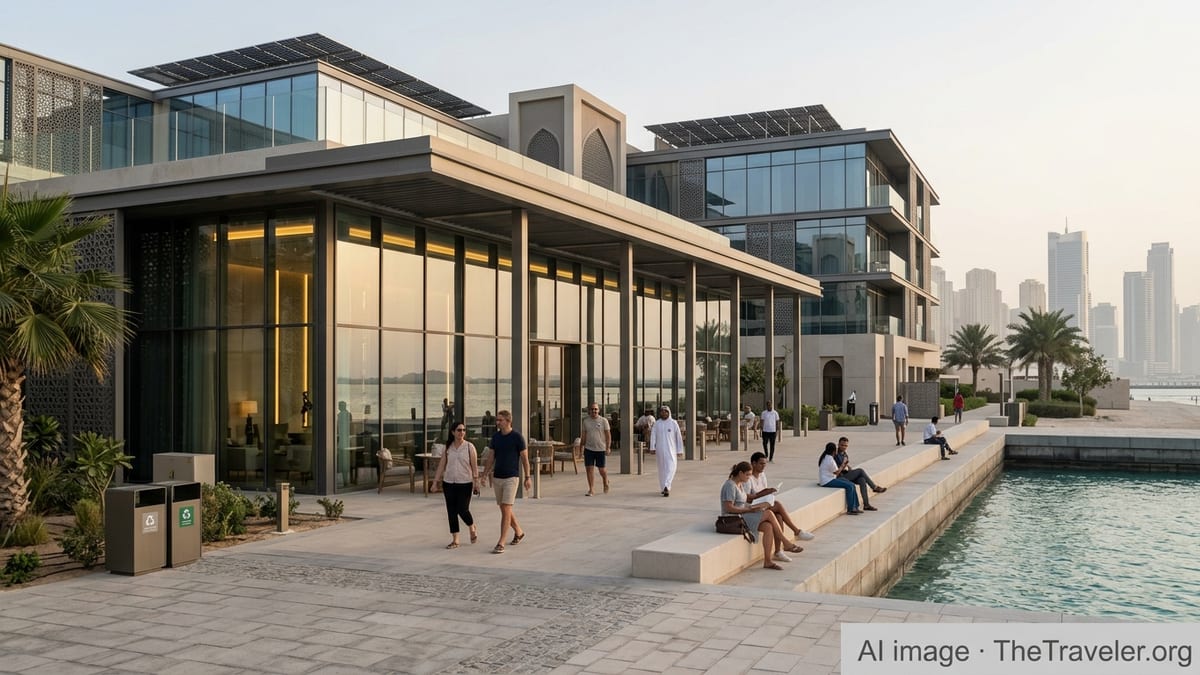
A Global Climate Pledge Reaches the Gulf’s Luxury Lobbies
The Glasgow Declaration on Climate Action in Tourism, launched at the COP26 climate summit in 2021, has become a central reference point for travel businesses committing to cut emissions in line with the Paris Agreement. The declaration calls on signatories to halve tourism-related emissions by 2030 and reach net zero as soon as possible before 2050, through actions to measure, decarbonize, regenerate, collaborate and finance climate solutions.
Recent additions to the declaration have come from across the hospitality spectrum, including large international hotel groups with major footprints in the Middle East. Industry statements describe the framework as the most widely recognized climate commitment specifically tailored to tourism, with support from United Nations tourism bodies and global industry associations.
By joining this initiative, a high-profile Gulf hotel ties its brand to a growing coalition of businesses that publicly report on emissions, set science-aligned targets and link future investment decisions to decarbonization pathways. The move signals that low‑carbon standards emerging in Europe and North America are now shaping expectations in destinations whose economies are still anchored in fossil fuels.
The hotel’s pledge also reflects broader pressure on leading Gulf destinations to demonstrate climate responsibility as they compete for international visitors who are increasingly attentive to sustainability credentials when choosing where to stay and meet.
Oil, Gas and a Tourism Economy in Transition
The Gulf state hosting the hotel remains one of the world’s major oil and gas producers, deriving a significant share of public revenue and export earnings from hydrocarbons. National development plans in the region, such as long‑term visions adopted by Saudi Arabia, the United Arab Emirates and Qatar, frequently describe tourism as a pillar of economic diversification, intended to lessen dependence on volatile energy markets over time.
At the same time, the build‑out of new resorts, urban hotels and conference centers has historically relied on energy systems powered largely by fossil fuels. Cooling-intensive building stock, large-scale desalination and aviation connectivity all contribute to the carbon footprint of Gulf tourism, making the sector particularly exposed to regulatory and reputational risks as global climate scrutiny intensifies.
Climate researchers and tourism analysts have noted that this creates a dual challenge for Gulf destinations: they must rapidly decarbonize their tourism offerings while national economies are still underpinned by the export of fuels that drive global emissions. Signing a high‑profile tourism climate pact does not alter the composition of national export baskets, but it can influence how new hotels are designed, operated and supplied, from energy procurement to food sourcing and waste management.
In this context, a single hotel’s decision to align with the Glasgow Declaration is both symbolic and practical. It is symbolic because it foregrounds climate accountability in a region frequently associated with fossil fuels, and practical because it requires concrete planning for emissions reductions at the property and portfolio level.
From Pledge to Practice: What Changes Inside the Hotel
For hotels that join the Glasgow Declaration, the headline commitments translate into detailed internal work. Publicly available guidance associated with the declaration emphasizes the need to quantify emissions across scopes, using standardized methodologies and tools. For a large Gulf property, this typically includes electricity and cooling, on‑site fuel use, food and beverage procurement, staff travel, guest transportation and waste management.
Operators in the region have already begun investing in efficiency measures such as advanced building management systems, low‑energy lighting, water‑saving fixtures and optimized cooling technologies suited to high-temperature climates. Some hospitality groups with extensive Gulf portfolios report installing or sourcing renewable electricity, either through utility-scale solar projects or through green tariffs where available.
In food and beverage operations, climate action plans often encourage shorter supply chains and reduced food waste, which can be particularly challenging in desert environments where imports dominate. Hotels are experimenting with local hydroponic suppliers, seasonal menus and improved inventory management to cut both emissions and operating costs.
The declaration also nudges hotels to think beyond their own walls. Collaborations with airport authorities, tour operators and transport providers are framed as essential to lowering the overall footprint of guest journeys. In fast-growing Gulf hubs, where aviation connectivity is central to tourism growth, this can include partnerships around sustainable aviation fuel initiatives, low‑emission airport ground transport and guest communication about the impact of travel choices.
National Climate Narratives and Tourism’s Role
Gulf governments have increasingly highlighted tourism in their national climate and economic strategies, presenting it as a sector where green growth is possible. Official communications surrounding recent global climate conferences hosted in the region, including the COP28 summit in the United Arab Emirates, portrayed new hotels, eco-resorts and cultural districts as showcases for low‑carbon technology and design.
Investment promotion materials from several Gulf states now feature references to sustainability certifications, green building codes and renewable energy projects serving tourism zones. Initiatives such as national tourism sustainability programs, green hotel guidelines and carbon calculators for accommodation providers are promoted as tools to align the sector with international climate goals.
Critics of regional climate policy argue that such measures amount to only a partial response to the climate crisis as long as oil and gas production continues to expand or remains at high levels. Supporters counter that transforming domestic energy systems and service sectors, including tourism, is a necessary step toward eventual decarbonization and can create political and commercial momentum for deeper change.
Within this debate, a hotel’s decision to embrace a leading tourism climate pact serves as a visible example of how global climate norms are filtering into day‑to‑day business operations. It may also influence lenders, investors and corporate clients, many of whom now apply climate-related criteria when selecting partners or venues for major events.
A Test Case for Net Zero Tourism in Fossil-Fuel Economies
The Gulf hotel’s new climate commitments will be measured against a global tourism sector that, according to data released by the World Travel and Tourism Council, has begun to decouple economic growth from emissions in recent years. The council’s environmental research indicates that travel and tourism’s share of global greenhouse gas emissions has edged down since 2019, even as visitor numbers recover, though absolute emissions remain substantial.
Analysts caution that meeting Glasgow Declaration timelines requires accelerated action, especially in regions where energy demand is rising and cooling loads are significant. For Gulf hotels, this means that operational efficiencies alone are unlikely to be sufficient without wider shifts in national power generation toward renewables and improvements in urban planning that reduce car dependency.
Nevertheless, industry observers see opportunities for the region to position itself as a laboratory for climate-smart hospitality, given the scale of new development and the availability of capital for large infrastructure projects. Newbuild hotels can integrate passive design, efficient envelopes and on‑site clean energy from the outset, while existing properties can be retrofitted with advanced cooling, digital controls and waste-to-resource systems.
How the newly committed Gulf hotel implements its climate action plan over the next few years may offer an early indicator of whether ambitious tourism climate pacts can gain real traction in economies still shaped by oil and gas. The outcome will be closely watched by other destinations facing the same tension between fossil-fuel income today and the low‑carbon tourism their future visitors increasingly expect.