

More news on this day
Severe weather sweeping across the Gulf has disrupted at least 60 flights and led to 16 postponements across Bahrain, Dubai and Doha, with operations at Gulf Air, flydubai and Qatar Airways all affected as aviation hubs juggle ground stoppages, diversions and rolling delays.
Get the latest news straight to your inbox!
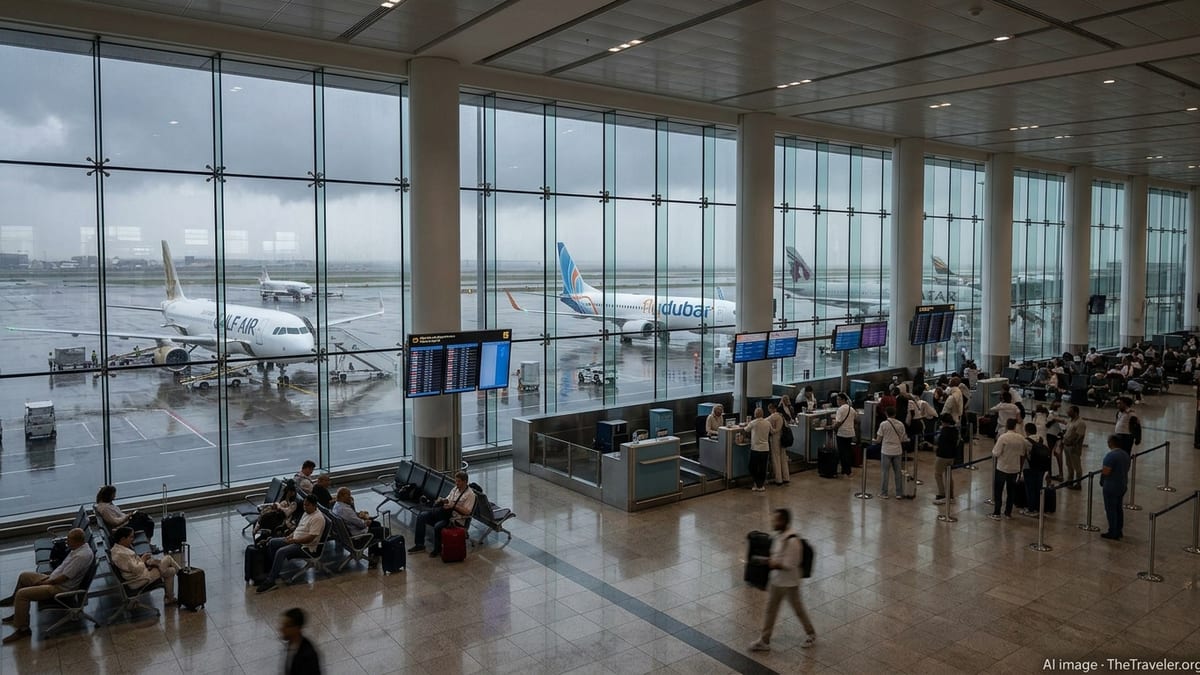
Weather turmoil hits key Gulf aviation hubs
Recent storm systems over the Arabian Gulf have combined low clouds, heavy rain and shifting winds, creating difficult operating conditions for airports in Bahrain, Dubai and Doha. Publicly available flight tracking and airport status data show waves of arrival and departure disruptions concentrated over a several-day period, particularly at peak travel times.
The three hubs serve as essential transit points for long haul traffic between Europe, Asia, Africa and Oceania, so even localized weather issues quickly ripple across global schedules. As conditions deteriorated, air traffic control measures, spacing requirements and temporary ground stoppages were introduced, pushing many flights beyond their scheduled slots.
Across the affected period, at least 60 flights involving Bahrain, Dubai and Doha were disrupted in some form, from outright cancellations to extended delays. In addition, reports indicate 16 flights were formally postponed, with departure times pushed back significantly rather than being cancelled outright.
While operations have continued on a reduced or irregular basis at times, passengers connecting through these hubs have experienced missed connections, overnight stays and unplanned rerouting as airlines work within weather-related airspace and runway constraints.
Impact on Gulf Air, flydubai and Qatar Airways services
Gulf Air, Bahrain’s flag carrier, has been among the most exposed to the disruption due to its reliance on Bahrain International Airport as a central hub. Public schedules and passenger accounts indicate that a series of Bahrain-bound and Bahrain-originating services were cancelled or heavily delayed as weather repeatedly restricted movements in and out of the island state.
In Dubai, flydubai operations have faced a mixture of cancellations, pushbacks and diversions. When low visibility and storm cells moved over Dubai International, the low cost carrier’s short and medium haul network was particularly affected, with several regional flights into the Gulf and wider Middle East placed on hold until conditions met safety thresholds.
Qatar Airways, operating through Hamad International Airport in Doha, has also had to trim or retime parts of its schedule. According to published coverage and flight status data, a number of services to and from Doha were cancelled or shifted to later windows when thunderstorms and unstable air masses made approach and departure paths more complex.
Collectively, these changes account for dozens of affected flights, including at least 16 formal postponements where aircraft were held on the ground or rescheduled to later departure times rather than being scrubbed entirely. The pattern reflects a preference by carriers to preserve itineraries where possible while still adhering to weather and airspace restrictions.
How airports are managing ground operations and safety
Airport operators in Bahrain, Dubai and Doha have responded with a combination of ground holds, revised runway configurations and stricter spacing between aircraft in poor visibility. Radar and meteorological data have guided decisions on when to suspend departures temporarily, when to divert inbound aircraft, and when it is safe to resume movements.
During intense periods of rainfall and gusty winds, ramp operations such as refueling, baggage handling and boarding can be slowed or briefly halted for safety reasons. This creates a backlog even after weather cells move away, as ground staff work through accumulated aircraft on stands and passengers waiting to board or disembark.
Publicly available information from previous regional weather events shows that these hubs typically prioritize long haul and time-critical services when capacity is constrained, with some short regional sectors more likely to be retimed or cancelled. That same pattern appears to be playing out in the most recent disruption, contributing to uneven impacts across different routes and markets.
Despite the operational strain, there are no indications that safety margins have been compromised. Instead, the volume of cancellations and delays reflects conservative decision-making designed to keep aircraft, crews and passengers clear of hazardous weather bands and low-visibility approach scenarios.
What affected passengers are experiencing on the ground
Travellers transiting the three hubs report a familiar pattern of rolling notifications, updated departure boards and crowded transfer desks. Some passengers saw itineraries cancelled outright and were rebooked on later services, while others experienced multiple successive delays as airlines waited for weather windows and updated air traffic control clearances.
In Bahrain, passengers on Gulf Air services have described being shifted to alternative routings or placed on hold while the carrier adjusted to periods when local conditions allowed only limited arrivals and departures. For some, this has meant unexpected overnight stays or extended layovers while waiting for the next viable connection.
At Dubai International, where flydubai shares airfield capacity with a large number of other carriers, the knock-on effects of weather and earlier cancellations have contributed to congestion at gates and check-in areas. Delayed aircraft arriving late into Dubai can cause subsequent outbound rotations to miss their slots, amplifying the disruption throughout the day.
In Doha, Qatar Airways passengers have reported itinerary changes and last-minute adjustments to flight times as the airline works through a constrained operations window. Some long haul passengers have had to be reprotected on alternative days or given different connection patterns when their original flights fell within the worst-affected weather periods.
Key advice for travelers booked through Bahrain, Dubai or Doha
Given the current pattern of disruptions and the possibility of further unsettled weather, travelers due to pass through Bahrain, Dubai or Doha in the coming days are being urged by airlines and airports, via public channels, to monitor their bookings closely. Same-day checks on airline apps or booking portals can provide early notice of schedule changes or aircraft swaps.
Publicly available guidance from previous Gulf weather events indicates that passengers whose flights are cancelled are typically entitled to be rebooked on the next available service, and in some cases to refunds or alternative transportation. However, options can be limited during peak disruption periods when many services are already full, so flexibility on travel dates and routing can be important.
Travelers with tight connections may want to consider building in longer layovers or proactively shifting to more robust itineraries, particularly if they are connecting between separate tickets. Those with essential events at their destination, such as business meetings or onward cruises, may benefit from planning to arrive earlier than strictly necessary in case of fresh weather-related delays.
As conditions evolve, the core message for passengers remains simple: check flight status regularly, keep contact details up to date with airlines, and be prepared for potential schedule changes when flying through Bahrain, Dubai or Doha while unsettled weather continues to impact these strategically important Gulf aviation hubs.